 how-to
How to Maintain Commercial Office Carpets
Table of Contents
- Daily Vacuuming and Soil Removal for Commercial Carpets
- Spot Cleaning and Stain Removal Techniques
- Establishing a Commercial Carpet Cleaning Schedule
- Commercial Floor Care Maintenance Tips for Businesses
- Commercial Carpet Deep Cleaning Frequency and Methods
- Choosing the Right Cleaning Solutions and Equipment
- Preventative Maintenance and Entryway Systems
- Frequently Asked Questions
Last Updated: October 2, 2026
Daily Vacuuming and Soil Removal for Commercial Carpets
Regular vacuuming is the foundation of how to maintain commercial office carpets, removing dry soil, dust, and debris before they embed in fibers and cause permanent damage.
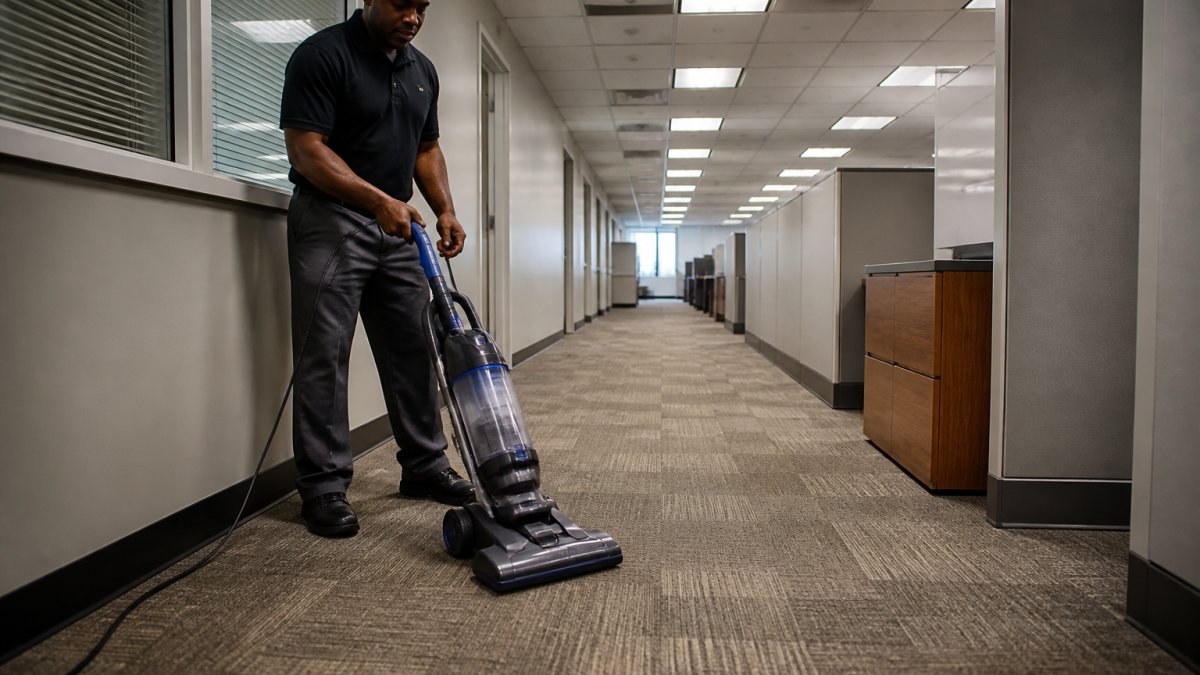
Daily vacuuming is essential for commercial spaces. Focus extra passes on high-traffic areas: entryways, hallways, and spaces near workstations.
Best practices for daily vacuuming:
- Vacuum high-traffic areas at least twice daily
- Use slow, overlapping passes to ensure thorough coverage
- Empty the vacuum bag or canister when it reaches half-full capacity
- Check filters regularly and replace when clogged
Soil accumulates quickly, a single day of foot traffic deposits significant dirt that becomes ground into carpet pile if left unaddressed, making deep cleaning far more difficult.
Consistency is key to maintaining commercial office carpets: daily vacuuming (15-20 minutes for a typical office) prevents soil from settling deeper. Offices maintaining strict daily schedules avoid stubborn stains and extend carpet life.
Adjust vacuuming intensity to your carpet type: lower-pile carpets show dirt faster but release it easily; higher-pile carpets hide soil longer but trap it deeper.
Spot Cleaning and Stain Removal Techniques
Speed and method determine whether spills become permanent stains. Addressing spills within minutes dramatically improves removal chances.
Immediate response steps:
- Blot liquid spills with white cloth or paper towels (never rub)
- For solids, remove debris gently with a spoon or dull knife
- Work from the outside edge toward the center to prevent spreading
- Use a neutral-pH cleaner appropriate for your carpet fiber type
Avoid common mistakes: rubbing spreads stains deeper, and hot water can damage fibers and cause wicking. Use cold or lukewarm water instead.
Test any cleaning solution on a hidden area first and wait 24 hours before applying to visible stains to prevent discoloration or fiber damage.
Stain removal by type:
- Coffee and tea: blot, apply cool water, blot again, use neutral cleaner if needed
- Grease: sprinkle absorbent powder, let sit 15 minutes, vacuum, then treat with appropriate degreaser
- Ink: blot immediately, use rubbing alcohol on white cloth, work from outside edges inward
- Pet accidents: remove solids, blot liquid, apply enzymatic cleaner to break down organic matter
Always rinse treated areas with cool water and blot dry, residual cleaner attracts new soil, making spots look dirty again within days.
Professional cleaning equipment can remove moisture more effectively, preventing wicking and resoiling better than rental machines.
Establishing a Commercial Carpet Cleaning Schedule
A structured cleaning schedule prevents problems. Most commercial spaces benefit from daily vacuuming, monthly spot treatments, and quarterly deep cleaning.
Adjust schedules based on traffic volume and carpet type: high-traffic areas need more frequent attention than light-use spaces.
Recommended maintenance frequency:
- Daily: vacuuming and spot cleaning
- Monthly: focused deep cleaning in high-traffic zones
- Quarterly: whole-floor deep cleaning
- Annually: professional assessment and specialized treatments
Build schedules into facility management calendars, assign responsibility to staff, and track completion dates to identify patterns and adjust as needed.
Adjust cleaning intensity seasonally: winter brings moisture and salt; spring and fall increase pollen; summer accelerates soil accumulation.
Document cleaning efforts with before-and-after photos to create accountability, justify budgets, and track method effectiveness.
Commercial Floor Care Maintenance Tips for Businesses
Entryway matting systems capture moisture and soil before reaching carpet, reducing overall soiling by 30-40%.
Place matting at all entry points, extending at least 15 feet into the building. Use wet matting in rainy seasons and dry matting in dry months.
Floor care integration:
- Use walk-off matting at every entrance
- Establish shoe-cleaning stations near high-traffic areas
- Maintain hard flooring adjacent to carpet to reduce tracked soil
- Seal grout lines in mixed flooring areas to prevent moisture migration
Hard flooring maintenance affects carpet health: dirty floors transfer soil to carpet edges, and sealed grout prevents moisture wicking from below.
Train staff to report spills immediately and spot-clean properly, many carpet problems stem from untrained staff using incorrect products or methods.
Budget for annual professional assessment to identify problem areas and recommend schedule adjustments; small changes in traffic flow or entryway design often solve recurring issues.
Commercial Carpet Deep Cleaning Frequency and Methods
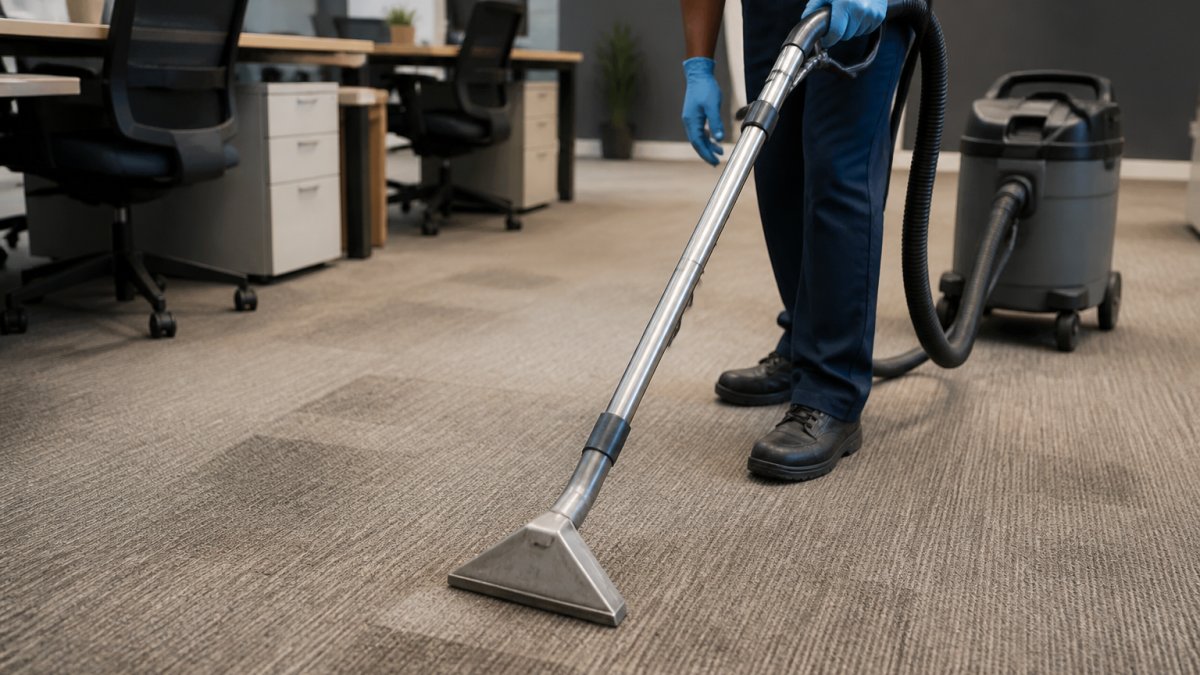
Deep cleaning removes soil daily vacuuming cannot reach. Two primary methods are hot water extraction and low-moisture encapsulation cleaning.
Hot water extraction uses pressurized hot water to suspend soil, then extraction removes moisture and soil together. It works well for heavily soiled carpet but requires 6-12 hours drying time.
Encapsulation cleaning applies a polymer that surrounds soil particles, which become powder as it dries and vacuums away easily. It uses minimal water and dries in 1-2 hours, working best on moderately soiled carpet.
Choose based on soil level, fiber type, and operational constraints: delicate fibers need low-moisture systems; heavily trafficked areas benefit from hot water extraction's deeper power.
Professional equipment can be crucial. Commercial-grade machines often provide better soil suspension, faster extraction, and more consistent drying than rental options.
Schedule deep cleaning during low-traffic periods (early mornings or weekends) and coordinate with staff to avoid cleaned areas while drying.
Choosing the Right Cleaning Solutions and Equipment
Not all cleaning products suit all carpet fibers. Using the wrong product causes fiber degradation, color loss, or permanent damage. Identify your carpet's fiber composition before selecting solutions.
Identifying your carpet fiber type: Check your carpet specification sheet first, then contact your vendor or facilities manager if needed. Knowing your fiber type prevents costly mistakes.
Fiber-specific maintenance protocols:
Nylon (most common in commercial offices): Nylon tolerates neutral-pH cleaners but yellows from alkaline cleaners and matts if over-wetted.
Polyester and Polypropylene (olefin): These fibers are stain-resistant but sensitive to solvents and oil-based cleaners. Avoid petroleum distillates. Encapsulation cleaning works better than hot water extraction for these fibers.
Wool (premium commercial installations): Wool requires pH-balanced solutions (5.5-7.5). Avoid alkaline cleaners above pH 8.0, bleach, and oxygen-based brighteners. Use low-moisture encapsulation or dry-foam methods rather than hot water extraction. Professional cleaning is often recommended.
Understanding cleaning chemistry: Neutral-pH cleaners (6.0-7.5) work safely across most fibers. Acidic solutions (below 5.5) damage dyes; alkaline products (above 8.5) leave residue attracting new soil and cause yellowing. Always check pH rating and fiber compatibility.
Equipment selection by cleaning method: Upright vacuums work for daily maintenance; backpack vacuums offer mobility in tight spaces. For deep cleaning, commercial extraction equipment can offer advantages over rentals, such as higher water pressure, consistent temperature, and stronger suction.
Matching solutions to soil type: Use enzymatic cleaners for coffee, tea, and food stains. For grease and oil, use water-based degreasers rather than solvent-based. Ink and dye stains need specialized solvents (test extensively first). Pet accidents require enzymatic treatments that destroy odor-causing compounds.
Building a fiber-specific cleaning kit: Maintain separate solutions for different fiber types, labeled with fiber type and pH rating. Use laminated reference cards at cleaning stations to prevent cross-use. Document which products work best for your carpet.
Preventative Maintenance and Entryway Systems
Prevention costs far less than correction. Proper entryway systems prevent 30-40% of carpet soiling, paying for themselves through extended carpet life and reduced deep-cleaning frequency.
Calculating the ROI of preventative maintenance:
Entryway system components and specifications:
Walk-off matting: Install moisture-absorbent matting at least 15 feet into the building to capture soil from 5-7 footsteps.
Shoe-cleaning stations: Install boot scrapers or brush stations at entries to reduce tracked soil by 10-15%. Maintain regularly to prevent clogging.
Protective runners: Clear or translucent runners shield high-traffic hallways from foot traffic. Use seasonally (winter) or during renovations.
Moisture-absorbent entry mats for wet seasons: In rainy or snowy regions, upgrade to heavy-duty absorbent mats during winter to prevent moisture wicking, mildew, and soil accumulation.
Carpet tile vs. broadloom maintenance trade-offs: Carpet tiles offer significant maintenance advantages over broadloom (wall-to-wall) carpet.
Carpet tiles also facilitate traffic pattern management. Rotate tiles periodically to distribute wear more evenly.
The trade-off: carpet tiles have visible seams that some consider less aesthetically polished than broadloom. Seams also require periodic maintenance to prevent dirt accumulation.
Choose cleaning solutions with Green Seal or Cradle to Cradle certification, which indicates lower environmental impact and reduced chemical toxicity.
Regular maintenance also reduces the frequency of replacement, which is the highest environmental impact of carpet ownership.
Traffic pattern management: Rearrange furniture occasionally to distribute foot traffic more evenly. Redirecting traffic away from the most vulnerable areas prevents premature pile wear in specific zones.
Monitor traffic patterns over time.
Humidity and environmental controls: Excess humidity promotes mildew growth and accelerates soil accumulation. Maintain indoor humidity between 30-50% using HVAC controls or dehumidification equipment.
Documentation and accountability: Track all preventative maintenance efforts: matting replacement dates, runner installation and removal, protective treatments, environmental controls, and traffic pattern changes.
Assign responsibility for specific preventative tasks to staff members and track completion. A simple spreadsheet or facility management software prevents tasks from being skipped.
Frequently Asked Questions
How often should commercial office carpets be deep cleaned?
Most commercial spaces benefit from professional deep cleaning every 12 to 18 months, though high-traffic areas may need quarterly maintenance. The frequency depends on foot traffic volume, soil load, and carpet fiber type. Daily vacuuming and spot cleaning extend the time between deep cleaning sessions. Facilities with heavy use or visible soiling should schedule professional services more frequently to prevent fiber degradation and maintain appearance.
What's the difference between hot water extraction and low-moisture cleaning for commercial carpets?
Hot water extraction (steam cleaning) uses heated water and cleaning solution injected into carpet fibers, then extracted with soil suspension. This method works well for heavily soiled carpets and provides thorough cleaning. Low-moisture systems use encapsulation cleaning, which applies a chemical that crystallizes soil particles for easier vacuuming and dries faster. Low-moisture cleaning is ideal for businesses that cannot tolerate extended drying times and works effectively for routine maintenance in commercial settings.
How can I remove stubborn stains from commercial carpet tiles?
For stubborn stains, first blot (never rub) with a neutral-pH cleaner and white cloth. Let the solution sit for 5-10 minutes to break down the stain, then blot again. For persistent stains on carpet tiles, you can remove and replace individual tiles without affecting the rest of the floor. This modular advantage makes carpet tiles ideal for commercial spaces. Professional spot cleaning with commercial-grade equipment handles tough stains that standard methods cannot remove.
Why do stains return after commercial carpet cleaning?
Stains reappear when cleaning solutions leave chemical residue in carpet fibers, causing wicking, where moisture pulls soil back to the surface during drying. This happens with improper rinsing or low-quality cleaning methods. Professional services use proper extraction techniques and neutral-pH cleaners to remove residue completely. High-traffic lanes are especially prone to rewetting and stain return. Preventative maintenance with regular vacuuming and quick spot treatment prevents soil buildup that causes persistent staining.