 listicle
Best Carpet Cleaning for Rental Properties: 2026 Guide
Table of Contents
- Best Carpet Cleaning Methods for Rental Properties Compared
- Tenant vs. Landlord Carpet Cleaning Responsibilities
- Professional Carpet Cleaning Cost for Rental Properties
- How to Remove Pet Stains from Rental Carpets
- Step-by-Step Deep Cleaning Process for Rental Carpet
- Preventative Maintenance Tips for Landlords
- Which Carpet Cleaning Option Is Right for Your Rental?
- Frequently Asked Questions
Last Updated: September 1, 2026
Best Carpet Cleaning for Rental Properties: 2026 Guide
Carpet damage is one of the most common reasons landlords withhold security deposits, and one of the most contested disputes tenants face at move-out. At Mighty Clean Services, we've worked with property managers and tenants since 2005, and the pattern is consistent: most carpet problems are preventable with the right cleaning method applied at the right time. This guide breaks down the best carpet cleaning for rental properties, covering everything from hot water extraction to eco-friendly pre-treatments, security deposit implications, and exactly when to call a professional versus renting a machine yourself.
Best Carpet Cleaning Methods for Rental Properties Compared
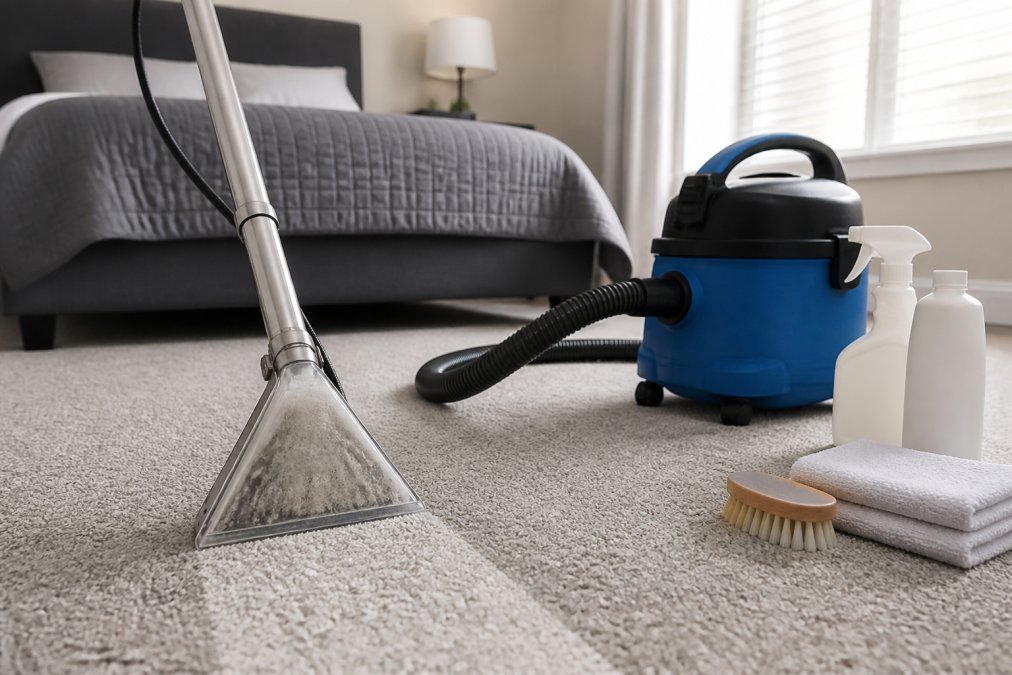
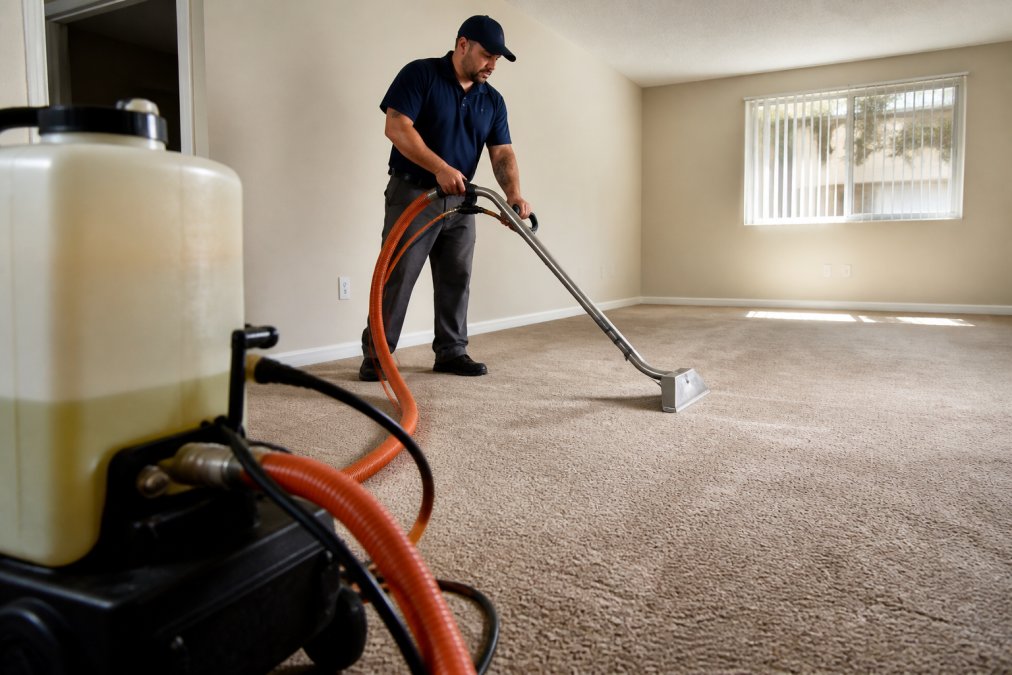
Hot water extraction is widely regarded as the most effective method for deep cleaning rental carpets. It penetrates carpet fibers, suspends embedded soil, and extracts allergens, pet dander, and residue that surface-level vacuuming leaves behind.
| Cleaning Method | Best For | Drying Time | Carpet Type Suitability |
|---|---|---|---|
| Hot Water Extraction | Deep clean, move-out | 6-12 hours | Most synthetic and wool |
| Dry Compound Cleaning | Low-moisture situations | Under 1 hour | Delicate, low-pile |
| Bonnet Cleaning | Surface maintenance | 1-2 hours | Commercial, loop pile |
| Encapsulation | Interim maintenance | 30-60 min | Low to mid-pile |
| Rental Machine (consumer) | DIY spot treatment | 4-8 hours | Most synthetic |
Hot Water Extraction (Steam Cleaning)
Hot water extraction injects hot water mixed with cleaning solution deep into carpet fibers under pressure, then immediately extracts it along with loosened soil, bacteria, and allergens. Despite the common name "steam cleaning," true steam is rarely used. For rental properties, hot water extraction handles pet dander, food residue, tracked-in soil, and embedded odors while rinsing out cleaning solution residue, which matters for carpet longevity.
Rental Machine vs. Professional-Grade Equipment
Consumer rental machines operate at significantly lower water pressure and suction power than professional-grade truck-mounted units. The solution tank capacity is smaller, heat output is lower, and extraction leaves more moisture in the carpet, extending drying time and increasing mold risk. Professional equipment delivers water at temperatures and pressures that break down set-in stains and kill bacteria. Consumer machines are adequate for light maintenance and fresh spot treatment, but rarely achieve the results needed for a move-out clean that satisfies property inspection standards.
Carpet Type Specifics: What Works and What Damages
Using the wrong method on the wrong fiber type causes permanent damage, which is far more expensive than the cleaning itself.
- Nylon and polyester (most rental carpets): Compatible with hot water extraction and standard carpet shampoo formulas.
- Wool and natural fiber blends: Require low-moisture methods and pH-neutral solutions. High-temperature hot water extraction can cause shrinkage and fiber distortion.
- Berber and loop-pile: Aggressive scrubbing can snag and unravel loops. Encapsulation or low-agitation extraction is safer.
- Frieze and cut-pile (high-pile): Deep pile traps soil effectively, so pre-treatment and multiple extraction passes are necessary.
Always identify carpet type before selecting a cleaning method. Test any solution on a hidden area first if the carpet type is unknown.
Tenant vs. Landlord Carpet Cleaning Responsibilities
Responsibility for carpet cleaning depends on the lease agreement, carpet condition at move-in, and applicable state landlord-tenant law. Generally, tenants are responsible for cleaning caused by their own use, while landlords are responsible for wear and tear that occurs naturally over the tenancy.
The HUD guidance on tenant and landlord responsibilities distinguishes between normal wear and tear (gradual fading, minor traffic patterns, light soiling) and tenant-caused damage (pet stains, burns, heavy soiling, odor contamination). Landlords cannot legally charge tenants for normal wear and tear in most states.
Security Deposit Implications
Security deposit deductions are one of the most litigated landlord-tenant issues, with carpet condition at the center of many disputes. Landlords who want to make a valid deduction for carpet cleaning must prove that the carpet's condition at move-out exceeds normal wear and tear for the length of the tenancy.
Practical steps that protect both parties:
- Document carpet condition at move-in with timestamped photos and a written move-in checklist signed by both parties.
- Document condition at move-out with the same level of detail.
- Require professional cleaning receipts in the lease, but note that many states prohibit mandatory cleaning fees regardless of carpet condition.
- Apply useful life depreciation when calculating deductions. A carpet with a 10-year useful life that is 7 years old has limited remaining value.
As documented in the Nolo landlord-tenant law resource, most states require landlords to return security deposits within 14 to 30 days of move-out, with an itemized statement of any deductions. Failing to meet this deadline can result in forfeiting the right to make any deduction.
Professional Carpet Cleaning Cost for Rental Properties
Professional carpet cleaning cost varies based on square footage, carpet condition, number of rooms, and whether specialized treatments (pet odor neutralization, stain removal, pre-treatment) are required. For accurate pricing on your specific rental unit, contact Mighty Clean Services directly for a quote. Certified by the International Janitorial Cleaning Association (IJCSA) since 2005, the team can assess your carpet type, soil level, and any stain or odor concerns before recommending the right service.
Cost Comparison: Machine Rental vs. Hiring a Pro
Machine rental is cheaper upfront but more expensive over time:
| Factor | Machine Rental (DIY) | Professional Service |
|---|---|---|
| Equipment quality | Consumer-grade, low suction | Professional-grade, truck-mounted |
| Cleaning solution | Generic retail formulas | Professional pre-treatment + rinse |
| Drying time | 6-24 hours | 6-12 hours (faster extraction) |
| Pet odor removal | Partial at best | Enzyme-based, more thorough |
| Risk of over-wetting | Higher | Lower |
| Repeat treatments needed | Often | Rarely |
| Security deposit protection | Uncertain | Documented receipt, stronger case |
The case for hiring a professional is strongest at move-out, when the cleaning must meet a documented standard and you need a receipt to defend against security deposit deduction.
How to Remove Pet Stains from Rental Carpets
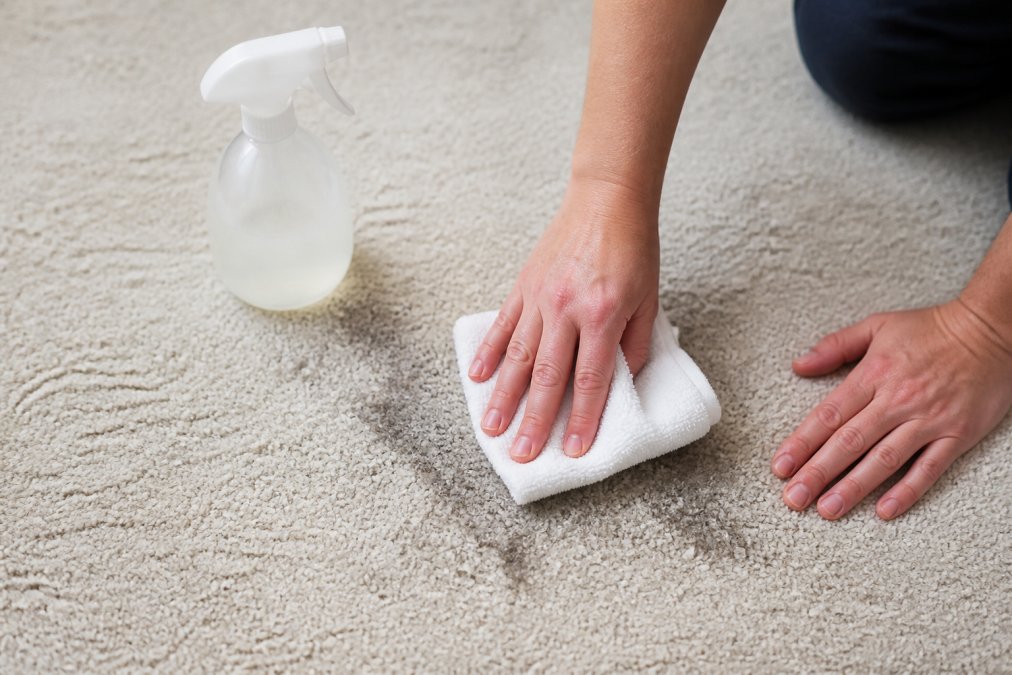
Pet stains are the most common carpet problem in rental properties and the most likely to cause security deposit disputes. The key is acting quickly. Fresh pet urine is far easier to neutralize than dried, set-in stains where uric acid crystals have bonded to carpet fibers.
Odor Neutralization: Baking Soda and Enzyme-Based Solutions
Enzyme-based cleaners work by breaking down uric acid crystals in pet urine at a molecular level. Standard carpet shampoo and vinegar solutions mask odors temporarily but do not eliminate the source. For rental carpets with embedded pet odor, enzyme cleaners are the only approach that produces lasting odor neutralization.
Step-by-step for fresh pet stains:
- Blot (do not rub) the stain with a clean white cloth to absorb as much liquid as possible.
- Apply cold water and blot again to dilute remaining urine.
- Apply an enzyme-based cleaner according to product instructions. Allow full dwell time.
- Blot dry, then apply baking soda over the area.
- Allow to dry completely before vacuuming.
For dried, set-in stains, pre-treatment with a professional-grade enzyme solution and hot water extraction is typically required.
Eco-Friendly and Non-Toxic Pre-Treatment Options
Many tenants and landlords prefer non-toxic cleaning solutions, particularly in households with young children, pets, or allergy concerns. Effective options include:
- White vinegar solution (1:1 with water): Effective for light spot treatment and mild odor control on synthetic carpets. Not suitable for wool or natural fibers.
- Baking soda paste: Mixed with a small amount of water and applied to stains before vacuuming, it draws out surface soiling and neutralizes mild odors.
- Plant-based enzyme cleaners: Commercially available formulas using naturally derived enzymes offer effective stain removal without volatile organic compounds. Look for products certified by the EPA Safer Choice program.
- Hydrogen peroxide (3% dilution): Useful for organic stains on light-colored carpets. Test on a hidden area first.
Step-by-Step Deep Cleaning Process for Rental Carpet
A thorough deep clean for a rental property follows a specific sequence. Skipping steps, particularly pre-treatment and pre-vacuuming, significantly reduces cleaning efficiency.
What you'll need:
- Vacuum with strong suction (HEPA filter preferred)
- Pre-treatment solution appropriate for carpet type
- Carpet cleaning machine (rental or professional)
- Clean white cloths or microfiber towels
- Enzyme cleaner for any pet stains
- Fans or dehumidifier for drying
Step 1: Clear and vacuum the space. Remove all furniture. Vacuum the entire carpet thoroughly, including edges and corners. Make at least two passes in different directions to lift embedded soil and carpet pile.
Step 2: Pre-treat stains and high-traffic areas. Apply pre-treatment solution to visible stains, pet stain areas, and heavily soiled zones. Allow the recommended dwell time.
Step 3: Mix and load cleaning solution. Use the correct dilution ratio for your machine. Over-concentrated solution leaves residue that accelerates re-soiling.
Step 4: Extract in overlapping passes. Work from the far end of the room toward the exit. Make slow, overlapping passes to maximize suction power and extraction efficiency. For heavily soiled carpet, make a second pass with clean water only to remove cleaning solution residue.
Step 5: Spot-treat remaining stains. After the main extraction, address any stains that remain. Apply spot treatment, allow dwell time, and extract again.
Post-Cleaning Drying Protocols
Drying time is the most overlooked part of the deep cleaning process. Carpet that stays wet for more than 24 hours risks mold and mildew growth beneath the carpet pile, which can cause permanent damage and health concerns.
To reduce drying time:
- Open windows and doors to maximize airflow.
- Run ceiling fans or portable fans at high speed across the carpet surface.
- Use a dehumidifier in enclosed spaces or humid climates.
- Avoid replacing furniture until the carpet is completely dry to the touch.
Do not allow foot traffic on wet carpet.
Preventative Maintenance Tips for Landlords
The best carpet cleaning for rental properties is the one you don't need to do urgently because you've maintained the carpet consistently throughout the tenancy. Preventative maintenance extends carpet longevity, reduces turnover costs, and gives landlords a stronger position in security deposit disputes.
Establish a vacuuming frequency standard. Lease agreements can reasonably require tenants to vacuum regularly, particularly in high-traffic areas. This reduces soil suspension buildup and slows fiber degradation.
Install entry mats at all exterior doors. A significant portion of carpet soil enters on shoes. Quality entry mats reduce the volume of dirt reaching carpet fibers.
Schedule annual professional cleaning. Annual hot water extraction, documented and receipted, creates a maintenance record and resets the carpet's baseline condition, making it easier to assess tenant-caused damage at move-out.
Use carpet protector treatments after professional cleaning. Carpet protector products apply a soil-resistant coating to fibers that slows re-soiling and makes future spot cleaning more effective.
Address spills immediately. Provide tenants with written guidance on spot treatment at move-in. A fresh spill that is blotted and treated within minutes rarely becomes a permanent stain.
Which Carpet Cleaning Option Is Right for Your Rental?
The right approach depends on the situation, the carpet type, and what outcome you need.
- Routine maintenance between tenancies: Rental machine with quality carpet shampoo is adequate for lightly soiled carpets in short-term rentals with no pets.
- Move-out clean with pets or heavy soiling: Professional hot water extraction with enzyme pre-treatment is the only reliable option. Consumer machines lack the suction power and heat to achieve the standard needed for a security deposit defense.
- Delicate or specialty carpets (wool, Berber, high-pile): Professional assessment is essential before any cleaning attempt. Using the wrong method causes damage that exceeds the cost of cleaning.
- Eco-conscious property managers: Plant-based enzyme cleaners and EPA Safer Choice-certified products deliver effective results without harsh chemicals. Pair with professional extraction for the best outcome.
- Landlords managing multiple units: A recurring professional cleaning schedule with documented receipts is the most cost-effective long-term strategy. It reduces emergency cleaning costs, extends carpet life, and creates a paper trail that simplifies deposit disputes.
| Situation | Recommended Approach | Priority |
|---|---|---|
| Light soiling, no pets, short tenancy | DIY rental machine | Cost savings |
| Move-out with pets or heavy stains | Professional hot water extraction | Results and documentation |
| Delicate carpet type | Professional assessment first | Damage prevention |
| Security deposit dispute risk | Professional with receipt | Legal protection |
| Multiple units, recurring need | Scheduled professional service | Long-term cost efficiency |
| Eco-conscious requirements | EPA Safer Choice products + professional extraction | Safety and performance |
Carpet maintenance in rental properties sits at the intersection of property value, legal compliance, and tenant relationships. Choosing the wrong method costs more than the cleaning itself, either in repeat treatments, damaged fibers, or contested security deposits. For property managers and landlords who need reliable results and a documented service record, Mighty Clean Services has delivered professional carpet and upholstery cleaning since 2005, certified by the IJCSA and equipped with professional-grade hot water extraction systems. Book an appointment with Mighty Clean Services to protect your investment, document your clean, and get results that hold up at move-out.
Frequently Asked Questions
Q: Should landlords pay for professional carpet cleaning between tenants?
A: Responsibility depends on your lease terms and state law. Normal wear and tear, gradual carpet fading or light soiling after a long tenancy, is generally the landlord's financial responsibility. Damage beyond that, such as deep pet stains or burns, can legally be charged to the tenant. Documenting carpet condition with photos at move-in and move-out is the most reliable way to establish what applies in a dispute over the security deposit.
Q: Are rental carpet cleaners as effective as professional carpet cleaning for rental properties?
A: Rental machines work for light maintenance but fall short on deep cleaning. They typically have lower suction power and smaller solution tank capacity than professional-grade equipment, which means they extract less soil and leave carpets wetter, extending drying time. For high-traffic areas, pet dander, or embedded odors in a rental unit, professional hot water extraction removes more debris from the carpet pile and reduces the risk of mold from excess moisture.
Q: How do I remove pet stains from rental carpets before move-out?
A: Act fast: blot the stain rather than scrubbing to avoid spreading it into the carpet fibers. Apply an enzyme-based cleaner, which breaks down the proteins in urine and eliminates odor at the source. For older stains, a baking soda and vinegar solution can lift residue before a final spot treatment. If stains have soaked through to the padding, surface cleaning alone won't achieve full odor neutralization, a professional carpet extraction service is the more reliable option.
Q: How long does carpet take to dry after professional cleaning?
A: Most carpets dry within 6 to 12 hours after professional hot water extraction, depending on carpet pile thickness, humidity, and airflow. Running fans, opening windows, or using a dehumidifier cuts drying time significantly. Avoid walking on the carpet until it is fully dry to prevent re-soiling. A certified technician can advise on drying time based on your specific carpet type and conditions in the space.
Q: Can carpet cleaning affect a security deposit decision?
A: Yes. Many security deposit disputes center on carpet condition. Under most state landlord-tenant laws, landlords can deduct professional carpet cleaning costs from the deposit only when damage exceeds normal wear and tear. Providing a receipt from a certified cleaning service, showing the rental property address and the scope of work, gives tenants documentation that the carpet was returned in professionally cleaned condition, which can prevent or resolve deposit deductions.