 ultimate-guide
Average Cost of Professional Carpet Cleaning (2026)
Table of Contents
- What Drives the Average Cost of Professional Carpet Cleaning
- Carpet Cleaning Price Per Square Foot vs. Per Room
- Cleaning Methods Compared: Steam, Dry, and Encapsulation
- Add-On Services That Affect Your Final Bill
- Professional Carpet Cleaning Benefits Worth the Investment
- How Long Does Carpet Take to Dry After Cleaning
- How to Get an Accurate Carpet Cleaning Cost Estimate
- Frequently Asked Questions
Last Updated: August 31, 2026
The average cost of professional carpet cleaning varies widely, a $150 quote and a $500 quote for the same house are rarely random. At Mighty Clean Services, we've worked with hundreds of clients surprised to learn how much the final price depends on factors they hadn't considered. This guide breaks down what drives those numbers, how different cleaning methods compare, and what to watch for when getting quotes.
Professional carpet cleaning is the process of deep-cleaning carpet fibers using specialized equipment and solutions to remove embedded dirt, allergens, stains, and odors that household vacuums cannot reach. Done correctly, it extends carpet life, improves indoor air quality, and eliminates contaminants that accumulate over time.
What Drives the Average Cost of Professional Carpet Cleaning
Three variables account for most of the price variation you'll see between quotes.
Room Size and Square Footage
Most professional carpet cleaning companies price by square footage or by room. Per-square-foot pricing is more precise and fairer for large, open-plan spaces. Per-room pricing is simpler but can penalize you if your rooms are small.
Measure your total square footage before requesting quotes to compare providers accurately and spot unusually low or high quotes. High-traffic areas like hallways, living rooms, and stairs typically require more passes and may be priced at a premium. Stairs are almost universally priced separately because they require manual labor and specialized attachments.
Carpet Condition and Fiber Type
A carpet that hasn't been professionally cleaned in several years requires significantly more work than one maintained regularly. Heavy soiling, matted fibers, and embedded pet dander all increase time and product volume required, raising costs.
Fiber type also affects pricing. Delicate fibers like wool, silk, or certain synthetic blends require gentler methods and specialized solutions to prevent discoloration or shrinkage.
Service Call Fees and Minimum Charges
Many carpet cleaning companies charge a service call fee or minimum charge regardless of job size. This is standard practice because mobilizing equipment, driving to your location, and setting up has a real cost.
The practical implication: cleaning one small room may cost nearly as much as cleaning two or three, because the minimum charge dominates the total. If you're considering adding an extra room, the math often favors doing it in the same visit.
Carpet Cleaning Price Per Square Foot vs. Per Room
These are the two dominant pricing models in the industry.
| Pricing Model | How It Works | Best For | Watch Out For |
|---|---|---|---|
| Per square foot | Charged by total carpeted area | Large homes, open floor plans | Hidden minimums |
| Per room | Flat rate per room, often capped by size | Smaller homes, defined room layouts | Oversized rooms excluded |
| Whole-house flat rate | Single price for entire home | Predictable budgeting | May not include stairs or closets |
| Per-room add-ons | Base rate plus extras (stain removal, pet treatment) | Targeted problem areas | Final bill can exceed estimate |
Per-square-foot pricing offers the most transparency. Per-room pricing is convenient but can vary depending on how a provider defines a "room." Always ask whether hallways, closets, and stairs are included or billed separately.
Whole-house discounts are common when you book multiple rooms in a single visit. Many providers offer reduced per-room rates when cleaning four or more rooms at once, since fixed costs spread across a larger job.
IICRC carpet cleaning standards and consumer guidance
Cleaning Methods Compared: Steam, Dry, and Encapsulation
Each cleaning method has different mechanisms, drying times, and effectiveness profiles. The right choice depends on your carpet type, soil level, and how quickly you need the space back in use.
Hot Water Extraction (Steam Cleaning)
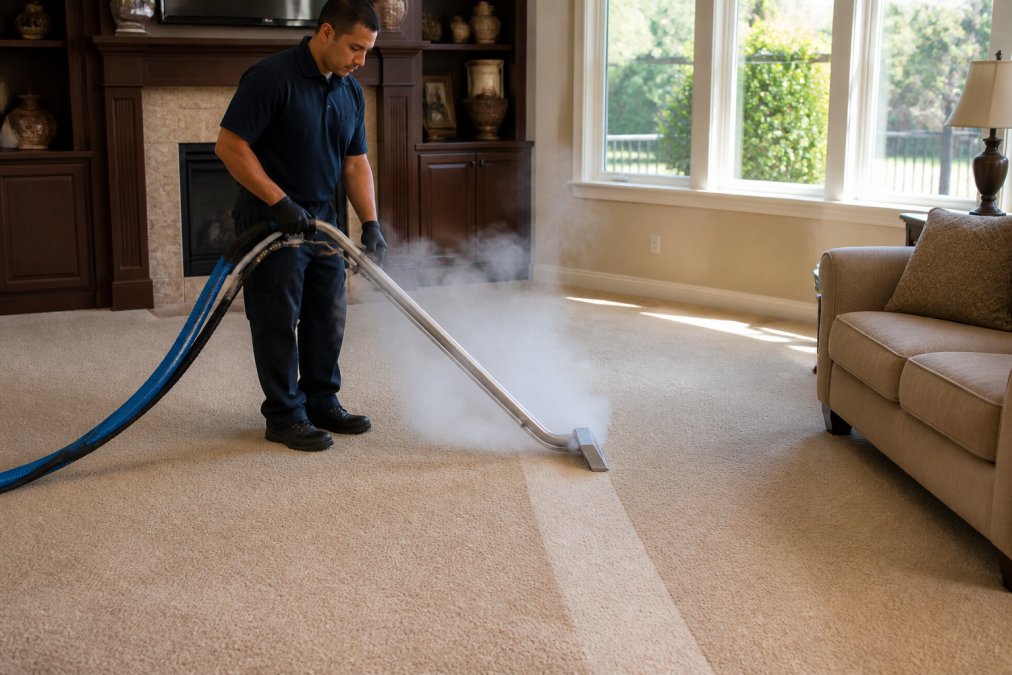
Hot water extraction is the method most often recommended by carpet manufacturers and is widely considered the most thorough option for deep cleaning. Despite the name, it uses heated water under high pressure, not actual steam. The machine injects hot water and cleaning solution deep into the carpet pile, then extracts it along with loosened soil, allergens, and residue.
Truck-mounted systems are more powerful than portable units and are generally preferred for residential deep cleaning. They maintain higher water temperature and extraction pressure, removing more soil and leaving less moisture behind.
Hot water extraction is particularly effective for allergen removal, pet odor treatment, and heavily soiled carpets. The main trade-off is drying time, carpets typically take longer to dry than those cleaned with dry methods.
Dry Cleaning and Encapsulation
Dry cleaning methods use minimal moisture, appealing when drying time is a constraint. Encapsulation applies a polymer solution that crystallizes around soil particles. Once dry, the crystals are vacuumed away, taking trapped dirt with them.
Encapsulation is well-suited for commercial spaces and maintenance cleaning between deep cleans. It's faster, produces less moisture, and is effective for light-to-moderate soiling. It's less effective on heavily soiled carpets or for removing deep-set pet odors, where hot water extraction is stronger.
Add-On Services That Affect Your Final Bill
The base cleaning price rarely tells the whole story. Several add-on services are common and worth considering depending on your situation.
Stain removal for specific spots, particularly old or set-in stains, is typically priced separately. Enzyme treatment for pet urine is one of the most requested add-ons and targets the organic compounds causing odor at the source.
Fiber protection treatments create a barrier that repels future spills and extend the interval between professional cleanings.
Deodorizing treatments address persistent odors from pets, smokers, or mustiness.
Upholstery cleaning is frequently offered as a bundled add-on. Adding it to a carpet cleaning appointment is often more cost-effective than scheduling separately.
Before you book:
- Measure your total carpeted square footage by room
- Identify any specific stains or problem areas
- Note your carpet fiber type if known
- Decide whether you need fiber protection applied
- Confirm whether upholstery cleaning should be added
- Ask whether stairs, hallways, and closets are included in the base price
Professional Carpet Cleaning Benefits Worth the Investment
The case for professional cleaning goes well beyond aesthetics.
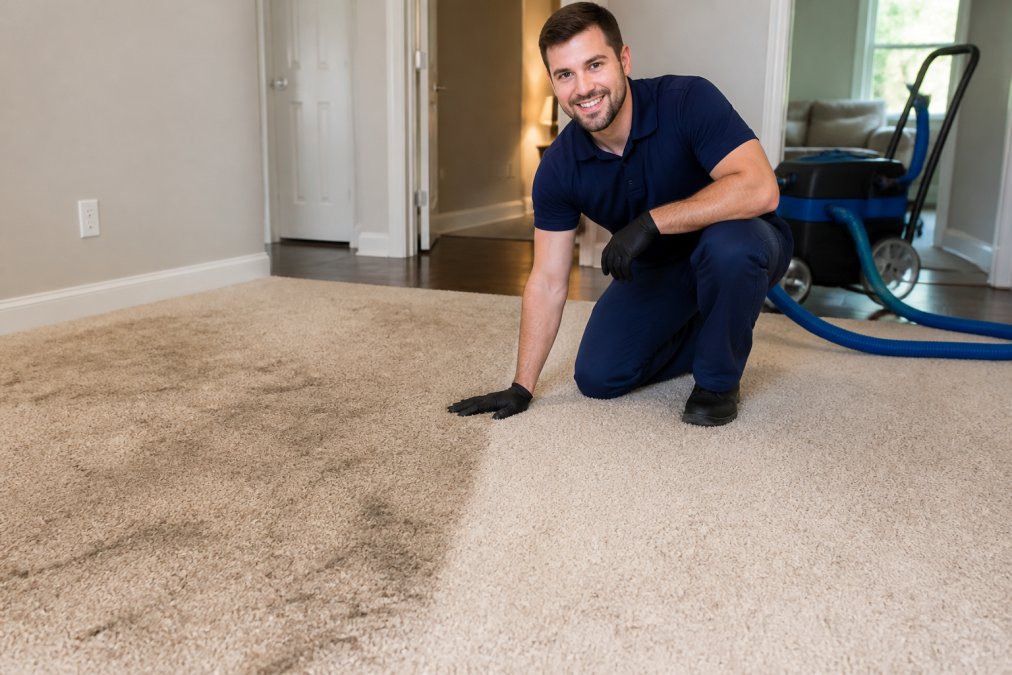
Carpet fibers trap allergens, dust mites, pet dander, mold spores, and bacteria at rates vacuuming alone cannot address. According to EPA guidance on indoor air quality and carpets, carpets can hold several times their weight in dirt and contaminants before appearing visibly soiled. This matters especially for households with allergy sufferers, young children, or pets.
Regular professional cleaning extends carpet longevity. Abrasive soil particles at the base of carpet fibers degrade the pile over time. Removing them through deep cleaning delays replacement costs.
For pet owners, professional enzyme treatment addresses the source of odors rather than masking them. Professional equipment with proper extraction power reaches subfloor padding where urine can penetrate, preventing stains and smells from returning.
How Long Does Carpet Take to Dry After Cleaning
Carpet drying time depends on the method used, ventilation, and humidity level.
Hot water extraction typically results in drying times between 6 and 12 hours under normal conditions. Dry cleaning and encapsulation methods can leave carpets ready to walk on within 1 to 2 hours.
To speed drying after hot water extraction:
- Open windows and doors to increase airflow immediately after the technician leaves
- Run ceiling fans or portable fans directed at the carpet surface
- Turn on your HVAC system to maintain air circulation
- Avoid walking on wet carpet with shoes, which can re-soil fibers
- Place furniture back only after the carpet is fully dry to prevent rust stains
If you need a specific room available quickly, discuss this with your provider before booking.
How to Get an Accurate Carpet Cleaning Cost Estimate
Getting an accurate estimate requires asking the right questions and knowing what to watch for.
Questions to Ask Before You Book
- Do you price by square footage or by room, and how do you define a room?
- Is the service call fee included in the quote, or is it added separately?
- What cleaning method do you use, and why is it appropriate for my carpet type?
- Are stairs, hallways, and closets included or billed as add-ons?
- What is your process for stain removal, and is it included or priced separately?
- Do you use a truck-mounted system or a portable unit?
- What certifications do your technicians hold?
- What is the expected drying time for the method you're recommending?
Providers who answer these questions specifically are demonstrating professional knowledge that correlates with quality results.
Red Flags to Watch For
The carpet cleaning industry has a documented pattern of bait-and-switch pricing, where unusually low advertised rates expand dramatically once the technician arrives. According to FTC consumer guidance on home service pricing practices, consumers should be cautious of door-to-door or heavily discounted offers that seem too low.
Specific red flags:
- A quote given without questions about your home's size or carpet condition
- Pressure to add services once the technician has arrived
- No mention of a minimum charge until after booking
- Vague answers about cleaning method or certification
- No written estimate provided before work begins
Carpets in high-traffic areas or homes with pets generally benefit from professional cleaning at least once a year, while lower-traffic areas may need it every 18 to 24 months. Maintaining that schedule keeps per-cleaning costs lower because carpets don't accumulate heavy soiling requiring intensive treatment.
| Household Type | Recommended Frequency | Key Concern |
|---|---|---|
| No pets, low traffic | Every 18-24 months | General maintenance |
| Moderate traffic, no pets | Every 12-18 months | Allergen buildup |
| Pets or young children | Every 6-12 months | Dander, odor, stains |
| High-traffic commercial | Every 3-6 months | Appearance, fiber wear |
For a precise quote based on your specific square footage, carpet type, and service needs, an in-home assessment or detailed phone consultation is most reliable. Mighty Clean Services offers professional estimates based on actual job requirements, not advertised minimums.
Carpet and Rug Institute professional cleaning guidelines
Choosing the right carpet cleaning provider is harder than it should be, largely because pricing structures vary and the industry has misleading quotes. Mighty Clean Services has been delivering professional carpet and upholstery cleaning since 2005, certified by the International Janitorial Cleaning Association, and equipped with professional-grade systems that reach what rental machines and surface methods miss. Book an appointment with Mighty Clean Services and get an accurate estimate based on your home's real requirements.
Frequently Asked Questions
How much does professional carpet cleaning typically cost per room?
Carpet cleaning cost per room depends on room size, carpet condition, and the cleaning method used. Pricing structures vary between providers, some charge per room, others by square footage, and some apply a minimum service call fee. Because regional labor rates and equipment choices also affect the final number, the most reliable way to know what you'll pay is to request an itemized quote from a certified local provider before booking.
Is it better to shampoo or steam clean carpets?
Hot water extraction, commonly called steam cleaning, is generally the more thorough option for deep cleaning. It flushes soil, allergens, and pet dander from the carpet fibers rather than just agitating the surface. Dry cleaning and encapsulation methods dry faster and work well for maintenance cleans or commercial spaces with heavy foot traffic. For heavily soiled residential carpets or homes with pets and allergy sufferers, hot water extraction from a truck-mounted system typically delivers more complete results.
Are there additional fees for stain removal or upholstery cleaning?
Yes. Most providers price stain removal, pet odor treatment, enzyme treatment, Scotchgard fiber protection, and upholstery cleaning as separate add-ons. A basic room-rate quote often covers standard deep cleaning only. High-traffic area treatments, deodorizing, and specialty rug care are usually itemized separately. Always ask for a written breakdown before the technician starts work so there are no surprises on the final bill.
How often should you invest in professional carpet cleaning?
Most carpet manufacturers and cleaning professionals recommend deep cleaning every 12 to 18 months for average households. Homes with pets, young children, or allergy sufferers benefit from cleaning every 6 to 12 months. High-traffic commercial spaces may need quarterly service to maintain indoor air quality and extend carpet longevity. Regular professional cleaning also helps preserve any fiber protection treatments and keeps allergen levels lower between visits.