 ultimate-guide
Carpet Cleaning for Pet Owners: A Complete Guide
Table of Contents
- Why Carpet Cleaning for Pet Owners Requires a Different Approach
- Carpet Cleaning Frequency for Pet Owners
- Regular Vacuuming Techniques and Pet Hair Removal
- Pet-Safe Carpet Cleaning Solutions and Stain Removal
- Professional Pet Urine Removal and Deep Cleaning
- Managing Pet Odors and Dander Accumulation
- Preventative Maintenance to Extend Carpet Longevity
- Protecting Delicate Carpets and Upholstery
- Frequently Asked Questions
Last Updated: September 30, 2026
Why Carpet Cleaning for Pet Owners Requires a Different Approach
Pet ownership transforms your carpet from a simple floor covering into a high-traffic zone that faces constant bombardment from hair, dander, urine, mud, and odors. Standard carpet cleaning approaches fall short because they don't account for the specific chemistry of pet-related stains or the biological compounds that create lasting odors. Carpet cleaning for pet owners demands a fundamentally different strategy, one that addresses not just surface dirt, but the embedded allergens and bacteria that standard vacuuming leaves behind.
At Mighty Clean Services, we understand how pet messes interact with different carpet fibers and what removal methods actually work without damaging your investment. The real challenge isn't removing visible stains. It's eliminating the odor-causing bacteria that settle deep in the carpet pile and padding, and it's doing all of this while keeping your pets safe from harsh chemical residues.
This guide walks you through every aspect of carpet cleaning for pet owners, from daily maintenance routines to professional deep cleaning options that restore carpets that seem permanently damaged.
Carpet Cleaning Frequency for Pet Owners
How often should you clean your carpets when you have pets? The answer depends on the number and type of pets, but most pet owners benefit from professional deep cleaning every 6 to 12 months, with spot cleaning happening immediately after accidents or spills.
Between professional cleanings, regular vacuuming is essential. Homes with one or two pets typically need vacuuming 2 to 3 times per week. Homes with multiple pets, shedding breeds, or pets with accidents should vacuum daily or every other day. The goal is to remove pet hair and dander before they accumulate deep in the carpet fibers, where they become harder to extract and contribute to odor buildup.
Spot cleaning should happen the moment a fresh stain or accident occurs. The longer you wait, the deeper the stain penetrates the carpet fibers and the harder it becomes to remove completely. Many pet owners make the mistake of waiting until the carpet "looks dirty" before cleaning, but by then, odor-causing bacteria have already colonized the carpet padding.
Regular Vacuuming Techniques and Pet Hair Removal
Vacuuming is the foundation of carpet maintenance for pet owners, but technique matters more than frequency alone. A standard upright vacuum removes surface hair, but pet hair embeds itself into the carpet pile, especially in high-traffic areas where pets spend the most time.
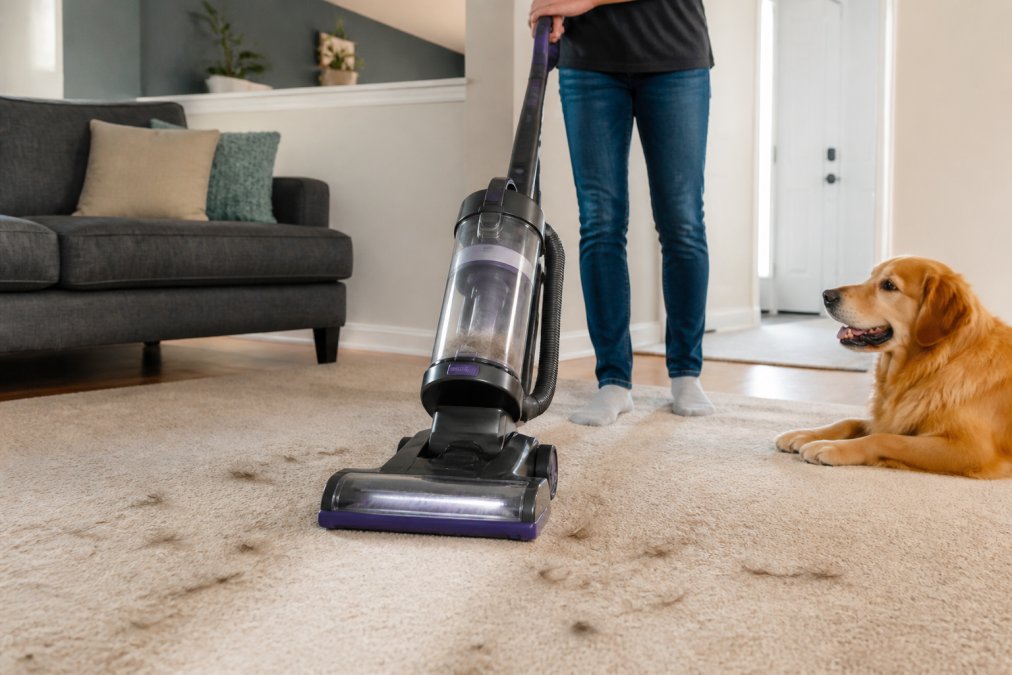
The most effective approach is slow, deliberate passes over each area. Instead of walking quickly across the carpet, push the vacuum slowly in one direction, then slowly pull it back over the same spot. This allows the brush roll to dislodge hair that's tangled in the fibers. One slow pass is more effective than three quick passes.
For maximum pet hair removal, vacuum in multiple directions. Go north-south across the room, then east-west. This cross-pattern ensures you're attacking the hair from different angles and lifting it from various directions in the carpet pile. Many pet owners skip this step and wonder why they still see hair after vacuuming.
Pay special attention to pet bedding areas, doorways, and anywhere your pet spends extended time. These zones accumulate dander, the tiny skin flakes that pets shed continuously and that trigger allergies in many people. Dander settles deeper than visible hair and requires more aggressive suction to remove.
Choose a vacuum with strong suction power and a motorized brush roll. Bagless vacuums with HEPA filters trap pet dander and allergens, preventing them from being released back into the air. Bagged vacuums work well too, but ensure you change the bag frequently, a full bag loses suction and defeats the purpose of your effort.
Pet-Safe Carpet Cleaning Solutions and Stain Removal
Not all carpet cleaners are safe for homes with pets. Many commercial carpet cleaning products contain chemicals that are toxic to dogs and cats, either through direct contact or through residues left on the carpet after cleaning. The safest approach uses products that are effective against pet stains without leaving harmful chemical residues behind.
Immediate Spot Cleaning for Fresh Stains
Speed is critical with fresh pet stains. The first 30 seconds after an accident or spill determine how easily you'll remove the stain later. Blotting technique is more important than scrubbing.
When you discover a fresh stain, blot it immediately with clean, dry towels or paper towels. Press down firmly to absorb as much liquid as possible.
Enzyme Cleaners and Odor Neutralization
Enzyme cleaners are the most effective tool for eliminating pet odors because they break down the biological compounds that cause the smell. Unlike surface cleaners that mask odors, enzyme cleaners destroy the odor-causing bacteria at the molecular level.
Professional Pet Urine Removal and Deep Cleaning
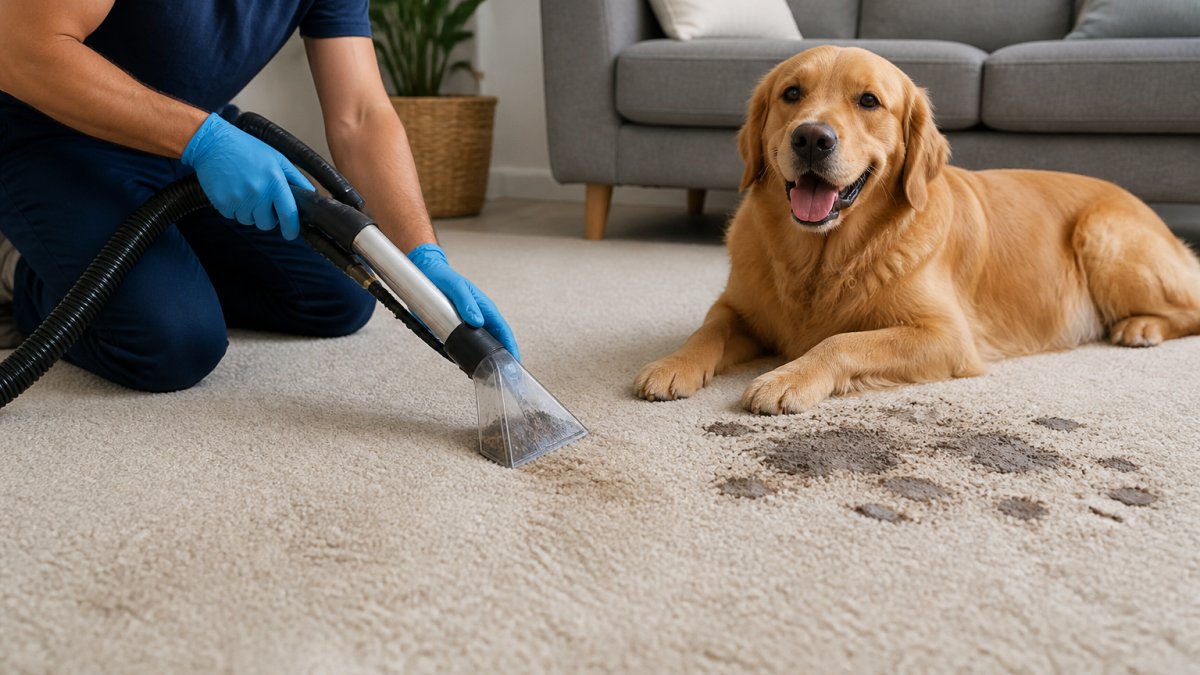
Some pet stains resist home treatment, especially old stains that have soaked deep into the carpet padding or concrete subfloor. Professional pet urine removal uses specialized equipment and techniques that penetrate beyond what consumer products can achieve.
Managing Pet Odors and Dander Accumulation
Odor prevention is easier than odor removal. The key is preventing odor-causing bacteria from establishing themselves in the first place. This requires addressing both the source of the odor and the environment where bacteria thrive.
Preventative Maintenance to Extend Carpet Longevity
Your carpet investment lasts longer when you prevent damage rather than trying to restore it after the fact. Preventative maintenance for pet owners includes both behavioral strategies and physical barriers.
Protecting Delicate Carpets and Upholstery
Not all carpets are created equal. Delicate natural fiber carpets, wool, silk, or specialty blends, require different cleaning approaches than durable synthetic fibers. Pet ownership and delicate carpets are a challenging combination, but it's manageable with the right precautions.
Frequently Asked Questions
How often should pet owners have their carpets professionally cleaned?
Most pet owners benefit from professional carpet cleaning every 6 to 12 months, depending on the number and type of pets. Households with multiple pets, senior animals, or pets with frequent accidents may need cleaning every 3 to 6 months. Regular professional cleaning removes deep-set pet dander, odor-causing bacteria, and allergens that vacuuming alone cannot extract, maintaining both carpet longevity and indoor air quality.
What are the best pet-safe carpet cleaning solutions?
Pet-safe carpet cleaning solutions include enzyme-based cleaners, which break down organic compounds in pet urine and stains without harsh chemicals. Distilled white vinegar and baking soda are effective natural alternatives for spot cleaning and odor neutralization. When selecting products, verify they are non-toxic and pH-balanced to avoid damaging carpet fibers or harming your pets. Always test any solution on a hidden area first, especially on delicate or synthetic carpet materials.
Can professional carpet cleaners remove pet urine completely?
Professional pet urine removal uses specialized equipment and enzyme-based treatments to break down urine compounds at the source, including carpet padding where odors often linger. Professional cleaners can detect urine with ultraviolet light and treat affected areas thoroughly. However, success depends on the age of the stain and carpet material. Very old or deeply set urine may require multiple treatments. Professional services are significantly more effective than rental machines or store-bought cleaners for stubborn pet urine odors.
How do I remove pet hair and dander from carpets between professional cleanings?
Vacuum at least twice weekly using a high-suction vacuum with a HEPA filter to capture pet dander and allergens. Use a rubber broom or specialized pet hair removal tool for targeted areas. For upholstery and pet bedding, wash these items weekly in hot water to reduce dander accumulation. Lint rollers and rubber gloves can lift hair from carpet surfaces. Regular preventative care significantly reduces the buildup of allergens and extends the time between professional deep cleaning sessions.
Are carpet cleaning chemicals safe for dogs and cats?
Many commercial carpet cleaning solutions contain harsh chemicals that can irritate pets' paws, skin, and respiratory systems. Pet-safe solutions should be non-toxic, free of ammonia and bleach, and pH-balanced for carpet fibers. Always ensure pets stay off cleaned carpets until they are fully dry. If you have concerns about specific products, ask your veterinarian or request that professional cleaners use only certified pet-safe formulations. Enzyme cleaners and natural solutions like vinegar and baking soda are safer alternatives for households with sensitive pets.
What's the difference between spot cleaning and deep cleaning for pet stains?
Spot cleaning addresses fresh stains using blotting techniques and surface-level treatments, ideal for immediate response to accidents. Deep cleaning, performed by professionals using carpet extraction equipment, reaches carpet padding and subfloor areas where old stains and odors hide. While spot cleaning prevents stains from setting, deep cleaning is necessary for stubborn or recurring odors. Most pet owners benefit from combining regular spot cleaning with professional deep cleaning every 6 to 12 months for optimal results.
How do I know if my carpet can handle professional steam cleaning?
Check your carpet's care label for manufacturer recommendations regarding water-based cleaning. Most synthetic fibers and wool carpets tolerate professional steam cleaning when performed by certified technicians. Delicate natural fibers, antique rugs, or carpets with specific dye treatments may require gentler methods. Always inform professional cleaners about your carpet material and any previous damage. Testing a small, hidden area first helps confirm compatibility before treating the entire carpet, especially for valuable or specialty carpets.