 blog
blog
Best Upholstery Cleaning for Pet Owners: 2026 Guide
Table of Contents
- Why Pet Owners Need a Different Approach to Upholstery Cleaning
- Comparison: Best Upholstery Cleaning Methods for Pet Owners
- Best Enzyme Cleaners for Pet Furniture
- Can You Remove Pet Stains From Silk Upholstery?
- Professional Upholstery Cleaning for Pet Odors
- How Often Should Pet Owners Clean Upholstery?
- Fabric Care and Protection: Keeping Furniture Pet-Safe
- Frequently Asked Questions
Last Updated: September 22, 2026
Why Pet Owners Need a Different Approach to Upholstery Cleaning
Pet accidents are not ordinary spills, and treating them like one is the most common mistake we see. Standard surface cleaning removes what you can see while leaving uric acid crystals and proteins deep in the cushion foam, which is why odors return on humid days and why pets keep marking the same spot. This guide from Mighty Clean Services breaks down the best upholstery cleaning for pet owners, covering enzyme treatments, fabric-specific methods, and when to call in professional help.
Comparison: Best Upholstery Cleaning Methods for Pet Owners
The best method depends on what you're removing and how often. Fresh accidents need immediate blotting and an enzyme treatment. Set-in stains and dander require deeper extraction. Here's how the main options compare.
| Method | Best For | Frequency | Pet-Safe? | Residue Risk |
|---|---|---|---|---|
| DIY enzyme spray | Fresh accidents, spot treatment | As needed | Yes, if pH-balanced | Low |
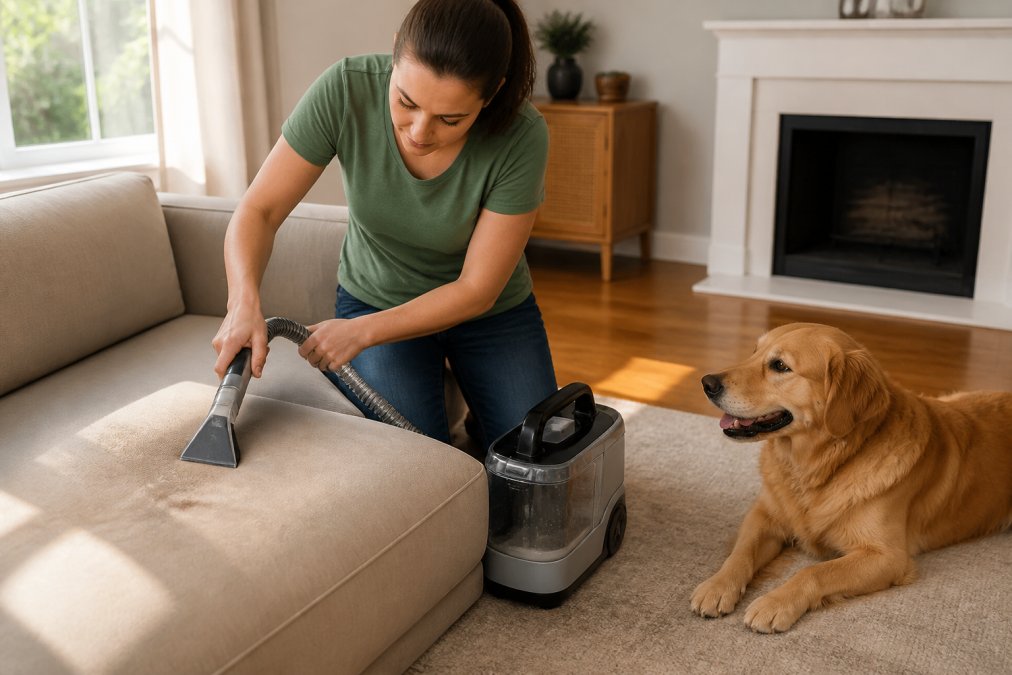
| Portable spot cleaner | Small stains, quick touch-ups | Weekly to monthly | Yes | Low to medium |
| Full hot water extraction | Deep cleaning, dander, odor | Every 3-6 months | Yes, when dry | Medium |
| Professional service | Set-in stains, allergy control | Every 6-12 months | Yes | Lowest |
DIY vs. Professional Upholstery Cleaning
DIY cleaning works well for maintenance and fresh spots. It falls short on two things: extraction depth and drying speed. Rental and consumer machines often leave too much moisture behind, which can wick stains back to the surface within weeks.
Portable Spot Cleaners vs. Full Extraction
Portable spot cleaners handle isolated accidents and daily pet hair removal. They're convenient and low-residue when you follow the dilution instructions.
Best Enzyme Cleaners for Pet Furniture
-
Enzymatic spot treatments: Liquid sprays and foams meant for fresh accidents. Fast-acting, low residue, but they only work where they contact the fiber.
-
Bio-enzymatic saturating treatments: Thinner liquids you pour or inject into cushion foam for set-in stains and recurring odor. These need longer dwell time and often a second application.
-
Enzyme-enhanced extraction solutions: Concentrates added to a portable or truck-mounted machine's water tank. They combine enzyme action with the mechanical lift of extraction.
-
Check the label for "enzyme" or "bio-enzymatic" rather than "odor eliminator," which often just adds fragrance
-
Avoid ammonia and bleach, both of which can set stains and attract pets back
-
Test on a hidden area first, especially on silk, wool, or velvet
-
Reapply for old stains, since dried crystals may need two or three treatments
-
Match the product to the surface, not just the stain, a foam made for carpet can leave rings on tightly woven upholstery
Can You Remove Pet Stains From Silk Upholstery?
Yes, but with major caveats. Silk is a protein fiber, and many enzyme cleaners will damage it because they're designed to break down proteins. Water alone can leave rings and weaken the weave.
The safe approach for silk upholstery:
- Blot fresh accidents immediately with a clean, dry cloth
- Do not rub, which spreads the stain and distorts the weave
- Use a pH-balanced, silk-safe cleaner, or plain distilled water for fresh spots
- Never use enzyme cleaners, ammonia, or bleach on silk
- Call a professional for set-in stains or any piece with sentimental or financial value
Professional Upholstery Cleaning for Pet Odors
EPA guidance on indoor air quality and pet dander points out that pet dander is a common indoor allergen that settles into soft surfaces, which is why upholstery cleaning supports allergy management, not just appearance.
How Often Should Pet Owners Clean Upholstery?
Most pet owners should spot clean as accidents happen and schedule full upholstery cleaning every three to six months. Homes with multiple pets, allergy sufferers, or heavy shedding may need it more often.
A workable maintenance schedule looks like this:
- Daily: Vacuum high-traffic seating to lift pet hair and dander
- Weekly: Check cushions for fresh spots and treat immediately
- Monthly: Deep clean one or two heavily used pieces
- Every 3-6 months: Full upholstery extraction on all soft furniture
- Annually: Professional deep cleaning, plus fabric protection
Fabric Care and Protection: Keeping Furniture Pet-Safe
Most pet cleaning guides stop at "test a hidden spot." That advice is fine as far as it goes, but it doesn't tell you what to actually do once you know the fabric. This section fills that gap with a fabric-by-fabric guide, because the right method for microfiber can ruin velvet, and the right method for leather is wrong for linen.
Microfiber and Synthetic Blends
The most forgiving category for pet owners. Tightly woven polyester and nylon blends resist liquid absorption, so accidents stay on the surface longer. Clean with a pH-balanced enzyme spray, agitate gently with a soft brush, and blot, don't scrub, which pills the fibers. A 1:1 mix of distilled water and white vinegar works for fresh spots, but rinse it out with clean water to avoid leaving an acidic residue.
Cotton and Linen
Durable but prone to water rings. The fix is to clean the entire cushion face evenly rather than spot-treating, which is why a spray-and-blot approach often leaves a visible circle. Use a low-moisture method, a foam cleaner or a barely damp cloth, and dry with a fan. Linen wrinkles and can shrink with heat, so keep the dryer out of the process and never use hot water.
Wool
Wool is a protein fiber, so enzyme cleaners designed to break down proteins can damage it the same way they damage silk. Use a pH-balanced, wool-safe cleaner, keep moisture low, and avoid agitation that causes felting. Blot, don't rub. If the piece is a valuable rug or an heirloom cushion, treat set-in stains as a professional job.
Silk
Silk is also a protein fiber and the least forgiving upholstery fabric in a pet household. Water alone can leave rings and weaken the weave. For fresh accidents, blot immediately with a clean dry cloth and use only distilled water or a silk-safe cleaner. Never use enzyme cleaners, ammonia, or bleach. For set-in stains, vintage pieces, hand-dyed fabrics, or anything labeled "dry clean only," call a professional, the cost of a ruined silk cushion far exceeds the cost of a service call.
Velvet and Velour
Velvet's pile traps pet hair and shows every brush stroke. Vacuum with a soft upholstery attachment in one direction, then use a dry foam cleaner or a very lightly dampened cloth. Never saturate velvet, moisture crushes the pile and leaves permanent marks. Steam can help lift dander and refresh the nap, but keep the head moving and don't let the fabric get wet to the touch.
Leather and Faux Leather
Leather is not a fabric, and it should never be treated like one. Water-based enzyme sprays can dry out and crack the finish. Wipe fresh accidents immediately with a damp cloth, then follow with a leather conditioner made for upholstery. Avoid alcohol, ammonia, and abrasive cleaners. For set-in stains or dye transfer, use a leather-specific cleaner and test on the underside of a cushion first.
Protection Strategies That Actually Work
Protection is cheaper than restoration. After cleaning, apply a fabric protector designed for upholstery. It creates a barrier that buys you time to blot accidents before they soak in. Reapply according to the label, typically every few months on high-traffic pieces.
Beyond products, a few habits extend furniture life:
- Wash removable cushion covers on the label's schedule, and air-dry them to avoid shrinkage
- Keep pet nails trimmed to reduce snags, especially on velvet and woven fabrics
- Place washable throws on the pet's favorite spots, the cheapest protection you can buy
- Address accidents within minutes, since the first hour determines whether a stain sets
- Rotate cushions so wear and dander buildup distribute evenly
Frequently Asked Questions
How do you get pet urine out of upholstery?
Act quickly by blotting the area with a clean cloth to absorb as much liquid as possible. Apply an enzyme-based cleaner designed for pet accidents, which breaks down uric acid crystals that cause lingering odors. Let it sit for 10-15 minutes, then blot again with a damp cloth. For deeper saturation, a portable spot cleaner or professional upholstery extraction may be needed to flush the padding underneath.
Are enzyme cleaners safe for all upholstery fabrics?
Enzyme cleaners are generally safe for most synthetic and natural fabrics, but always test a hidden area first. Silk, wool, and some delicate blends can react poorly to moisture and certain enzymes. Check the manufacturer's care code and consider a pH-balanced, pet-safe product. For silk or vintage upholstery, professional cleaning is the safest route to avoid discoloration or fiber damage.
How often should pet owners have upholstery professionally cleaned?
Most pet owners should schedule professional upholstery cleaning every 6 to 12 months, depending on shedding, accidents, and allergy concerns. Homes with multiple pets, senior dogs, or family members with dander allergies may benefit from cleaning every 4 to 6 months. Regular vacuuming and spot treatment between visits extend the results and help maintain indoor air quality.
Is professional upholstery cleaning safe for pets?
Yes, when done by a certified technician using pet-safe, low-residue products. Professional services like Mighty Clean Services use ammonia-free and bleach-free solutions that are safe once dry, usually within a few hours. Ask about drying time and product ingredients before booking, and keep pets off treated furniture until it is fully dry to avoid irritation.