 blog
blog
Residential Upholstery Cleaning Services in Harrisburg, PA
Table of Contents
- What Residential Upholstery Cleaning Services in Harrisburg Include
- How to Remove Pet Stains from Silk Upholstery
- Upholstery Cleaning Cost Estimate: What Affects the Price
- How Long Does Upholstery Take to Dry After Cleaning?
- DIY vs. Professional Upholstery Cleaning: A Cost-Benefit Analysis
- Health Benefits: Allergen Reduction and Indoor Air Quality
- Fabric-Specific Care: Matching the Method to the Material
- Frequently Asked Questions
Last Updated: September 10, 2026
What Residential Upholstery Cleaning Services in Harrisburg Include
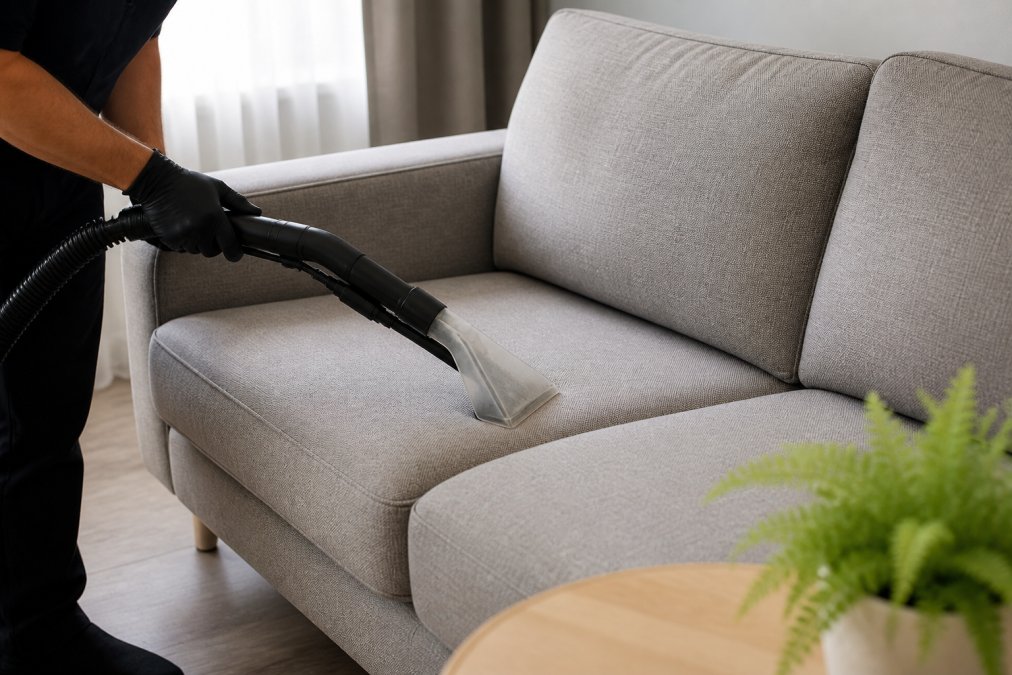
Residential upholstery cleaning is the professional process of extracting embedded soil, allergens, and stains from sofas, chairs, and other fabric furniture using commercial-grade equipment and pH-balanced solutions. Every job starts with a pre-inspection because the fabric decides the method, not the other way around.
Pre-Inspection and Fabric Testing
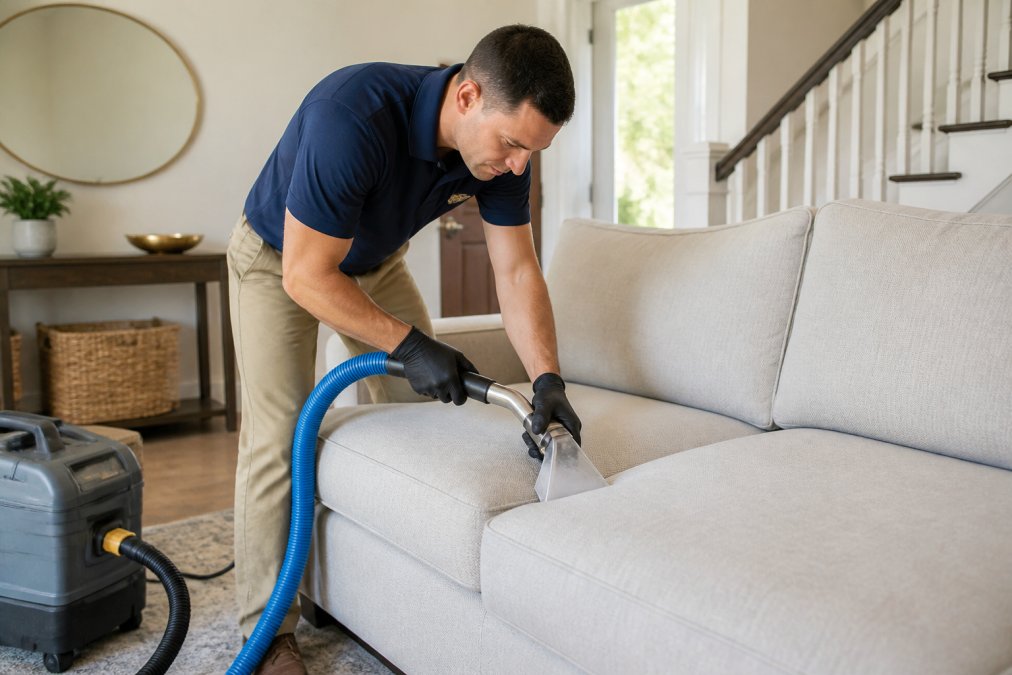
Technicians identify the fiber type, check for colorfastness, and test a hidden area before any solution touches the visible surface. This step catches delicate fabrics, failing linings, and problem dyes before they become a claim. Skipping it is how furniture gets ruined.
Deep Cleaning Methods and Equipment
Most residential upholstery cleaning relies on hot water extraction, often called steam cleaning, which flushes soil out of the fiber and pulls it away with strong suction. Delicate fabrics may need low-moisture or dry methods instead. A common mistake is treating every couch the same way.
How to Remove Pet Stains from Silk Upholstery
Silk is one of the few fabrics you should almost never clean yourself. The fiber is protein-based, water-sensitive, and prone to water rings and discoloration, so blotting with a damp cloth can set a stain permanently.
For pet accidents on silk, follow this sequence:
- Blot fresh liquid with a clean white towel, pressing rather than rubbing
- Lift solids with a dull spoon, working from the edge inward
- Do not apply grocery-store enzyme cleaners, which can strip silk dyes
- Call a professional for pet odor elimination and stain removal
Professionals use pH-balanced cleaners and controlled extraction to treat silk without altering its finish.
Upholstery Cleaning Cost Estimate: What Affects the Price
An upholstery cleaning cost estimate is built from four inputs: the fabric, the piece count, the soil load, and any add-on treatments. Providers who quote a flat rate over the phone without seeing the furniture are guessing, because two sofas of the same size can require very different labor.
How the Estimate Is Built
Most residential upholstery cleaning is priced per piece or as a package for a matching set (for example, a sofa plus loveseat plus chair). The estimate then adjusts for:
| Factor | How It Changes the Estimate | Why It Matters |
|---|---|---|
| Fabric type | Natural fibers like cotton and linen sit at the base rate; silk, velvet, and wool carry a premium | Delicate fibers require lower-moisture methods, slower passes, and longer dry times |
| Piece count | Priced per item, with a discount for matched sets | Sectionals are usually quoted as multiple seating units, not one sofa |
| Soil and stain level | Heavy soiling adds labor for pre-treatment, agitation, and a second extraction pass | Traffic lanes, pet areas, and food spills are the usual culprits |
| Pet treatment | Add-on for odor and dander neutralization | Enzyme treatment and sub-surface flushing take extra time |
| Fabric protection | Optional add-on applied after cleaning | Helps repel future spills but does not replace regular cleaning |
| Accessibility | Stairs, tight hallways, and oversized pieces can add a handling charge | Affects setup and equipment routing |
What a Written Estimate Should Include
A professional estimate should list each piece by name, the method planned for that piece, any add-ons, and the total. It should also state whether the price is a flat rate or an hourly rate with a cap. If a provider will not put the scope in writing after an in-person inspection, treat that as a red flag.
DIY Rental vs. Professional: The Real Cost Comparison
A rental extraction machine from a grocery or hardware store typically runs a daily rate plus the cost of cleaning solution, and the unit is designed for carpets, not upholstery. The wand is too aggressive for most furniture fabrics, and the suction is calibrated for a floor, not a cushion. By the time you add solution, pads, and your own time, the savings over a professional visit shrink quickly, and the risk of over-wetting the backing, which can lead to mildew and odor, goes up.
Questions to Ask Before You Book
- Is the price per piece or per package?
- Does the estimate include pre-treatment and deodorizing, or are those add-ons?
- What method will be used on each piece, and why?
- Is there a satisfaction guarantee, and what does it cover?
- How long is the estimate valid?
Getting these answers in writing before the crew arrives prevents the most common billing disputes.
How Long Does Upholstery Take to Dry After Cleaning?
Most upholstery dries within 4 to 8 hours when technicians use controlled extraction and proper airflow (iicrc.org). The upholstery drying process depends on fabric, humidity, and ventilation, not just the cleaning method.
You can shorten dry time by running fans, opening windows, and avoiding heavy use of the furniture until it feels dry to the touch. In humid conditions, expect closer to 12 hours. If a provider leaves your couch soaked for two days, they used too much water.
DIY vs. Professional Upholstery Cleaning: A Cost-Benefit Analysis
Rental machines and store-bought spot treatments handle light surface soil, but they rarely reach the backing where dust mites, dander, and deep grime collect. That is why stains often return within months of a DIY attempt.
Professional cleaning wins on three fronts:
- Commercial-grade equipment extracts soil a rental unit cannot reach
- Trained technicians match the method to the fiber, protecting delicate fabric
- Deep cleaning addresses allergens and odor at the source, not the surface
For a single light spill, DIY is fine. For high-traffic areas, pet owners, and allergy sufferers, professional service pays for itself in furniture longevity.
Health Benefits: Allergen Reduction and Indoor Air Quality
Upholstered furniture traps dust mites, pet dander, pollen, and other allergens that recirculate every time someone sits down. Professional extraction removes these particles along with the soil holding them in place.
According to the American Lung Association guidance on indoor air quality, reducing indoor allergens supports better respiratory health, especially for children and people with asthma. Regular upholstery sanitization and dust mite removal make a measurable difference in homes with pets or allergy sufferers.
Fabric-Specific Care: Matching the Method to the Material
Most upholstery cleaning pages list fabric types without explaining what actually goes wrong when the wrong method is used. This section covers the mechanism, the risk, and the correct approach for each major category, the fabric-specific guide competitors skip.
Cotton and Linen
These plant-based fibers absorb water readily, which is why hot water extraction works well on them. The risk is shrinkage: cotton and linen can contract when soaked and dried unevenly, and the weave can distort if the fabric is agitated while wet. Correct approach: controlled extraction with even passes, low-moisture pre-treatment, and airflow to dry the piece uniformly. Watch for loose weaves and unlined slipcovers, which can shrink more than the frame.
Silk
Silk is a protein fiber and is water-sensitive. Water alone can leave rings, and alkaline cleaners can strip dyes. The mechanism is simple: silk fibers swell and distort when wet, and the dye bond is fragile. Correct approach: low-moisture, pH-balanced treatment, minimal agitation, and no soaking. Never use grocery-store enzyme cleaners on silk, they are often alkaline and can permanently alter the color.
Wool
Wool is also a protein fiber, but it is more resilient than silk. The risks are heat and agitation: hot water and aggressive brushing cause felting, where the scales on the fiber lock together and the fabric shrinks permanently. Correct approach: gentle, controlled methods with moderate temperatures and minimal mechanical action. Wool blends behave differently from 100% wool, so pre-inspection matters.
Leather
Leather is not a fabric and should never be cleaned with water-based upholstery methods. Water strips the natural oils that keep leather supple, leading to cracking and fading. Correct approach: dry soil removal followed by a pH-balanced leather cleaner and a conditioning step to restore oils. Finished and aniline leathers require different products, so the label and a hidden test area matter.
Microfiber and Synthetics
Polyester, nylon, and microfiber are durable and forgiving. They respond well to hot water extraction and tolerate mild agitation. The main risk is over-wetting, which can leave the backing damp and encourage odor. Correct approach: standard extraction with good airflow, and a fabric protector if the piece gets heavy use.
Velvet and Chenille
These pile fabrics show every mark and can crush or bruise if handled wrong. Water can leave pile distortion, and brushing the wrong direction creates permanent shading. Correct approach: low-moisture cleaning with a soft brush, working with the nap, and drying without weight on the pile.
Why Pre-Inspection Comes First
Fiber content, dye stability, backing material, and prior treatments all affect the method. A technician who skips the hidden-area test is guessing. The pre-inspection is what separates a fabric-specific clean from a one-size-fits-all job.
Frequently Asked Questions
How much does a professional upholstery cleaning cost in Harrisburg?
Pricing for residential upholstery cleaning services in Harrisburg depends on the number of pieces, fabric type, stain severity, and whether you need pet odor elimination or allergen reduction. Most providers charge per piece or per room, with add-ons for stain removal and fabric protection. Request a professional estimate from Mighty Clean Services for current pricing based on your specific furniture and cleaning needs.
Can professional cleaners remove pet stains from silk upholstery?
Yes, but silk requires careful handling. Professional technicians use pH-balanced cleaners and low-moisture methods to lift pet stains without damaging delicate fibers. For how to remove pet stains from silk upholstery, the key is acting quickly and avoiding DIY solutions that can set the stain or cause discoloration. A pre-inspection helps determine the safest approach for your silk pieces.
How long does upholstery take to dry after cleaning?
Most upholstery dries within 4 to 8 hours when using hot water extraction and proper air circulation. Humidity, fabric thickness, and ventilation affect dry time. Leather conditioning may extend the process slightly. To speed drying, run fans or a dehumidifier and avoid sitting on the furniture until fully dry. Professional technicians can advise on the expected upholstery drying process for your specific fabric.
What is included in a standard residential upholstery cleaning service?
A standard service typically includes pre-inspection, fabric testing, soil extraction, spot treatment, upholstery deodorizing, and fabric protection. Some providers also offer upholstery sanitization and allergen reduction treatments. For high-traffic areas and pet owners, additional stain removal or pet odor elimination may be recommended. Always confirm what is included before booking to avoid surprises.
Upholstery that looks clean on the surface can still hold years of embedded soil and allergens. Mighty Clean Services has specialized in professional carpet and upholstery care since 2005, with IJCSA-certified technicians and state-of-the-art equipment for every fabric type. From stain removal to allergen reduction, our team delivers customer-focused service from start to finish. Get started with Mighty Clean Services and book an appointment for a healthier, fresher home.