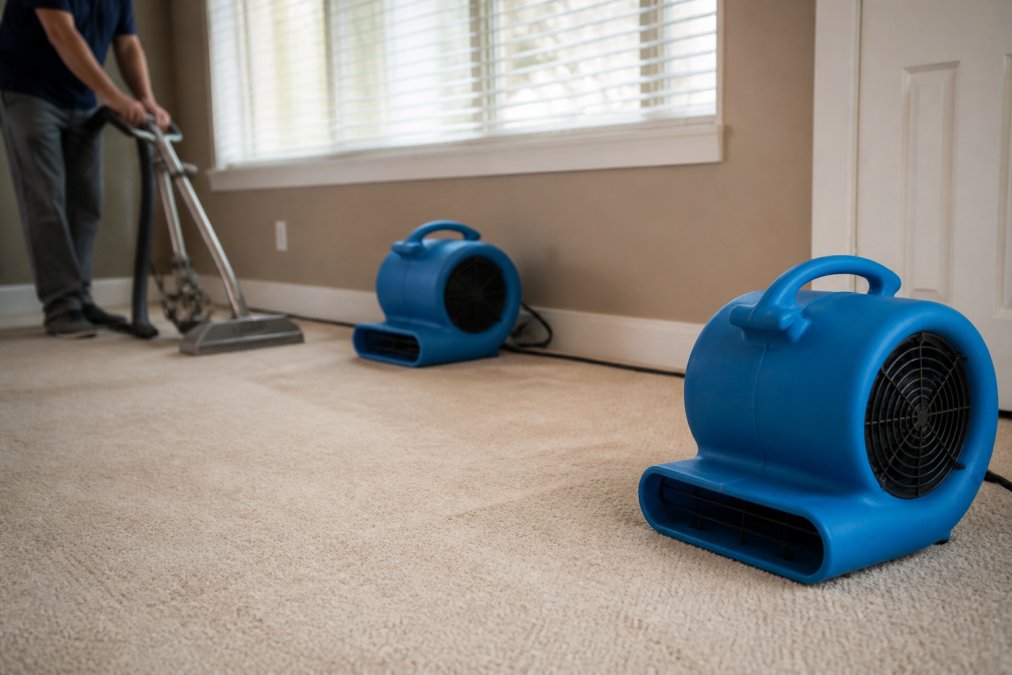
 ultimate-guide
Carpet Cleaning Drying Time Expectations: What to Know
Table of Contents
- How Long Professional Carpet Cleaning Drying Time Expectations Really Are
- Carpet Cleaning Drying Time Factors That Change Everything
- Hot Water Extraction vs Dry Cleaning: Drying Time Differences
- Tips to Speed Up Carpet Drying After a Deep Clean
- Walking on Wet Carpet After Cleaning: What Is Safe and When
- Risks of Leaving Carpet Wet Too Long: Mold, Mildew, and Pad Damage
- Conclusion
- Frequently Asked Questions
Last Updated: September 17, 2026
How Long Professional Carpet Cleaning Drying Time Expectations Really Are
Professional carpet cleaning drying time expectations typically land between 6 and 12 hours under good conditions, but that window stretches to 24 hours or more when humidity is high or airflow is poor. This guide from Mighty Clean Services breaks down what actually controls drying speed, so you can plan around your carpet cleaning drying rather than guess at it.
Here's the part most people get wrong: the clock doesn't start when the technician packs up. It starts when moisture extraction ends, and everything that happens in your home after that either shortens or stretches the timeline.
Typical Drying Windows by Method
| Method | Typical Drying Window | Why |
|---|---|---|
| Hot water extraction | 6-12 hours | Powerful moisture extraction, but leaves carpet backing and pad damp |
| Dry cleaning (low-moisture) | 1-4 hours | Minimal water used, surface-focused |
| Encapsulation cleaning | 2-6 hours | Polymer residue crystallizes and vacuums away later |
Hot water extraction, often called steam cleaning, is the most thorough deep cleaning method, and it's also the slowest to dry. Low-moisture methods trade some cleaning depth for speed.
Carpet Cleaning Drying Time Factors That Change Everything
Five variables decide whether your carpet is dry by dinner or still damp tomorrow morning: fiber type, pile depth, pad saturation, ambient conditions, and airflow. Each one compounds the others, which is why two identical rooms cleaned the same day can dry hours apart.
Fiber Type, Pile, and Pad Saturation
Fiber chemistry sets the floor for drying time. Synthetic fibers like nylon, polyester, and olefin (polypropylene) are hydrophobic by design: they absorb very little water into the fiber itself, so most of the moisture sits between fibers and on the backing, where airflow can reach it. That is why a nylon or polyester carpet cleaned with hot water extraction commonly dries in the 6-12 hour range under good conditions.
Natural fibers behave differently.
Humidity, Temperature, and Airflow in the Room
High relative humidity slows evaporation because the air is already close to holding its capacity for water vapor, so moisture leaving the carpet has nowhere to go. As a rule of thumb, drying slows noticeably once indoor relative humidity climbs past roughly 60 percent, and it stalls in the 70s and above. Warm ambient temperature speeds evaporation by giving water molecules more energy to leave the fiber, but temperature alone rarely beats airflow.
Hot Water Extraction vs Dry Cleaning: Drying Time Differences
Hot water extraction injects heated water and cleaning solution deep into carpet fibers, then extracts it with powerful vacuum suction. Even with professional equipment pulling most of the moisture out, the carpet backing and padding retain enough water to need 6-12 hours of drying.
Tips to Speed Up Carpet Drying After a Deep Clean
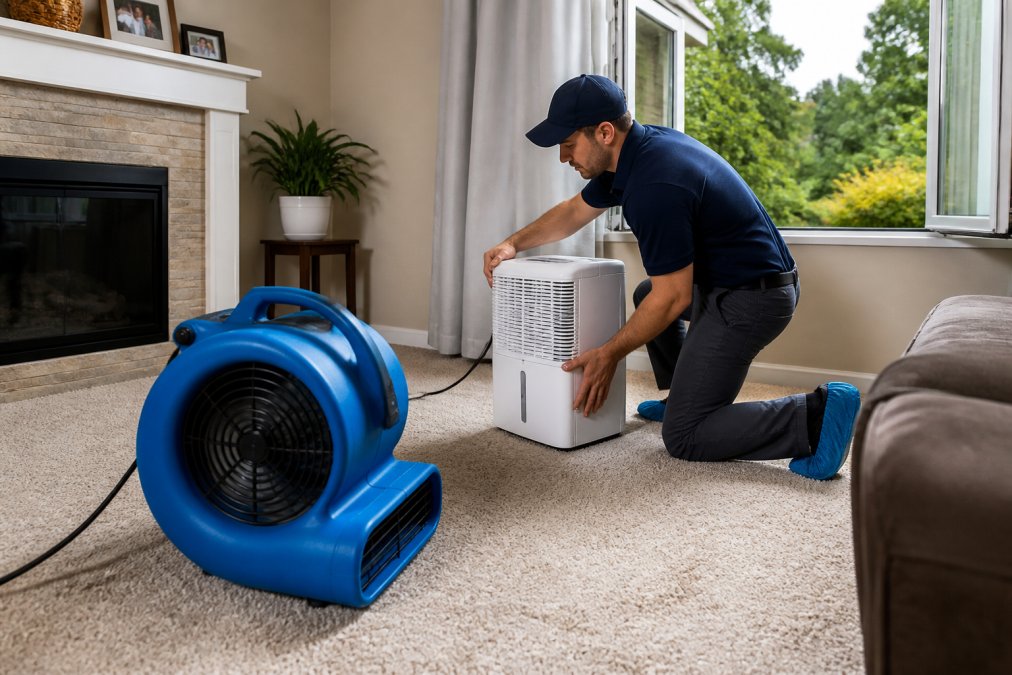
- Turn on ceiling fans and place box fans angled across the carpet surface for maximum air circulation.
- Run a dehumidifier to pull moisture out of the air, especially in humid climates or after rain.
- Lower the thermostat a few degrees, or run the HVAC system on fan-only mode to keep air moving.
- Open windows only if outdoor humidity is low. In muggy conditions, closed windows plus a dehumidifier wins.
- Blot any visible dampness with clean white towels, then let airflow do the rest.
- Keep foot traffic off the carpet until it's thoroughly dry to avoid crushing damp fibers.
Walking on Wet Carpet After Cleaning: What Is Safe and When
Light foot traffic on damp carpet is generally safe after a few hours, but shoes off and socks on is the rule. Walking on wet carpet with street shoes grinds dirt back into damp fibers and can transfer moisture to adjacent flooring.
Risks of Leaving Carpet Wet Too Long: Mold, Mildew, and Pad Damage
Most guides treat a damp carpet as an inconvenience. It is closer to a clock. Mold and mildew need three things to grow: moisture, warmth, and an organic food source. A damp carpet pad supplies all three, and the window before growth becomes likely is shorter than most homeowners assume.
The 24-48 Hour Window
A common industry rule of thumb is that carpet and pad should be dry within 24 to 48 hours of cleaning. Past that window, the risk of mold and mildew growth rises sharply, especially in warm rooms and humid climates. The first sign is usually smell, not sight: a musty, earthy odor that lingers after the carpet feels dry on top.
Pad Saturation: The Hidden Problem
The carpet surface can read dry while the pad underneath stays wet for days. This is the mechanism behind most recurring odors and most "we just cleaned it and it still smells" complaints. A saturated pad loses its resilience, can delaminate from the carpet backing, and shortens the carpet's usable life. It also keeps feeding moisture upward through the backing, which is why wicking stains reappear and why the smell returns after a surface clean.
A Mold-Mitigation Checklist for the First 48 Hours
If your carpet is still damp after a professional cleaning, work through this in order:
- Measure, don't guess. Check the carpet at several spots with a moisture meter or the paper-towel press test. Note where it is wettest; those are the spots that need the most airflow.
- Get air moving immediately. Box fans angled across the surface, plus ceiling fans, plus the HVAC fan set to on (not auto) to keep air circulating through the whole room.
- Pull moisture out of the air. Run a dehumidifier and empty it regularly. In humid conditions, keep windows closed so you are not pulling damp outdoor air in.
- Lift and separate. Raise furniture legs onto foil or plastic blocks, and lift area rugs or mats so air can reach the backing and pad edges.
- Recheck at 24 hours. If the carpet still reads damp at 24 hours, escalate: more airflow, a second dehumidifier, or a call to a water-damage restoration professional with commercial drying equipment.
- Do not mask the smell. Air fresheners and sprays hide the symptom. A musty odor after 48 hours means moisture is still present somewhere, usually the pad or subfloor.
- Know when to replace. If the pad has been saturated for days and shows delamination or a persistent odor, replacement is often faster and cheaper than repeated cleaning attempts.
When to Call a Professional
Surface drying handles surface moisture. It does not handle a saturated pad, a wet subfloor, or mold that has already started. If the carpet stays damp past 24 hours despite fans and a dehumidifier, or if a musty odor develops, professional restoration with commercial-grade drying equipment is the right next step. Mighty Clean Services, certified in water damage restoration, can assess whether moisture has reached the pad or subfloor and recommend drying versus replacement.
Conclusion
Drying time isn't just a scheduling inconvenience, it's the difference between a carpet that stays fresh and one that develops mold, odors, and pad damage within days. Mighty Clean Services has handled residential and commercial carpet care since 2005, and our IJCSA-certified team uses professional-grade extraction equipment to pull maximum moisture out before we leave. If you want your carpet cleaned thoroughly and dried properly, book an appointment with Mighty Clean Services and get back to a clean, dry, healthy home faster.
Frequently Asked Questions
How long does it take professionally cleaned carpet to dry?
Most professional carpet cleaning drying time expectations land between 6 and 12 hours when humidity is moderate and airflow is good. Hot water extraction leaves more moisture than low-moisture methods, so carpet can stay damp longer in muggy conditions. Thick plush carpet with a dense pad may need up to 24 hours. Running ceiling fans, opening windows, or using a dehumidifier typically brings drying back toward the 6-hour end.
What factors influence carpet cleaning drying time factors the most?
The biggest carpet cleaning drying time factors are fiber type, pile height, and how saturated the pad became during cleaning. Relative humidity and ambient temperature matter just as much: a 70°F room with 40% humidity dries far faster than a damp 60°F room at 70% humidity. Airflow from ceiling fans, HVAC, or open windows, plus the cleaning method used, all shift the final number by hours.
Is it safe to walk on wet carpet after cleaning?
Light, barefoot or sock-footed traffic is usually fine right after cleaning, but avoid heavy foot traffic, pets, and shoes until the carpet is thoroughly dry. Walking on damp carpet pushes moisture deeper into the pad and backing, which slows evaporation and can cause wicking, where dirt rises back to the surface. If you must cross the room, lay down clean towels or walk in socks and keep it brief.
How can I speed up the drying process after a professional cleaning?
Run ceiling fans and a dehumidifier, open windows if outdoor humidity is low, and keep the HVAC system circulating air. Turn on exhaust fans in nearby bathrooms and kitchens. Blot any visible dampness with clean towels and avoid walking on the carpet until it is dry. These tips to speed up carpet drying can cut drying time by several hours and lower the risk of mold growth or mildew in the pad.