 ultimate-guide
Carpet Cleaning for Pet Allergies: A Complete Guide
Table of Contents
- How Pet Dander and Allergens Embed in Carpet Fibers
- Is Professional Carpet Cleaning Safe for Pets
- How to Remove Pet Dander from Carpet: Methods That Work
- Carpet Cleaning Frequency for Allergy Management
- Vacuuming vs. Professional Deep Cleaning for Allergen Control
- Maintaining Indoor Air Quality Between Professional Cleanings
- Treating Pet Urine Odors and Stains to Eliminate Allergen Sources
- Frequently Asked Questions
Last Updated: September 3, 2026
How Pet Dander and Allergens Embed in Carpet Fibers
Pet dander doesn't just sit on top of your carpet. It works its way deep into the fibers, settling between strands and binding to dust mites that have already colonized the material. When your pet moves across a room, they're not just leaving visible hair, they're depositing microscopic particles that trigger respiratory reactions in people with allergies.
The problem compounds over time. Carpet fibers naturally trap allergen matter because of their texture and density. A single carpet can harbor months' worth of accumulated pet dander, dead skin cells, and biological contaminants that vacuuming alone cannot reach. The deeper the carpet pile, the more protected these particles become from surface cleaning.
Embedded dirt and pet hair create an environment where dust mites thrive. These microscopic creatures feed on dander and multiply rapidly in undisturbed carpet layers. For someone with pet allergies, this isn't just a cleanliness issue, it's a health issue that worsens the longer allergens remain trapped in the fibers.
Understanding how allergens embed in carpet is the first step toward effective removal. Standard vacuuming might remove surface debris, but it leaves behind the particles that actually trigger allergic reactions. This is why carpet cleaning for pet allergies requires methods that reach below the surface.
Is Professional Carpet Cleaning Safe for Pets
Professional carpet cleaning is generally safe for pets when performed by trained technicians using appropriate methods and products. The key concern isn't the cleaning process itself, it's ensuring the right approach for your specific situation.
Most professional cleaning methods use water-based extraction systems that don't leave behind toxic residues. The chemicals used in legitimate carpet cleaning are designed to break down dirt and allergens without harming pets or their owners. However, not all cleaning solutions are created equal, and some providers use harsher formulations than necessary.
The real safety consideration involves timing and preparation. Your pets need to stay away from treated carpets during the cleaning process and while surfaces are drying. This typically means keeping them in another room or area of your home for several hours. Once carpets are fully dry, usually within 24 hours with professional equipment, the space is safe for pets to return.
Mighty Clean Services uses certified cleaning products and state-of-the-art equipment specifically selected to be safe for households with pets. Our team understands the unique challenges of cleaning homes where animals live, and we take precautions to ensure the process doesn't introduce new irritants or leave harmful residues behind.
One common concern is whether cleaning products themselves might trigger allergies. The answer depends on the products used. Some commercial cleaners contain fragrances or chemicals that can irritate sensitive airways. Professional services that specialize in allergen removal typically use hypoallergenic or fragrance-free formulations designed specifically for homes with allergy sufferers.
How to Remove Pet Dander from Carpet: Methods That Work
Hot Water Extraction and Deep Cleaning
Hot water extraction is the most effective method for removing embedded pet dander and allergen matter from carpet fibers. This process forces heated water mixed with cleaning solution deep into the carpet, breaking down biological contaminants and lifting them out through powerful suction.
The extraction process works because heat helps dissolve the compounds that bind allergens to carpet fibers. The combination of temperature, moisture, and mechanical action penetrates below the surface where regular vacuuming cannot reach. When done correctly, hot water extraction can remove up to 95% of surface allergens and a significant portion of embedded particles (peer-reviewed research).
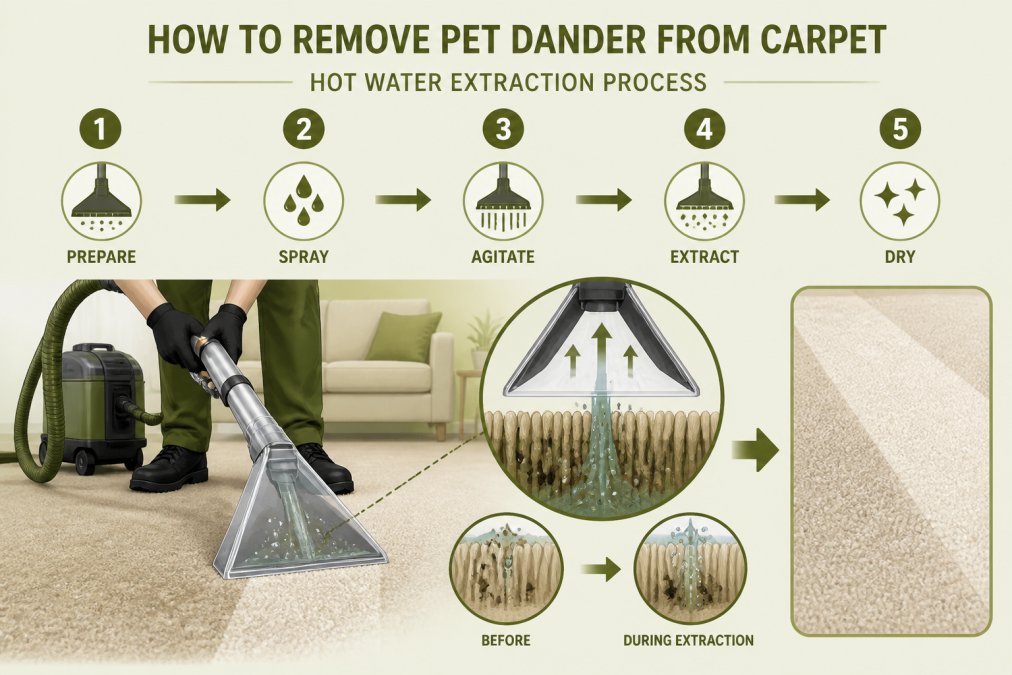
The process typically involves three stages. First, technicians pre-treat the carpet with cleaning solution to break down dirt and allergen matter. Then they apply hot water under pressure to force the solution deep into fibers. Finally, powerful extraction equipment pulls out the water along with the dissolved contaminants.
Pre-treatment is crucial for pet allergen removal. Many professional services skip this step or rush through it, which reduces effectiveness significantly. Allowing the pre-treatment solution to sit for 10-15 minutes before extraction gives it time to break down embedded dander and biological residues. This extra step is what separates adequate cleaning from thorough allergen removal.
The temperature of the water matters. Most professional equipment heats water to 200-210°F, which is hot enough to break down allergens without damaging carpet fibers (the CDC). Some lower-quality rental machines or less experienced providers use cooler water, which reduces effectiveness for allergen removal specifically.
HEPA Filtration and Pre-Treatment Approaches
HEPA filtration captures microscopic particles that other vacuuming methods miss. When used in conjunction with professional extraction, HEPA filters ensure that airborne particles released during cleaning don't simply circulate back into your home's air.
Professional equipment with HEPA filtration traps particles as small as 0.3 microns, small enough to catch most allergen matter and dust mite waste. This is particularly important in homes where someone has severe allergies, as the cleaning process itself can temporarily release particles into the air that need to be captured rather than inhaled.
Pre-treatment solutions work by chemically breaking down the bonds between allergens and carpet fibers. Not all pre-treatments are equal. Some are designed primarily for stain removal, while others specifically target allergen matter and biological contaminants. For pet allergy sufferers, pre-treatments formulated to address pet-related allergens are more effective than general-purpose solutions.
The timing of pre-treatment affects results. Applying solution and immediately extracting means the chemicals have minimal time to work. Professional services that allow dwell time, letting the solution sit on the carpet for several minutes, achieve better allergen removal. This is especially true for heavily soiled carpets or homes with multiple pets.
Some advanced pre-treatment approaches use enzymatic cleaners that break down organic matter at a molecular level. These are particularly effective for pet-related allergens because they target the biological components of dander and pet urine residue. Standard chemical cleaners work differently and may not be as effective for this specific application.
Carpet Cleaning Frequency for Allergy Management
Homes with pets and allergy sufferers benefit from more frequent professional cleaning than typical households. The standard recommendation for most homes is annual or biannual cleaning, but pet owners dealing with allergies should consider different schedules based on severity.
For households with one pet and mild allergies, quarterly professional cleaning combined with aggressive home maintenance often provides adequate control. For multiple pets or severe allergies, many people find that cleaning every 4-6 weeks makes a noticeable difference in symptoms.
The relationship between cleaning frequency and symptom relief isn't linear. The first professional cleaning removes the largest accumulation of embedded allergens, providing the most dramatic improvement. Subsequent cleanings maintain that improvement by preventing dangerous buildup.
Between professional cleanings, vacuuming frequency becomes critical. Daily or every-other-day vacuuming with a HEPA-filter vacuum helps prevent allergen reaccumulation. Without this maintenance, allergens build up quickly, and the benefits of professional cleaning diminish within weeks.
Seasonal changes affect cleaning needs. During spring and fall when pets shed more heavily, more frequent cleaning becomes necessary. Winter months often see reduced shedding but increased indoor time for pets, which can offset the benefit.
Vacuuming vs. Professional Deep Cleaning for Allergen Control
Vacuuming and professional cleaning serve different purposes in allergen management. Vacuuming removes surface debris and prevents accumulation, while professional cleaning removes embedded allergens that vacuuming cannot reach.
A standard household vacuum, even a quality upright model, cannot extract allergens from deep within carpet fibers. The suction power is insufficient, and the brush action doesn't penetrate far enough. HEPA-filter vacuums perform better than standard models but still cannot match the capability of professional hot water extraction equipment.
Professional equipment uses water pressure and heat that home vacuums cannot generate. The combination of these factors is what makes professional cleaning effective for allergen removal. Vacuuming alone, no matter how frequently performed, leaves behind 40-60% of embedded allergen matter.
The ideal approach combines both methods. Regular vacuuming prevents new allergens from settling deeply into fibers, while periodic professional cleaning removes what has already embedded. Without professional cleaning, vacuuming alone cannot achieve adequate allergen control for people with serious allergies.
Some people attempt to substitute rental carpet cleaning machines for professional services. These machines are cheaper but significantly less effective. They lack the power, heat control, and suction capability of professional equipment. Rental machines also require extensive drying time, often 48+ hours, compared to 12-24 hours for professional extraction.
The training difference also matters. Professional technicians understand how to adjust equipment for different carpet types, how to identify problem areas requiring extra attention, and how to optimize the cleaning process for allergen removal specifically. Using equipment without this expertise produces mediocre results.
Maintaining Indoor Air Quality Between Professional Cleanings
Carpet cleaning addresses the source of many airborne allergens, but maintaining indoor air quality requires attention to ventilation and filtration between professional services.
Air purifiers with HEPA filters capture airborne pet allergens and dander particles that have become suspended in your home's air. Running an air purifier continuously in bedrooms and living areas where allergies are most bothersome provides measurable symptom relief. The effectiveness depends on the purifier's clean air delivery rate and filter quality.
Humidity control influences allergen behavior. Dust mites and biological contaminants thrive in humid environments. Maintaining indoor humidity between 30-50% makes the environment less favorable for these allergen sources. Dehumidifiers in basements and bathrooms help achieve this balance.
Ventilation matters more than many people realize. Opening windows when weather permits brings in fresh air and dilutes indoor allergen concentrations. This is particularly helpful on days when outdoor pollen counts are low. Mechanical ventilation through HVAC systems should include regular filter changes, at least monthly during pet shedding seasons.
Furniture and upholstery also harbor pet allergens. Professional upholstery cleaning on a schedule similar to carpet cleaning prevents these surfaces from becoming secondary allergen sources. Leather and microfiber furniture can be wiped down regularly, but fabric upholstery requires professional cleaning for effective allergen removal.
Bedding management is critical for bedroom air quality. Washing sheets, pillowcases, and blankets weekly in hot water removes accumulated dander. Using allergen-blocking pillowcase and mattress covers creates a barrier between you and embedded allergens. For people with severe allergies, keeping pets out of bedrooms provides the most effective protection.
Treating Pet Urine Odors and Stains to Eliminate Allergen Sources
Pet urine creates a dual problem: visible stains and embedded biological contaminants that trigger allergies. Standard carpet cleaning often addresses the stain but misses the underlying allergen source.
Urine contains uric acid crystals that bind to carpet fibers and carpet backing. These crystals don't dissolve in water alone, which is why regular cleaning sometimes fails to eliminate odors. Professional treatment requires specialized enzymatic cleaners that break down the chemical compounds in urine.
The location of urine damage affects treatment approach. Surface urine can be treated with enzymatic cleaners applied directly to affected areas. Urine that has soaked through carpet into the padding requires more aggressive intervention. In severe cases, affected padding must be replaced because the allergen-containing material cannot be fully cleaned.
Enzymatic treatments work by introducing bacteria that consume organic matter in urine. This process takes time, typically 24-48 hours for full effectiveness. Rushing the process or applying standard cleaners first can interfere with enzymatic treatment.
Identifying hidden urine spots requires specialized equipment. Ultraviolet light reveals urine damage that isn't visible under normal lighting. Many professional services include this inspection as part of their allergen-focused cleaning process. Treating all affected areas, not just visible stains, is essential for complete allergen removal.
Prevention is more effective than treatment. Training pets to use designated areas and promptly cleaning accidents prevents urine from becoming deeply embedded. For ongoing issues, enzymatic odor eliminators applied regularly help prevent buildup.
Mighty Clean Services uses advanced detection methods to identify all urine-affected areas and applies appropriate enzymatic treatments to eliminate both odors and the allergen sources they represent. This comprehensive approach addresses the root cause rather than just masking symptoms.
Pet allergies don't have to force difficult choices between pet ownership and respiratory health. Professional carpet cleaning for pet allergies removes the embedded allergen matter that triggers symptoms, and regular maintenance prevents dangerous reaccumulation. The most effective approach combines periodic professional deep cleaning with consistent home maintenance and attention to indoor air quality. When you're ready to reclaim your home from pet allergens, Mighty Clean Services offers certified, professional carpet cleaning using state-of-the-art equipment and proven methods specifically designed for allergen removal. Our team has been delivering high-quality results since 2005, and we understand the health impact of pet allergens on families. The International Janitorial Cleaning Association certifies professionals in allergen removal and specialized cleaning techniques, our certification ensures you're working with trained experts. Contact us to schedule your professional carpet cleaning and discover how much your symptoms can improve with thorough allergen removal.
Frequently Asked Questions
Q: Can professional carpet cleaning really help with pet allergies?
A: Yes. Professional carpet cleaning removes embedded pet dander, dust mites, and other allergen matter that vacuuming alone cannot extract. Hot water extraction and HEPA filtration systems capture microscopic particles trapped deep in carpet fibers, significantly reducing airborne allergens. Many pet owners with allergies notice improved respiratory health within days of professional deep cleaning.
Q: How often should carpets be cleaned to minimize pet allergen buildup?
A: Pet owners with allergies should have carpets professionally cleaned every 3 to 6 months, depending on the number of pets and allergy severity. Homes with multiple pets or severe allergies may benefit from quarterly cleaning. Regular vacuuming with HEPA filters between professional cleanings helps control dander accumulation and maintains a healthier indoor air quality.
Q: Is professional carpet cleaning safe for pets?
A: Professional carpet cleaning is safe for pets when performed by certified technicians using pet-safe products and methods. Reputable providers use non-toxic cleaning solutions and ensure thorough rinsing to eliminate residue. Always inform your cleaning service about pets in the home so they can select appropriate products and avoid harsh chemicals that may irritate sensitive animals.
Q: What's the difference between vacuuming and professional deep cleaning for allergen removal?
A: Vacuuming removes surface allergens and loose pet hair, but cannot extract embedded dirt and biological contaminants lodged deep in carpet fibers. Professional deep cleaning uses hot water extraction or specialized pre-treatment methods to break down and remove allergen matter that vacuums cannot reach, providing superior allergen control and longer-lasting results.