 ultimate-guide
Deep Cleaning Carpets for Health: A 2026 Guide
Table of Contents
- How Deep Cleaning Carpets for Health Benefits Your Home
- How Often to Deep Clean Carpets: A Room-by-Room Schedule
- Carpet Cleaning for Allergy Relief: What Actually Works
- Professional Carpet Cleaning vs DIY: Which Protects Your Health?
- Eco-Friendly and Chemical-Safe Cleaning Options
- Extending Carpet Lifespan While Protecting Indoor Air Quality
- Frequently Asked Questions
Last Updated: September 26, 2026
How Deep Cleaning Carpets for Health Benefits Your Home
Deep cleaning carpets for health benefits starts with understanding what regular vacuuming cannot reach. At Mighty Clean Services, we've been dedicated to delivering high-quality results by prioritizing our customers' needs and utilizing state-of-the-art equipment, and the difference between a surface pass and true deep extraction is dramatic. Carpets act as a reservoir, trapping airborne particles that settle out of the air.
What Standard Vacuuming Leaves Behind
A standard vacuum lifts loose debris from the top third of the carpet pile. Below that, fine particulate matter, dust mite waste, and sticky residue from cooking and traffic stay locked in the backing. Over time, that layer compacts into a dense mat that no household vacuum can lift. The EPA guide to indoor air quality and carpet notes that carpets can accumulate significant biological and chemical pollutants over their lifetime.
The Health Impact of Trapped Pollutants
Trapped pollutants do not stay trapped. Humidity, foot traffic, and temperature swings stir them into the air you breathe. For households dealing with asthma triggers or seasonal allergy symptoms, that constant low-level release matters more than any single dusting session. Deep extraction removes the source rather than redistributing it.
How Often to Deep Clean Carpets: A Room-by-Room Schedule
Most homes need professional deep cleaning every 12 to 18 months, but that number shifts based on who lives there, how each room gets used, and what the occupants are sensitive to. The schedule below reflects common industry recommendations, and it's a framework for homeowners who want a defensible plan rather than a guess.
| Room | Household Type | Frequency | Why |
|---|---|---|---|
| Living room | Standard family | Every 12 months | Highest foot traffic and dust load |
| Bedrooms | Allergy sufferers | Every 6 months | Dust mites concentrate near sleeping areas |
| Entryways | Any household | Every 6-9 months | Outdoor soil tracked in daily |
| Pet areas | Pet owners | Every 4-6 months | Dander and odor embed quickly |
| Rental units | Turnover properties | Between tenants | Hygiene standards and liability |
Households with Pets or Allergies
Pet dander and dust mites are the two allergens most likely to drive a faster cleaning cycle. If someone in the home has diagnosed allergies or asthma, a six-month interval is a reasonable starting point. A common mistake is waiting for visible soiling before booking. By then, allergen levels have been elevated for months.
Tailored Schedules for Infants, Elderly, and Immunocompromised Households
Most cleaning guides stop at "every 6 to 12 months" and leave it there. That advice breaks down in homes where the occupants are more vulnerable to what's in the carpet. The mechanism is straightforward: carpet acts as a reservoir, and the smaller the body, the closer the breathing zone sits to the pile. A crawling infant inhales at roughly the height where dust mite allergen, pet dander, and tracked-in particulate concentrate.
For these households, a tighter cadence is worth considering:
- Homes with infants or toddlers: Deep clean every 4 to 6 months, and prioritize the nursery, play areas, and any room where the child spends floor time. Between professional visits, vacuum with a HEPA-filter unit two to three times weekly.
- Homes with elderly residents: Every 6 months in bedrooms and main living areas. Pay attention to mobility aids, walkers and wheelchairs grind soil deeper into the pile and compress the backing faster than foot traffic alone.
- Immunocompromised occupants: Every 3 to 4 months in the rooms they use most, with a focus on moisture control. Damp padding is where mildew and bacteria establish, and that risk matters more when the immune system can't mount a normal response.
- Multi-pet or multi-occupant homes: Every 4 to 6 months regardless of visible soiling. Dander load scales with the number of animals, not the size of the carpet.
High-Traffic Areas and Rental Properties
Rental properties and high-traffic zones need a different rule. Carpet maintenance in these spaces is about protecting the asset as much as the occupant. Between tenants, deep extraction removes odors, stains, and biological residue that a standard turnover clean leaves behind. Landlords who skip this step often replace carpet years earlier than necessary.
Carpet Cleaning for Allergy Relief: What Actually Works
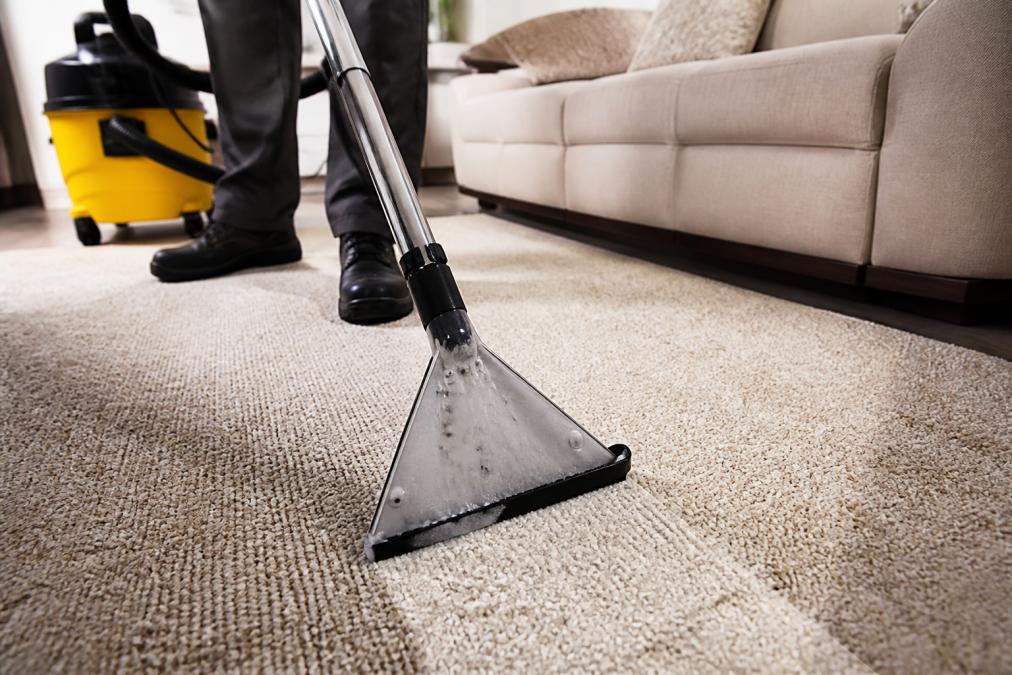
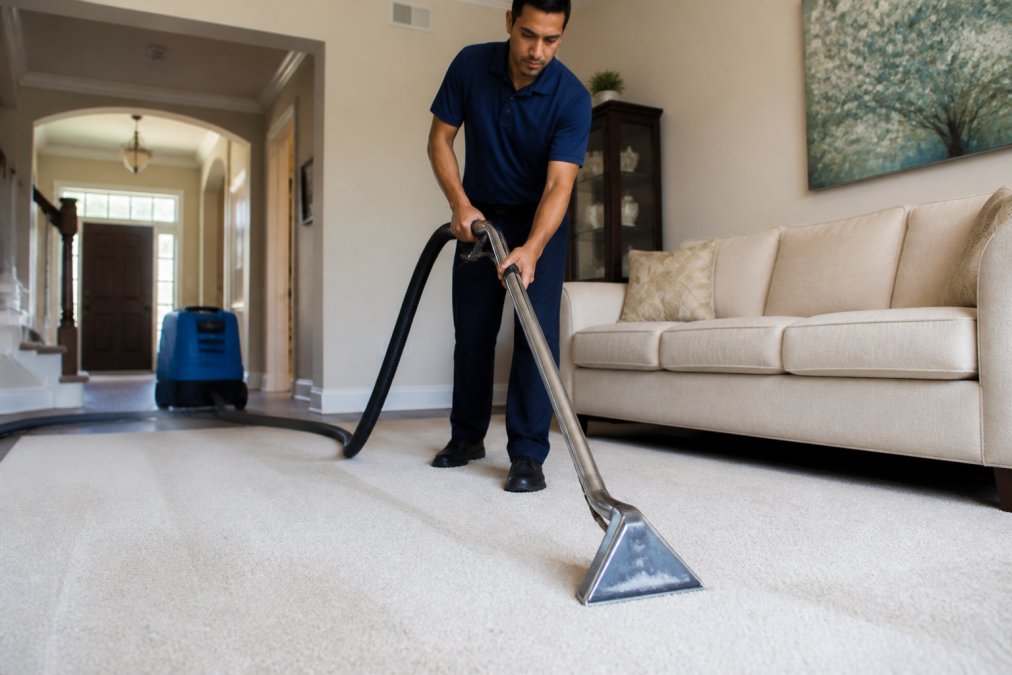
Carpet cleaning for allergy relief works when it removes the allergens themselves, not just the visible dirt. Hot water extraction, sometimes called steam cleaning, uses high-temperature water and strong suction to flush the pile and pull contaminants out. This is a method often recommended by indoor air quality professionals because it reaches the base of the fiber.
- Dust mites and their waste, the most common indoor allergen
- Pet dander that clings to fiber and backing
- Mould spores that colonize damp padding
- Pollen tracked in during high season
- Volatile organic compounds off-gassing from furnishings
Professional Carpet Cleaning vs DIY: Which Protects Your Health?
Professional carpet cleaning vs DIY comes down to three measurable variables: water temperature, extraction lift, and drying time. Those three determine whether allergens are actually removed or just redistributed. The Carpet and Rug Institute's cleaning standards outlines the performance benchmarks professional equipment is tested against, and the gap between consumer and commercial gear shows up most clearly in how each handles those variables.
What the Equipment Actually Does Differently
Water temperature. Dust mites and their allergens are denatured by sustained heat, and professional hot water extraction systems can reach temperatures well above what a rental unit's onboard heater can hold at the nozzle. A consumer machine often loses temperature between the tank and the carpet, so the water arriving at the pile is cooler than the dial suggests.
A Side-by-Side Look at Health Outcomes
| Factor | Rental / Consumer Unit | Professional Truck-Mounted System |
|---|---|---|
| Water temperature at the pile | Drops between tank and nozzle | Sustained high heat |
| Vacuum lift | Lower; leaves more residue | Higher; pulls from the backing |
| Typical drying time | Often 24+ hours if over-wet | Hours, with controlled moisture |
| Allergen removal | Surface-level | Deep extraction |
| Residue left behind | Higher, re-soils faster | Rinsed to neutral |
| Risk of mildew from moisture | Elevated | Low when properly operated |
Where DIY Still Makes Sense
DIY has a real place, and it's worth being specific about it. Spot treatment between professional visits keeps small spills from setting and prevents the stain from wicking back up through the pile. A HEPA-filter vacuum used two to three times weekly on high-traffic zones does meaningful work on surface allergen between deep cleans. What DIY does not do well is whole-room deep extraction, because that's where the three variables above matter most.
If you're weighing the two, ask yourself three questions:
- Can your equipment hold water hot enough at the nozzle to denature dust mite allergen?
- Can it extract enough water that the carpet and pad dry within a day?
- Do you have a way to rinse the backing, not just the surface?
Eco-Friendly and Chemical-Safe Cleaning Options
Chemical safety is where a lot of cleaning advice goes quiet. Harsh residues left in carpet can off-gas into your indoor environment, and children and pets are closest to the floor. The EPA Safer Choice program identifies cleaning products that meet stricter human health and environmental standards, which is a useful filter when evaluating any provider.
Extending Carpet Lifespan While Protecting Indoor Air Quality
Carpet lifespan and indoor air quality are linked more tightly than most people realize. Embedded grit acts like sandpaper on carpet fibers, grinding them down with every footstep. Regular deep extraction removes that abrasive layer, so the pile stays resilient longer. The same process clears the trapped pollutants that degrade air quality.
A practical maintenance rhythm looks like this:
- Vacuum high-traffic zones two to three times weekly
- Spot-clean spills within 24 hours
- Schedule professional deep extraction every 6 to 18 months based on your household
- Address moisture immediately to prevent mildew and microbial growth
- Keep indoor humidity in a range that discourages dust mites
Frequently Asked Questions
How often should you get your carpet deep cleaned?
Most households should schedule deep cleaning carpets every 12 to 18 months. Homes with pets, children, or allergy sufferers benefit from cleaning every 6 to 12 months. High-traffic areas like living rooms and hallways may need attention more frequently. Professional hot water extraction removes trapped pollutants that regular vacuuming cannot reach, so keeping a consistent schedule protects both carpet fibers and indoor air quality.
Does carpet cleaning remove bacteria and allergens?
Yes. Professional deep cleaning with hot water extraction removes dust mites, pet dander, mould spores, and bacteria that accumulate in carpet pile. The combination of high-temperature water and strong suction power pulls allergens from deep within the fibers rather than just the surface. For allergy relief, this process significantly reduces airborne particles and asthma triggers in the indoor environment.
What are the downsides of carpet cleaning?
The main downsides are drying time and potential chemical sensitivity. Some cleaning solutions may contain volatile organic compounds that bother sensitive individuals. Over-wetting can also lead to microbial growth if the carpet does not dry properly. Choosing a certified professional who uses controlled moisture levels and eco-friendly solutions minimizes these risks while still delivering effective sanitization.
What not to do after carpet cleaning?
Avoid walking on wet carpet with dirty shoes, and do not replace furniture until the fibers are completely dry. Keep windows open or run fans to speed drying and prevent mildew prevention issues. Do not use the carpet for at least 6 to 8 hours, and avoid applying stain protectors immediately after cleaning. Following these steps preserves fiber integrity and keeps your indoor air quality high.