 how-to
Fast Drying Carpet Cleaning Methods That Work
Table of Contents
- How Fast Drying Carpet Cleaning Methods Work
- Low Moisture Carpet Cleaning: The Fastest Route to Dry Carpet
- Step-by-Step: How to Apply Fast Drying Methods
- How Long Does Carpet Take to Dry After Cleaning?
- Carpet Drying Tips After Steam Cleaning
- Choosing the Right Method: Fiber, Soil, and Equipment
- Frequently Asked Questions
Last Updated: September 11, 2026
How Fast Drying Carpet Cleaning Methods Work
Fast drying carpet cleaning methods are low-moisture techniques that clean carpet fibers using minimal water, so the surface is typically dry within a few hours instead of a day or more. According to the EPA's indoor air quality guidance on mold and moisture, standing moisture is the primary driver of mold and mildew growth indoors, which is why drying speed matters as much as cleaning power.
Since 2005, we have observed that the cleaning method you choose determines how long your carpet stays wet, and how long your carpet stays wet determines whether you're looking at a fresh carpet or a mildew problem two weeks later.
Here's the tension most guides skip. Deep cleaning and fast drying pull in opposite directions. More water means better soil extraction, but it also means longer evaporation time, higher relative humidity indoors, and a wider window for mold prevention problems. The best fast drying carpet cleaning methods resolve that trade-off with chemistry, airflow, and equipment rather than brute-force water volume.
Below, we'll break down how each method works, how long carpet actually takes to dry after cleaning, and how to cut drying time down to a few hours.
Low Moisture Carpet Cleaning: The Fastest Route to Dry Carpet
Low moisture carpet cleaning is the fastest route to a dry carpet because it replaces soaking water with mechanical agitation and fast-evaporating solutions. The three main low-moisture approaches are encapsulation, bonnet cleaning, and dry foam or dry powder compounds.
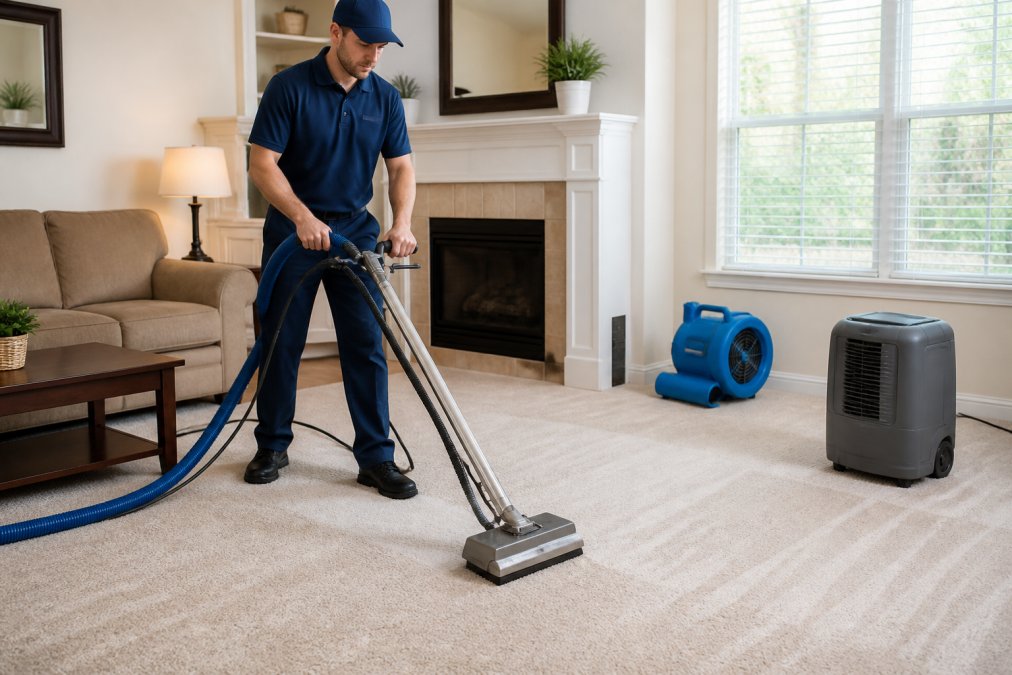
Encapsulation sprays a polymer solution into the carpet pile. As it dries, it crystallizes around soil particles, which are then removed with vacuuming. Bonnet cleaning uses a rotary machine with an absorbent pad to lift soil from the surface of the fibers. Dry foam and dry powder work similarly, with compounds that bind to soil and get vacuumed away.
The catch: low-moisture methods clean the top third of the carpet pile thoroughly and the base of the fibers less so. For maintenance cleaning in a low-traffic home, that's fine. For a carpet that hasn't been deep cleaned in years, it's not enough.
Step-by-Step: How to Apply Fast Drying Methods
The process below outlines common steps for residential jobs. Total time for the cleaning process is roughly 60 to 90 minutes for an average room, plus drying.
What you'll need: a low-moisture cleaning machine or rotary bonnet setup, encapsulation solution or dry compound, a wet-dry vacuum, two box fans, and a dehumidifier.
- Pre-vacuum thoroughly. Slow passes with a quality vacuum remove dry soil before any liquid touches the carpet. Skipping this step is a common mistake; it turns surface dirt into mud.
- Pre-treat spots. Apply a spot cleaning solution to stains and let it dwell for the time on the label.
- Apply the cleaning solution. Work in small sections, overlapping passes. Don't over-wet the carpet pile.
- Agitate. Use the machine's brush or a bonnet pad to work the solution into the fibers.
- Extract or vacuum. Pull the encapsulated soil or compound out with a wet-dry vacuum.
- Start airflow immediately. Position fans and a dehumidifier before you finish the last section, not after.
Expected result: a carpet that feels dry to the touch in a few hours.
How Long Does Carpet Take to Dry After Cleaning?
Carpet typically takes 4 to 6 hours to dry after low-moisture cleaning and 12 to 24 hours after hot water extraction (iicrc.org). The gap comes down to how much water reaches the backing and pad.
Several factors push drying time in either direction:
- Relative humidity. In a humid climate, the air can't absorb moisture as fast. A dehumidifier becomes essential, not optional.
- Air circulation. Fans cut drying time substantially by replacing the saturated air layer above the carpet.
- Carpet pile and density. Plush, dense carpet holds more water than low-pile commercial carpet.
- Ventilation. Open windows help in dry weather; closed windows with HVAC running help in humid weather.
Carpet Drying Tips After Steam Cleaning
Steam cleaning, also called hot water extraction, uses heated water and strong suction to pull soil from deep in the carpet. It's the most thorough method available and the one most professionals default to for heavily soiled carpets. It's also the slowest to dry unless you manage it deliberately.
Here's how to speed it up, in order of impact:
- Ask for dry passes. After the wet extraction pass, a skilled technician can run additional dry-only passes with the wand to pull remaining water out of the pile and backing. This is the single biggest lever on dry time, and it costs nothing but a few minutes. If your technician doesn't offer it, ask.
- Start airflow before the last section is finished. Position box fans and a dehumidifier while the technician is still working the final area, not after they pack up. Moisture starts evaporating the moment the wand leaves the carpet; every minute without airflow is a minute added to dry time.
- Angle fans across the surface, not down into it. A fan pointed straight down pushes moisture into the pad. A fan angled low across the pile sweeps the saturated air layer away and replaces it with drier air, that's what actually drives evaporation.
- Run the dehumidifier, not just the AC. Air conditioning cools air but doesn't necessarily remove enough moisture in a humid climate. A standalone dehumidifier set to its lowest target does the work the AC can't. Empty the reservoir as it fills; a full unit stops working.
- Keep foot traffic off until fully dry. Walking on damp carpet compresses the pile, drives moisture into the pad, and can leave permanent traffic-lane matting. Clean socks or shoe covers only until the carpet passes the paper-towel test below.
- Don't crank the heat. Warm air holds more moisture, but a sudden temperature spike can cause the carpet to dry unevenly and pull dissolved soil to the surface, the wicking stains that show up as brown rings a day later. Steady, moderate airflow beats heat.
The Paper-Towel Test
Don't judge dryness by touch. Carpet can feel dry on top while the pad underneath stays damp for another day. Press a white paper towel into the carpet, step on it for a few seconds, and check for moisture. If the towel wicks water, keep the fans and dehumidifier running. Repeat every few hours until the towel comes up dry.
The Honest Limits
Even with perfect airflow, a heavily saturated carpet in a humid climate will not dry in four hours. Anyone promising otherwise is either using very little water or overstating the result. The realistic floor for hot water extraction is roughly 12 hours in dry conditions and up to 24 hours in humid conditions, and that's with fans and a dehumidifier running the whole time.
If you need a carpet dry in a few hours, the answer isn't a better drying technique, it's a different cleaning method. Low-moisture encapsulation or bonnet cleaning is the right choice when dry time matters more than deep soil extraction.
Choosing the Right Method: Fiber, Soil, and Equipment
Method choice should follow fiber type first, soil level second, and equipment third. Getting this order wrong is how carpets get damaged, and it's the step most guides compress into a single table row.
Fiber Compatibility Matrix
Not every fast-drying method is safe on every fiber. The matrix below reflects the general guidance most certified technicians and fiber manufacturers follow.
| Fiber | Encapsulation | Bonnet / Rotary Pad | Dry Compound | Hot Water Extraction | Notes |
|---|---|---|---|---|---|
| Nylon | Safe | Safe | Safe | Safe | Most forgiving fiber; handles all low-moisture and wet methods |
| Polyester (PET) | Safe | Safe | Safe | Safe | Prone to matting; use low agitation on bonnet passes |
| Triexta (PTT) | Safe | Safe | Safe | Safe | Stain-resistant; avoid high-pH solutions that can dull the finish |
| Olefin (polypropylene) | Safe | Caution | Safe | Caution | Heat-sensitive; hot water above manufacturer limits can distort fibers |
| Wool | Safe (pH-neutral only) | Caution | Safe | Caution | Alkaline solutions cause browning and felting; low-moisture encapsulation is the default |
| Silk / Viscose / Rayon | Not recommended | Not recommended | Not recommended | Not recommended | Cellulosic fibers can brown or shrink from any moisture; dry-clean only |
| Cotton / Natural blends | Safe (pH-neutral) | Caution | Safe | Caution | Can shrink; test in an inconspicuous area first |
Two rules sit above the table. First, always test a hidden area, a closet corner or under a piece of furniture, before applying any method to a full room. Second, when in doubt on a natural fiber, choose the method with the least water, not the most cleaning power.
Chemical Residue: The Hidden Cost of "Fast-Dry" Chemistry
Fast-drying encapsulation and bonnet solutions work by leaving a polymer or surfactant behind that binds soil and then gets vacuumed away. When applied correctly, residue is minimal. When over-applied, a common shortcut when a technician is chasing a faster dry time, the residue stays in the pile and acts like a magnet for new soil.
The result is a cycle most homeowners don't recognize: the carpet looks clean for two to three weeks, then soils faster than before, prompting another cleaning, which adds more residue. If your carpet seems to get dirty faster after every professional cleaning, residue buildup is a likely cause.
What to look for:
- A stiff or slightly tacky feel to the pile after drying
- Rapid re-soiling in traffic lanes within two to three weeks
- Visible white powder at the base of fibers after vacuuming
A proper rinse pass, a pH-neutral final application, or a clean-water extraction step removes most residue. When considering a cleaning service, it's advisable to inquire whether the final step includes a rinse.
Equipment: Rent vs. Buy vs. Hire
For homeowners weighing a DIY approach, the math rarely favors buying a low-moisture unit for a single home. A consumer-grade encapsulation machine or rotary bonnet setup typically runs several hundred dollars, plus solution, pads, and storage. Rental units at hardware and grocery stores are usually available by the half-day or day, which is enough for most single-family homes.
The break-even point is roughly three to four cleanings per year. Below that, rental or professional service is almost always cheaper once you account for solution, pads, and the time to learn the equipment. Above that, say, a landlord with multiple units or a small commercial space, a purchased unit starts to pay for itself within the first year.
Professional service sits in a different category. You're paying for fiber knowledge, the right chemistry for your specific carpet, and the airflow equipment that actually determines dry time. A homeowner with a rented machine and no dehumidifier may find it challenging to match the dry time a professional achieves with the same method.
Water Usage: The Sustainability Angle
Hot water extraction uses substantially more water per room than encapsulation or bonnet cleaning, often several gallons per hundred square feet versus a fraction of that for low-moisture methods (the EPA). For a single home, the difference is modest. For a commercial space on a recurring schedule, it compounds: a low-moisture program can cut water consumption dramatically over a year while also shortening dry time and reducing downtime for the space.
That's the underreported case for low-moisture cleaning. It isn't just faster, for high-frequency commercial cleaning, it's the more sustainable option, and the one that keeps a space usable while it's being cleaned.
Match the method to the fiber, not the other way around. Low-moisture cleaning wins on drying time and water use; hot water extraction wins on soil extraction. The right answer depends on which one your carpet actually needs, and on whether the final step is a rinse.
Frequently Asked Questions
What type of carpet cleaning dries the fastest?
Low-moisture methods dry fastest, often in 1 to 2 hours. These include encapsulation, dry foam, and bonnet cleaning. They use minimal water and rely on chemical encapsulation or absorbent pads. Hot water extraction (steam cleaning) uses more water and takes 6 to 12 hours to dry. For the quickest turnaround, choose a low-moisture method, especially for low-pile or synthetic carpets.
How long does carpet take to dry after cleaning?
Drying time depends on the method and conditions. Low-moisture cleaning typically dries in 1 to 2 hours. Hot water extraction takes 6 to 12 hours. High humidity, low air circulation, and thick carpet can extend drying. Running fans, a dehumidifier, and air conditioning speeds evaporation. In ideal conditions, most carpets dry within 4 to 6 hours after professional cleaning.
Can I use fans to speed up carpet drying?
Yes, fans are one of the most effective tools. Position fans to blow air across the carpet surface, not directly down. Use a dehumidifier to remove moisture from the air. Open windows if outside humidity is low. Combining air movement with lower indoor humidity can cut drying time by half. For best results, keep fans running until the carpet feels completely dry.
Is low-moisture carpet cleaning effective?
Yes, low-moisture cleaning is effective for maintenance and light soil. It removes surface dirt, allergens, and spots without soaking the carpet. However, for deep-set soil or heavy stains, hot water extraction may be needed. Many professionals use low-moisture methods for quick refreshes and hot water extraction for periodic deep cleaning. The best choice depends on your carpet's condition and fiber type.