 how-to
How Long Does Carpet Take to Dry? Real Timelines
Table of Contents
- How Long Does Carpet Take to Dry After Professional Cleaning?
- Carpet Drying Time After Steam Cleaning vs Other Methods
- How Long Does Wet Carpet Take to Dry After Spills and Leaks?
- What Changes Your Carpet Drying Time: Fiber, Pile, and Humidity
- How to Dry Carpet Fast After Cleaning
- How Long to Stay Off Carpet After Cleaning
- How to Check Whether Carpet Is Actually Dry
- Frequently Asked Questions
Last Updated: October 14, 2026
How Long Does Carpet Take to Dry After Professional Cleaning?
Most people ask how long does carpet take to dry, and the answer is that most carpets are dry to the touch within 6 to 12 hours after professional cleaning. Full drying, meaning the backing and padding are also moisture-free, usually takes 12 to 24 hours. That gap between "feels dry" and "is dry" is where most problems start.
Carpet drying time is the total period from the end of cleaning until moisture has left the carpet fibers, backing, and padding. It depends on the cleaning method, your indoor conditions, and the carpet itself. The 6-to-12-hour figure applies to hot-water extraction in a well-ventilated room. Low-moisture methods dry much faster, often in 2 to 4 hours.
Here's what most guides get wrong: they quote a single number and stop there. In practice, two identical carpets cleaned the same day can dry hours apart based on humidity alone.
Below, we'll show you exactly how to estimate your own drying window, speed it up, and check whether the carpet is truly dry before you move furniture back. We'll also cover what changes when a spill or leak, not a cleaning, is the source of the water.
Carpet Drying Time After Steam Cleaning vs Other Methods
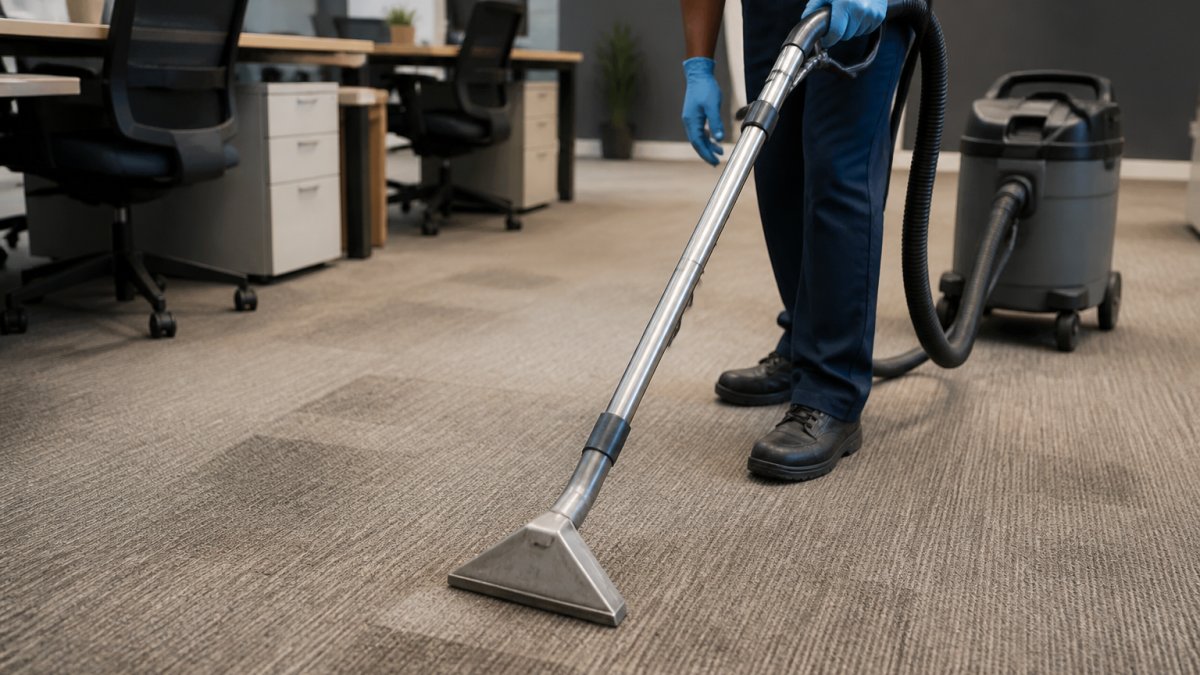
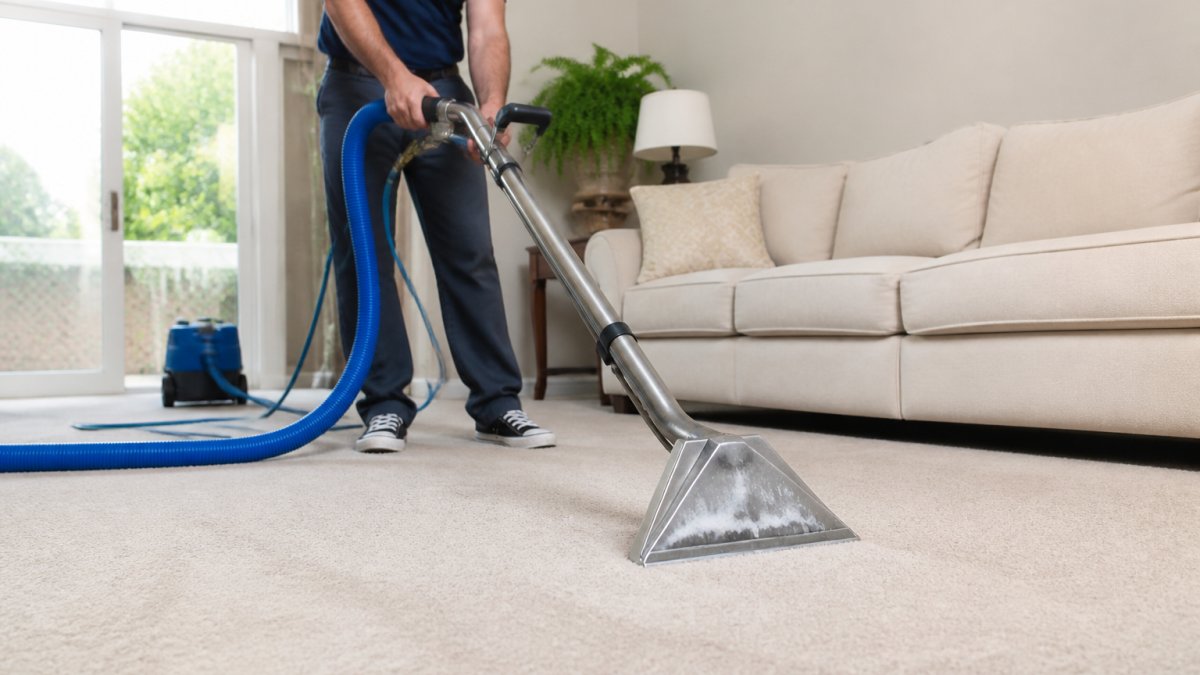
Steam cleaning, also called hot-water extraction, leaves the most moisture behind of any common method. Expect 6 to 12 hours for the surface and up to 24 hours for the padding. The reason is simple: this method pushes hot water and cleaning solution deep into the carpet, then pulls most of it back out.
Other methods leave far less water:
- Low-moisture cleaning: 2 to 4 hours. Uses less water and relies on agitation plus quick extraction.
- Dry cleaning compounds: 1 to 2 hours. Little to no liquid enters the backing.
- Rental machine cleaning: 12 to 24 hours or longer. These units extract less water than professional equipment, so more stays behind.
That last point matters. A common mistake is assuming a rental machine and a professional truck-mounted unit leave the same amount of moisture. They don't. Better water recovery means faster drying, and that's the real difference between the two.
How Long Does Wet Carpet Take to Dry After Spills and Leaks?
A small spill dries in 1 to 3 hours with good airflow. A larger leak or minor flooding can take 24 to 72 hours, and that timeline depends far more on how fast you act than on the carpet itself.
The key difference between a cleaning and a spill is contamination and volume. Cleaning water is controlled. Spill and leak water is not, and standing water keeps feeding moisture into the padding.
- Small spill (under a cup): blot, then air dry. 1 to 3 hours.
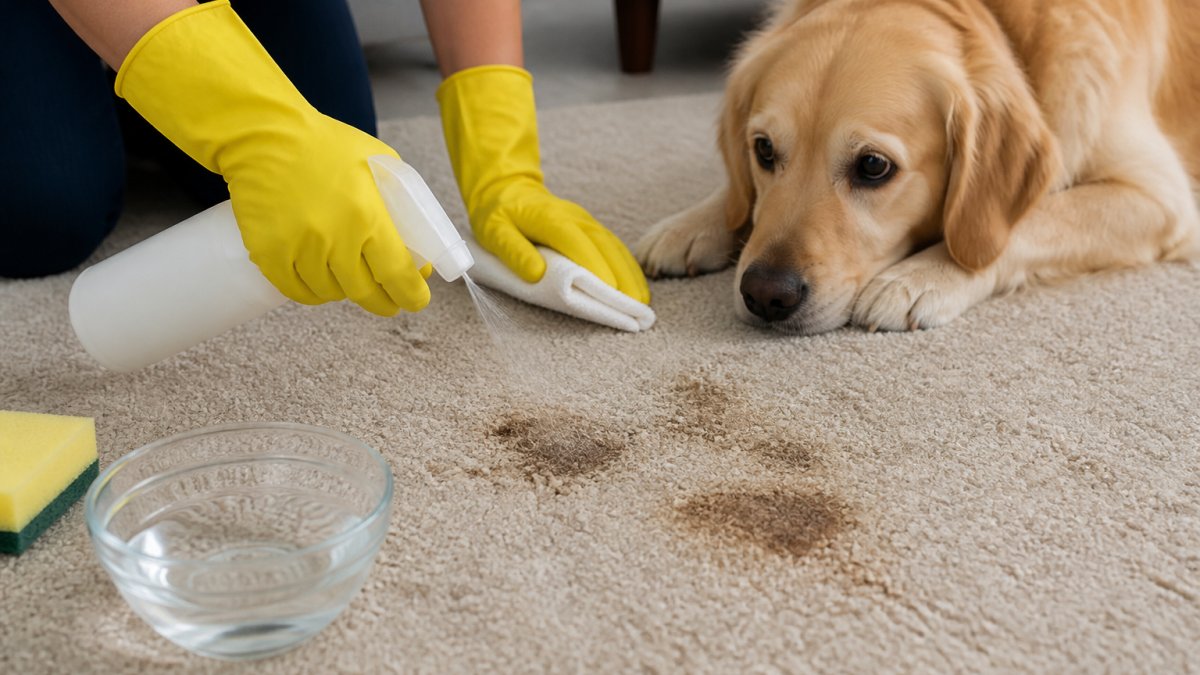
- Large spill or pet accident: extract, treat, and dry. 6 to 12 hours.
- Leak or minor flooding: 24 to 72 hours, and often needs professional water extraction.
If the water came from a burst pipe, appliance failure, or storm, treat it as a water damage event, not a cleaning job. The EPA guidance on indoor air quality and moisture notes that damp materials left wet for more than a day or two can support mold growth. That's why speed matters more than any drying trick.
What Changes Your Carpet Drying Time: Fiber, Pile, and Humidity
Four things decide how fast your carpet dries: fiber type, pile density, room conditions, and airflow. Change any one of them and the timeline shifts.
Carpet fiber and material. Synthetic fibers like nylon and polyester hold less water and dry faster than natural fibers like wool. Wool can stay damp noticeably longer.
Carpet thickness and pile density. A thick, dense pile traps more moisture and releases it slowly. Low-pile and loop carpets dry faster than plush or shag styles. The backing and padding matter too. A dense backing slows water release, and a thick pad holds more water than a thin one.
Room temperature and humidity. Warm air holds more moisture, so a room at a comfortable temperature dries faster than a cold one. High humidity is the bigger problem. When the air is already damp, it can't absorb much more, so the carpet dries slowly.
Air circulation and ventilation. Moving air carries moisture away from the surface. Still air lets it settle back in.
| Factor | Speeds Up Drying | Slows Down Drying |
|---|---|---|
| Fiber | Nylon, polyester | Wool, natural fibers |
| Pile | Low pile, loop | Plush, shag, dense pile |
| Humidity | Low humidity | High humidity |
| Airflow | Fans and open windows | Still, closed room |
How to Dry Carpet Fast After Cleaning
You can cut drying time significantly, but the right moves depend on the cleaning method and the room. Start the moment cleaning ends, and match your approach to how much water is actually in the carpet.
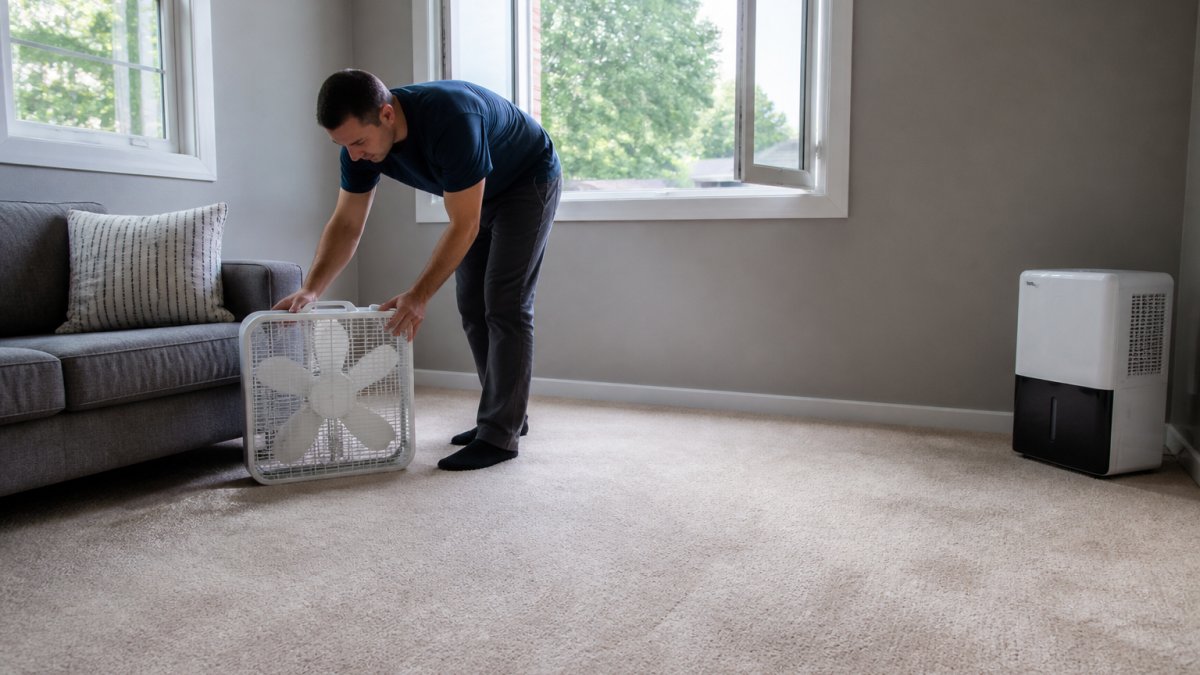
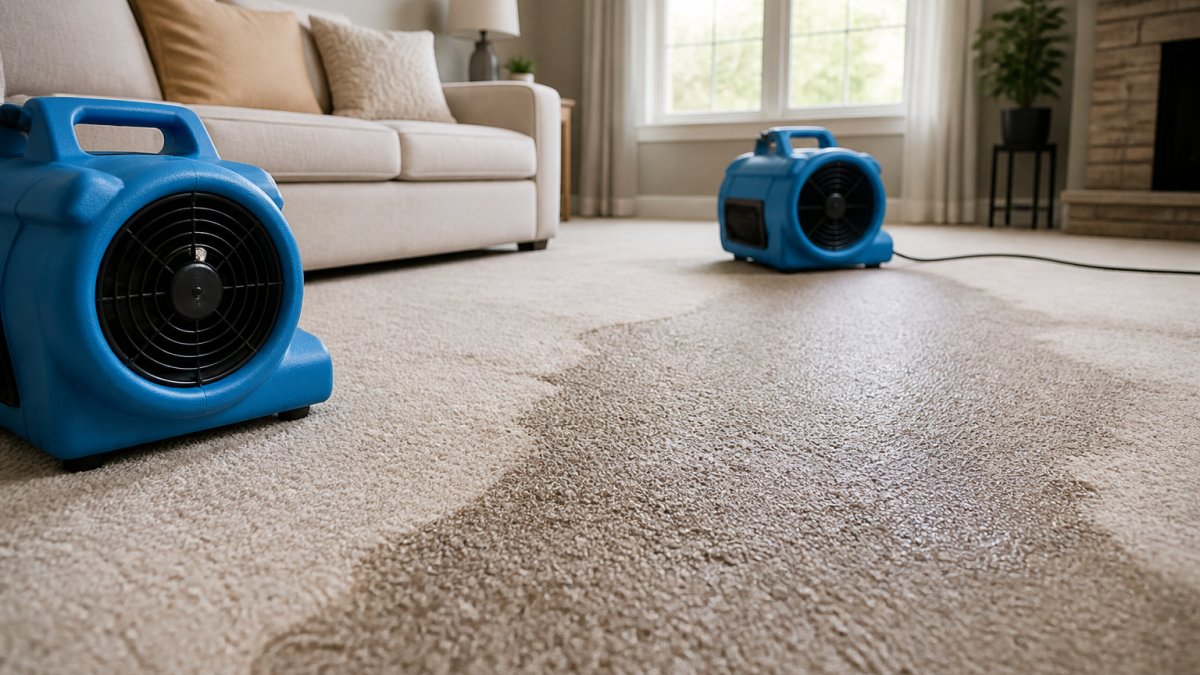
Set the airflow first. Air movers and box fans work best when air skims across the surface rather than blowing straight down. Angle a fan so it pushes air along the pile toward an open doorway or a running dehumidifier.
Match the drying method to the cleaning type.
- After hot-water extraction: run air movers and a dehumidifier together for the first 6 to 8 hours. This is when the largest share of moisture leaves the backing and pad. Keep the room closed to outside humid air if the outdoor dew point is high.
- After low-moisture or dry-compound cleaning: airflow alone is often enough. A dehumidifier helps but is rarely essential because little liquid reached the backing.
- After a rental-machine cleaning: expect to run air movers and a dehumidifier for 12 to 24 hours. Rental units recover less water, so more stays in the pad.
Use a dehumidifier with a target, not a guess. A portable dehumidifier rated for the room's square footage should run continuously until the carpet passes a dryness check.
Open windows only when outdoor conditions help. Fresh moving air speeds drying when the outdoor air is cooler and drier than the indoor air.
Run the air conditioning. AC cools and dehumidifies at the same time. Set it a few degrees lower than usual during the drying window.
Keep foot traffic off the carpet. Every step pushes moisture deeper into the backing. If you must cross the room, wear clean socks and walk along the same path.
A few more moves help:
- Blot any standing water with clean white towels before turning on fans.
- Lift furniture legs onto foil squares or plastic tabs so air reaches underneath.
- Run a ceiling fan on low to keep air moving without blowing dust onto the damp pile.
- Avoid walking on damp carpet in bare feet or socks that have been outside.
How Long to Stay Off Carpet After Cleaning
Wait at least 6 to 8 hours before walking on carpet after cleaning, and 12 to 24 hours before moving furniture back. Light traffic in socks is fine sooner, but heavy use should wait until the carpet is fully dry.
Here's the practical breakdown:
- First 6 to 8 hours: stay off the carpet if you can. If you must walk on it, wear clean socks.
- 8 to 12 hours: light foot traffic is usually fine, but keep pets and kids away.
- 12 to 24 hours: move furniture back once the carpet is dry to the touch and no longer cool or damp.
- Before replacing rugs or heavy items: confirm the padding is dry too, not just the surface.
The thing nobody tells you about furniture placement is this: setting a heavy sofa on a damp carpet traps moisture underneath and can leave rust stains from metal legs or dye transfer from wood. Wait the full window.
How to Check Whether Carpet Is Actually Dry
The surface can feel dry while the backing and padding are still wet. Use a measurable check, not your hand alone, and check the pad separately from the pile.
The paper towel test (surface check):
- Press a dry white paper towel firmly into the carpet.
- Hold it for 10 seconds.
- Lift it and check for any dampness or discoloration.
- Repeat in three or four spots, especially near walls and under where furniture sat.
If the towel stays dry, the surface is done. That does not mean the backing or pad is dry.
The backing and pad check (deeper check):
- Slide your hand under the carpet edge near a wall and feel the backing and pad. Cool or damp means keep drying.
- Press a dry paper towel against the backing and pad for 10 seconds. Any dampness means moisture is still trapped.
- In a room with a basement or slab foundation, check the pad near the wall first. Moisture wicks up and lingers there longest.
A simple dryness checklist:
- Surface feels dry to the touch in at least three spots.
- Paper towel pressed into the pile stays dry.
- Backing and pad feel dry, not cool or damp.
- No musty or sour odor in the room.
- No visible darkening or discoloration at the carpet edges.
- Furniture legs and rugs can sit on the carpet without trapping moisture.
Room-by-room and climate notes:
- Basements and slab floors: these dry slowest because the floor stays cool and holds humidity. Run a dehumidifier longer here than in an upstairs bedroom.
- Humid climates: outdoor air is often too damp to help. Keep windows closed and rely on AC and a dehumidifier.
- Cold weather: heat helps, but pair it with a dehumidifier. Warm air without dehumidification can leave the pad damp longer.
- Rooms with limited ventilation: closets, bathrooms, and small bedrooms need a fan and a dehumidifier because air doesn't move on its own.
What the readings mean:
- Dry to the touch: surface moisture is gone.
- Cool and slightly damp: backing still holds moisture. Keep fans and the dehumidifier running.
- Wet or squishy: padding is soaked. This needs more drying time or professional extraction.
- Musty odor or dark spots: moisture has been trapped too long. Stop drying attempts and have the carpet and pad inspected.
Frequently Asked Questions
How long do you have to stay off carpet after cleaning?
Most carpets handle light foot traffic in sock feet 4 to 6 hours after professional cleaning, once the surface feels dry to the touch. Wait a full 12 to 24 hours before moving heavy furniture back or allowing pets and children to play on it. Walking on damp carpet pushes moisture deeper into the backing and padding, which extends carpet drying time and can leave crushing marks that are hard to remove.
Is it okay to let carpet air dry on its own?
Air drying works for small spills, but it is slow and risky after a full cleaning or a leak. Standing water and residual moisture feed mildew growth within 24 to 48 hours, and that produces odor that no amount of cleaning fully removes. Run fans, keep air conditioning on, and use a dehumidifier to pull moisture out of the air. If the carpet is still damp after 24 hours, call a professional to check the padding underneath.
How can I tell when carpet is completely dry?
Press a dry paper towel against the carpet and stand on it for 10 seconds. Any dampness on the towel means moisture remains. Check the backing by lifting a corner or pressing near a tack strip, since carpet fibers dry before the backing and padding do. For a measurable check, a moisture meter reading below 15 percent indicates the carpet is dry enough for furniture and normal foot traffic.
What factors affect how quickly carpet dries?
Carpet drying time depends on the cleaning method, humidity, room temperature, and airflow. Hot-water extraction leaves the most moisture, while low-moisture cleaning can dry within 1 to 2 hours. High humidity slows evaporation, so run a dehumidifier or air conditioning. Carpet thickness, pile density, and the material of the backing and padding also matter: dense plush and thick padding hold water longer than low-pile berber or loop styles.