 how-to
How to Prevent Mold in Carpets: 2026 Homeowner's Guide
Table of Contents
- Why Mold Grows in Carpets and What It Costs You
- How to Dry Wet Carpet Quickly Before Mold Takes Hold
- Signs of Mold Under Carpet You Should Not Ignore
- Moisture Control and Humidity Management That Actually Works
- Carpet Material Vulnerabilities and Padding Selection
- DIY vs. Professional Testing Kits for Carpet Mold
- Professional Carpet Cleaning for Mold Prevention
- Eco-Friendly Mold Inhibitors and Preventative Maintenance
- Frequently Asked Questions
Last Updated: September 22, 2026
Why Mold Grows in Carpets and What It Costs You
Mold needs three things to grow in a carpet: moisture, warmth, and organic material. Carpet fibers, backing, and padding are all organic, so when water gets trapped in any layer, mold spores already in the carpet can start growing within a day or two.
How to Dry Wet Carpet Quickly Before Mold Takes Hold
Fast drying is the single best way to prevent mold. Mold growth in carpet typically begins within 24 to 48 hours of a spill, leak, or flood, so the goal is to move every layer of the carpet assembly, face fibers, backing, padding, and subfloor, back below the moisture threshold where mold can grow.
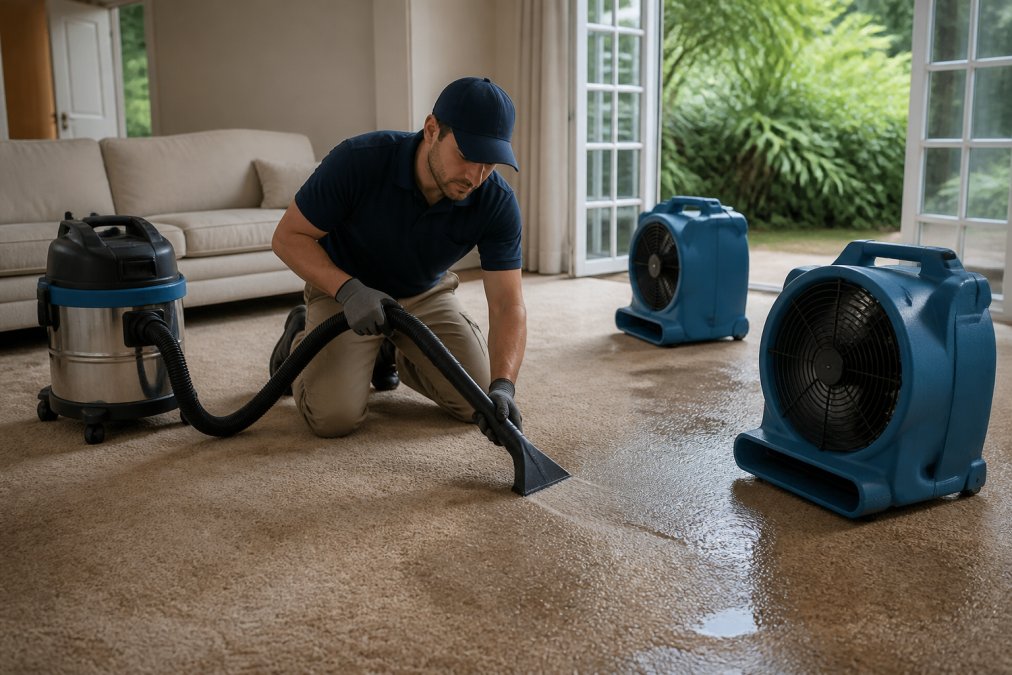
Here is the practical order of operations:
- Stop the water source. Fix the leak or shut off the supply before anything else. Drying a carpet while water is still feeding it is wasted effort.
- Blot and extract. Use towels or a wet/dry vacuum to pull up as much water as possible. On a wet/dry vacuum, make slow overlapping passes, one pass in each direction over the same strip, because a single fast pass leaves water behind in the backing.
- Lift the carpet if needed. For deep saturation, pull the carpet back from the tack strip so the padding can dry. A carpet knife and pry bar let you release an edge and fold the carpet back without cutting it.
- Remove and replace soaked padding. Padding holds water like a sponge and can stay damp for days. In most cases it is cheaper and faster to cut out the wet section and replace it than to try to dry it in place.
- Add airflow. Point box fans and a dehumidifier at the wet area. Air movers work best when they are angled to skim air across the surface rather than blowing straight down, which pushes moisture deeper into the backing.
- Monitor with a hygrometer and a moisture meter. Keep relative humidity under 50% while drying, and check the carpet, padding, and subfloor with a pin-type moisture meter until readings match a dry reference area of the same material.
The First 48 Hours After a Spill or Flood
If the flooding was more than a small spill, or the water came from a dirty source such as a sewer backup or outdoor flooding, call a professional. Water that reaches the subfloor needs commercial extraction and drying equipment, and contaminated water carries its own cleanup requirements beyond mold prevention.
Drying by Carpet and Padding Type
Drying speed depends on what the carpet and padding are made of, so the same spill can dry in hours in one room and days in another.
- Synthetic face fibers (nylon, polyester, olefin) release water relatively quickly and tolerate aggressive extraction. These are the most forgiving carpets to dry in place.
- Wool absorbs and holds far more water, dries slowly, and can distort or shrink if dried too aggressively. Wool carpets benefit from controlled airflow rather than high heat.
- Sisal, jute, and other natural plant fibers are the most mold-prone because they are highly absorbent and can stain or swell when wet. These often need professional drying or replacement rather than DIY extraction.
- Closed-cell padding resists water and dries faster; open-cell foam soaks up water and is usually best replaced once saturated.
Signs of Mold Under Carpet You Should Not Ignore
A musty odor is usually the first sign of mold under carpet, coming from mold spores and mildew growth long before visible spots appear.
Other warning signs include:
- Dark or greenish patches near the carpet backing
- Visible discoloration along baseboards or seams
- Increased allergy symptoms indoors
- Carpet that feels damp even days after cleaning
- Peeling or curling edges where moisture collects
Moisture Control and Humidity Management That Actually Works
Keeping indoor relative humidity between 30% and 50% is the most reliable way to prevent mold growth. A small hygrometer costs little and tells you exactly what your rooms are doing, check it after showers, cooking, and rainy stretches.
Practical steps that work:
- Run a dehumidifier in basements and other damp rooms
- Use exhaust fans in bathrooms and kitchens
- Open windows when outdoor humidity is low
- Fix leaks and condensation on pipes and windows right away
- Avoid overwatering indoor plants near carpeted areas
HVAC and Airflow Optimization for Every Room
Your HVAC system does more than heat and cool. Good air circulation keeps rooms from developing damp pockets where mold spores settle.
- Change air filters on schedule so airflow stays strong
- Keep vents and returns clear of furniture and rugs
- Run the fan setting to circulate air even when heating or cooling is off
- Seal air drafts around doors and windows to stop condensation
- Make sure crawl spaces and basements have proper ventilation
Carpet Material Vulnerabilities and Padding Selection
Not all carpets handle moisture the same way. Material choice affects how quickly a carpet dries, how vulnerable it is to mold, and whether a wet carpet can be saved at all, the fiber, backing, and padding each behave differently when water gets in.
| Carpet Type | Moisture Risk | Drying Speed | Best For |
|---|---|---|---|
| Wool | High (holds water) | Slow | Low-humidity rooms |
| Nylon | Medium | Moderate | High-traffic areas |
| Polyester | Low | Fast | Damp climates |
| Olefin | Low | Fast | Basements, rentals |
| Sisal / jute | Very high | Very slow | Dry rooms only |
Why the Fiber Is Only Part of the Story
A carpet is a layered assembly: face fibers, a primary backing that holds the tufts, a secondary backing, the padding, and the subfloor beneath. Mold can grow in any layer that stays wet, and the layers dry at different rates.
- Face fibers shed water fastest and are rarely the problem on their own.
- Primary and secondary backing trap water against the padding and dry slowly, especially in synthetic backings with a latex coating that resists airflow.
- Padding is the sponge of the assembly. Open-cell foam can hold water for days; closed-cell foam and rubber padding resist absorption and dry much faster.
- Subfloor, plywood, OSB, or concrete, is the layer most homeowners forget. A wet subfloor under dry-looking carpet is a common hidden mold source, and it is the reason a carpet can smell musty even after it feels dry.
Choosing Padding and Backing for Mold Resistance
In a humid area or a basement or bathroom-adjacent carpet, padding choice matters as much as fiber choice.
- Closed-cell foam or rubber padding resists water and dries faster than open-cell foam. It is the better default for damp rooms.
- Moisture-resistant secondary backings reduce how much water wicks up from the subfloor.
- Removable or modular carpet tiles let you lift and dry a single section instead of the whole room, a practical option for basements and rentals.
- Avoid natural-fiber padding (jute, felt) in any space that sees occasional moisture, since these are the most mold-prone options.
Subfloor and Installation Factors
Even the right carpet can fail if the subfloor stays wet. A few installation details drive most recurring carpet mold problems:
- Concrete subfloors wick moisture from the ground and can stay damp indefinitely without a vapor barrier. A moisture test before installing carpet over concrete is worth the effort.
- Crawl spaces and basements need ventilation or a dehumidifier; otherwise moisture migrates up into the carpet from below.
- Tack strips and seams are where water collects and where edges curl first, check them after any spill.
- Bathroom and kitchen perimeters see constant small splashes; a moisture-resistant backing and a bath mat or runner reduce how much water reaches the carpet edge.
DIY vs. Professional Testing Kits for Carpet Mold
A DIY mold test kit can tell you whether mold spores are present, but it cannot confirm the type or extent of growth. Store-bought kits are a quick check, not a final answer.
Professional testing goes further:
- Air sampling to measure spore count
- Surface sampling to identify the mold type
- Moisture readings in the carpet, padding, and subfloor
- A clear remediation plan
Professional Carpet Cleaning for Mold Prevention
Deep cleaning removes the dirt, allergens, and organic matter that feed mold. Professional carpet cleaning for mold prevention combines hot water extraction, strong drying, and antimicrobial treatment where needed, and a technician checking your carpet can spot damp padding or early mildew growth before it spreads.
Eco-Friendly Mold Inhibitors and Preventative Maintenance
Preventative maintenance keeps mold from coming back by controlling moisture year-round, not just after a spill.
Eco-friendly options that help:
- Use plant-based antimicrobial sprays instead of harsh chemicals
- Choose mold-resistant padding and carpet backing
- Add a dehumidifier to damp rooms
- Vacuum regularly to remove spores and organic debris
- Keep gutters and drainage clear to stop water from seeping in
A simple routine goes a long way:
| Task | Frequency | Why It Matters |
|---|---|---|
| Vacuum carpets | Weekly | Removes spores and dirt |
| Check humidity | Weekly | Catches damp air early |
| Deep clean carpets | Every 6-12 months | Removes organic buildup |
| Inspect for leaks | Monthly | Stops water before it spreads |
| Replace soaked padding | As needed | Removes the mold food source |
Frequently Asked Questions
How quickly does mold grow on wet carpet?
Mold spores can begin colonizing a wet carpet within 24 to 48 hours if moisture remains. In humid conditions, visible mildew growth may appear even sooner. The faster you extract standing water, run a dehumidifier, and improve air circulation, the lower your risk. If the carpet stays damp past 48 hours, mold growth is likely already underway in the padding and subfloor.
Can carpet with mold be saved or does it need to be replaced?
Small, surface-level mildew on the carpet fibers can sometimes be cleaned and dried successfully. However, if mold has penetrated the carpet backing, padding, or subfloor, replacement is usually the safer choice. Mold Inspector and Remediation certified professionals can assess the extent of contamination and recommend whether cleaning or full removal is needed to protect indoor air quality.
What are the signs of mold under carpet?
Common signs of mold under carpet include a persistent musty odor, dark or greenish discoloration near the baseboards, visible fuzzy patches along the tack strip, and increased allergy symptoms when you are in the room. You may also notice the carpet feels damp or spongy. If you spot any of these signs, address the moisture source immediately and schedule an inspection.
Does Lysol kill mold spores on carpet?
Household disinfectant sprays like Lysol are designed for hard surfaces and are not formulated to eliminate mold spores embedded in carpet fibers or padding. They may temporarily reduce surface odor, but they do not address the moisture source or the mold growing in the backing. For effective mold prevention, focus on water extraction, humidity control, and professional deep cleaning rather than relying on sprays.