 how-to
How to Protect Delicate Upholstery Fabrics: 2026 Guide
Table of Contents
- Start With the Fabric Code Before You Touch Anything
- Upholstery Fabric Care Codes Explained: S, W, S/W, and X
- How to Remove Pet Stains From Silk Upholstery Without Ruining the Fiber
- The Best Fabric Protector for Upholstery (and How to Apply It)
- Daily Habits That Protect Delicate Upholstery Fabrics
- Drying Techniques for Delicate Fibers: Why Moisture Control Matters
- When to Call a Professional for Delicate Upholstery Cleaning
- Conclusion
- Frequently Asked Questions
Last Updated: September 15, 2026
Start With the Fabric Code Before You Touch Anything
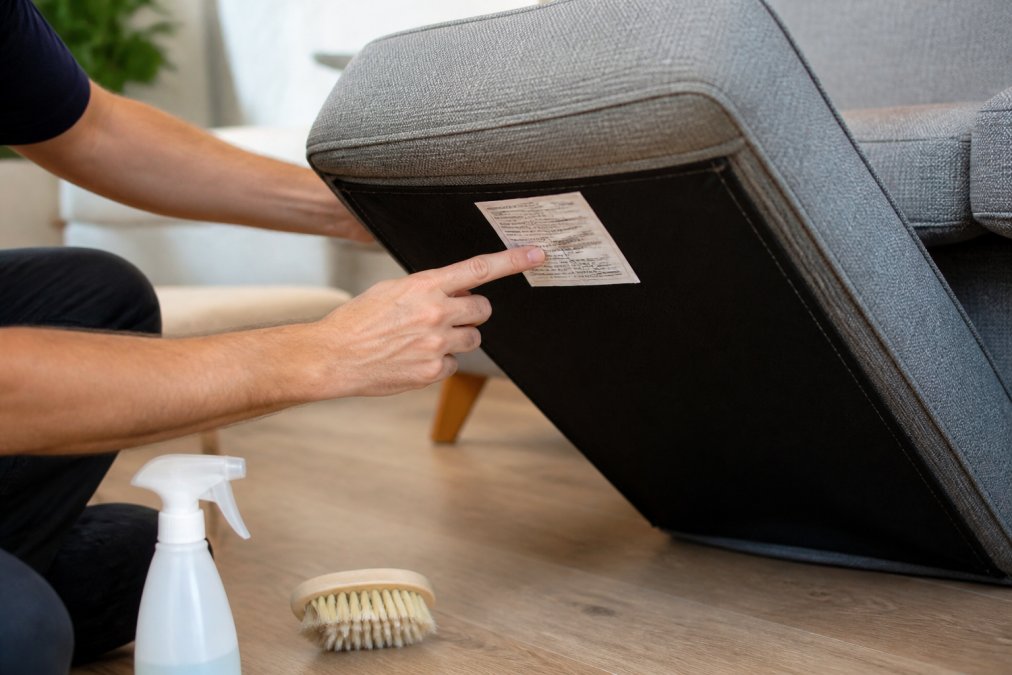
Learning how to protect delicate upholstery fabrics starts with one unglamorous step: reading the care code before any liquid, brush, or vacuum touches the surface. That small tag, usually hidden under a cushion or stapled to the frame, tells you which cleaning methods the fiber can survive.
Delicate upholstery is any fabric that loses color, shape, or texture when exposed to the wrong moisture level, heat, or agitation. Silk, velvet, linen, and some rayon blends fall into this group, and they fail fast. Water can leave rings on one fabric while a solvent-based cleaner destroys another.
At Mighty Clean Services, we have handled residential and commercial upholstery since 2005, and the pattern is consistent: most damage we inspect was caused by a well-intentioned owner using the wrong method, not by ordinary wear.
Upholstery Fabric Care Codes Explained: S, W, S/W, and X
Fabric care codes are standardized letters, usually printed on a tag under the seat cushion or stapled to the frame, that tell you which cleaning method a textile can tolerate. The four you will see on residential furniture are S, W, S/W, and X. The letter is not a suggestion, it reflects how the fiber, dye, and backing were tested for shrinkage, colorfastness, and pile distortion.
- W, Water-based cleaners are safe. These are the most forgiving fabrics, including many synthetic blends, microfiber, and solution-dyed acrylics. Water penetrates the weave, lifts soil, and evaporates without leaving a ring because the fiber does not swell or bleed.
- S, Solvent-based cleaning only. Water causes shrinking, rings, or browning on these fabrics. Silk, rayon, and many viscose blends fall here because water swells the fiber and mobilizes dyes.
- S/W, Either water-based or solvent cleaners work. Test in a hidden spot anyway; the dual rating means the fiber tolerates both, not that every product on the shelf is safe.
- X, Vacuum or light brush only. No liquid cleaner of any kind. These are typically dry-clean-only fabrics or pieces with glued construction that fails when wet.
How the Codes Are Assigned
The ASTM International textile standards overview covers how these performance classifications are tested. In practice, a fabric earns its letter after being exposed to water, solvent, and detergent under controlled conditions, then measured for shrinkage, color change, and pile distortion. That is why the letter matters more than the fabric name on the sales tag. A "linen" sofa and a "linen-look" polyester sofa can carry completely different codes, and a rayon blend labeled "dry clean only" on the bolt may still ship with a W tag if the mill finished it for water cleaning.
The Cases the Tag Does Not Cover
Three situations trip up most owners:
- No tag at all. On older or imported furniture, the code may be missing or written in a non-standard format. Treat an unmarked delicate fabric as S until a professional confirms otherwise. Water damage on an S fabric is permanent; solvent on a W fabric is usually just wasteful.
- S/W with a caveat. Some manufacturers print S/W but add "dry clean recommended" in fine print. That means the fiber tolerates water, but the dye or the backing does not. Follow the stricter instruction.
- Mixed-construction pieces. A sofa with a W-coded seat and S-coded back cushions is common. Clean each component by its own code, and never let a wet seat cushion sit against a solvent-only back panel.
Reading the Code in Context
The code tells you what the fiber can survive, not what the stain needs. A protein stain on an S-coded silk cushion still requires a solvent-based approach, because enzyme cleaners designed for pet odor can digest the silk itself. Match the method to the code first, then match the chemistry to the stain. When the two conflict, a water-based stain on an S fabric, for example, the code wins, and the stain gets treated with a solvent or handed to a professional.
How to Remove Pet Stains From Silk Upholstery Without Ruining the Fiber
Pet stains on silk require solvent-based cleaning, not water, and speed matters more than strength. Silk is a protein fiber, so enzyme cleaners designed for pet odor can actually digest the fabric itself (pubmed.ncbi.nlm.nih.gov).
Here is the sequence that works:
- Blot fresh liquid with a white, lint-free cloth. Press, do not rub.
- Sprinkle baking soda over the damp area to pull moisture and odor, then wait 15 minutes.
- Vacuum the powder with an upholstery attachment on the lowest suction setting.
- Apply a small amount of dry cleaning solvent to a cloth, not directly to the fabric, and dab from the outside of the stain inward.
- Let the area air dry away from direct sun and heat.
For dried or set-in stains, stop before you scrub. Silk pile crushes permanently under friction, and a crushed nap cannot be restored at home.
The Best Fabric Protector for Upholstery (and How to Apply It)
The best fabric protector for upholstery is a fluoropolymer-free, water-based spray rated for the specific fiber you own, applied in thin passes rather than one heavy coat. Protectors buy you reaction time; they do not make a fabric stain-proof.
Application matters as much as the product:
- Vacuum the surface first so the protector bonds to fabric, not dust.
- Test on the underside of a cushion and wait 24 hours.
- Spray in light, overlapping passes from roughly 12 inches away.
- Let it cure fully, typically overnight, before anyone sits on it.
- Reapply according to the manufacturer's interval, not on a fixed calendar.
Daily Habits That Protect Delicate Upholstery Fabrics
Preventative maintenance outperforms any cleaning method, and it takes minutes per week. The goal is to stop soil from working its way into the fiber base, where it becomes far harder to lift.
- Vacuum weekly with a soft-bristled brush attachment on low suction.
- Rotate and flip cushions so wear spreads evenly.
- Keep furniture out of direct sunlight to slow fading on natural fibers.
- Blot spills immediately with a clean white cloth.
- Use a pH-neutral cleaner for routine surface cleaning, never dish soap.
- Wash hands before sitting on light-colored linen or silk.
For households with pets or young children, a lint roller between vacuuming sessions removes dander and loose hair before it settles into the weave.
Drying Techniques for Delicate Fibers: Why Moisture Control Matters
Moisture control decides whether a cleaned cushion dries evenly or develops rings, mildew, and a musty smell. Delicate fibers absorb unevenly, so the wet edge dries at a different rate than the center and leaves a visible tide line. The mechanism is simple: as water evaporates from the outer edge, dissolved soil and dye migrate outward and deposit at the boundary, creating the ring. The slower the dry, the wider the ring.
Most guides stop at "use a fan." The fiber-specific protocols below are what actually prevent damage on silk, velvet, linen, and rayon.
Why Each Delicate Fiber Dries Differently
- Silk is a protein fiber that swells when wet and can lose up to a small percentage of its strength while damp. It also spots easily because the fiber wicks moisture along the weave faster than it evaporates.
A Fiber-Specific Drying Protocol
Preventing Rings and Mildew
When Drying Goes Wrong
When to Call a Professional for Delicate Upholstery Cleaning
Conclusion
Frequently Asked Questions
What is the safest way to clean delicate upholstery fabrics?
The safest approach starts with checking the fabric code tag. An S code means solvent-based cleaners only, W means water-based, S/W allows either, and X means vacuum only. For delicate upholstery like silk or velvet, always spot test any product on a hidden area first. Use a soft-bristled brush and minimal moisture, then blot rather than rub. When in doubt, professional cleaning prevents costly damage.
Can you use fabric protector sprays on delicate upholstery?
Yes, but choose a pH-neutral, water-based protector designed for sensitive textiles. Avoid solvent-heavy formulas on silk, linen, or velvet because they can stiffen fibers or cause discoloration. Apply in a well-ventilated area, hold the can 8 to 10 inches from the surface, and use light, even passes. Let it cure for 24 hours before sitting on the furniture. Reapply every 6 to 12 months for ongoing protection.
How do you prevent sun damage on fine upholstery fabrics?
Keep furniture out of direct sunlight or use UV-blocking window film and curtains during peak hours. Rotate cushions weekly so fading happens evenly. Silk, linen, and other natural fibers fade faster than synthetic blends because UV light breaks down dye molecules. A fabric protector with UV inhibitors adds a layer of defense, but it does not replace shade. For pieces near large windows, consider professional UV treatment.
How often should delicate upholstery be professionally cleaned?
Most delicate upholstery benefits from professional cleaning every 12 to 18 months. Homes with pets, children, or allergy sufferers may need service every 6 to 9 months. Silk and velvet should be cleaned less frequently because moisture and agitation wear fibers over time. Between professional visits, vacuum weekly with an upholstery attachment and address spills immediately with blotting to extend the life of your furniture.