 ultimate-guide
IJCSA Certified Cleaners: Benefits for Your Home
Table of Contents
- What IJCSA Certification Means for Cleaners
- Benefits of Professional Carpet Cleaning with Certified Expertise
- How Long Does Carpet Take to Dry After Deep Cleaning?
- Hiring Certified Cleaning Services: What to Verify
- Safety, Sanitation, and Environmental Standards
- The ROI of Hiring IJCSA Certified Cleaners
- Frequently Asked Questions
Last Updated: September 12, 2026
What IJCSA Certification Means for Cleaners
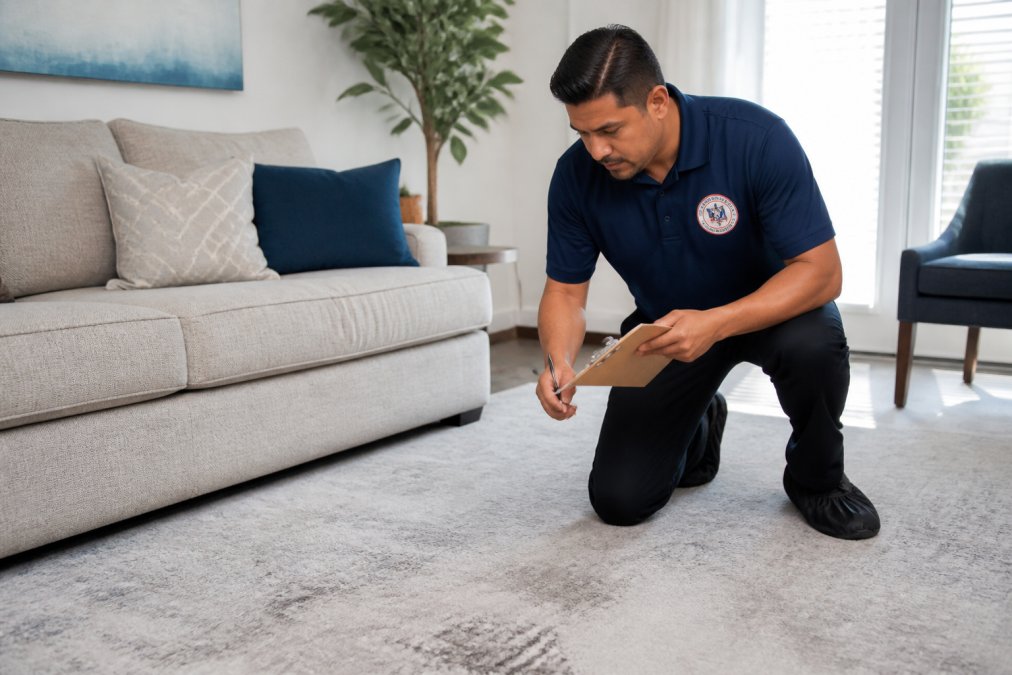
IJCSA certification is a formal credential awarded by the International Janitorial Cleaning Association to cleaning professionals who complete verified training in carpet care, upholstery cleaning, sanitation protocols, and safety compliance. For homeowners, it signals that the technician arriving at your door has been tested on the techniques and standards that protect your floors, furniture, and indoor air quality.
Mighty Clean Services has held IJCSA certification since 2005, and the difference shows up in how we approach every job. Certified cleaners follow documented procedures for fiber identification, pH-balanced solutions, and controlled drying rather than guessing at what works.
The benefits of IJCSA certified cleaners start with accountability. A certification isn't a sticker. It requires ongoing education, adherence to industry standards, and a commitment to documented best practices.
Benefits of Professional Carpet Cleaning with Certified Expertise
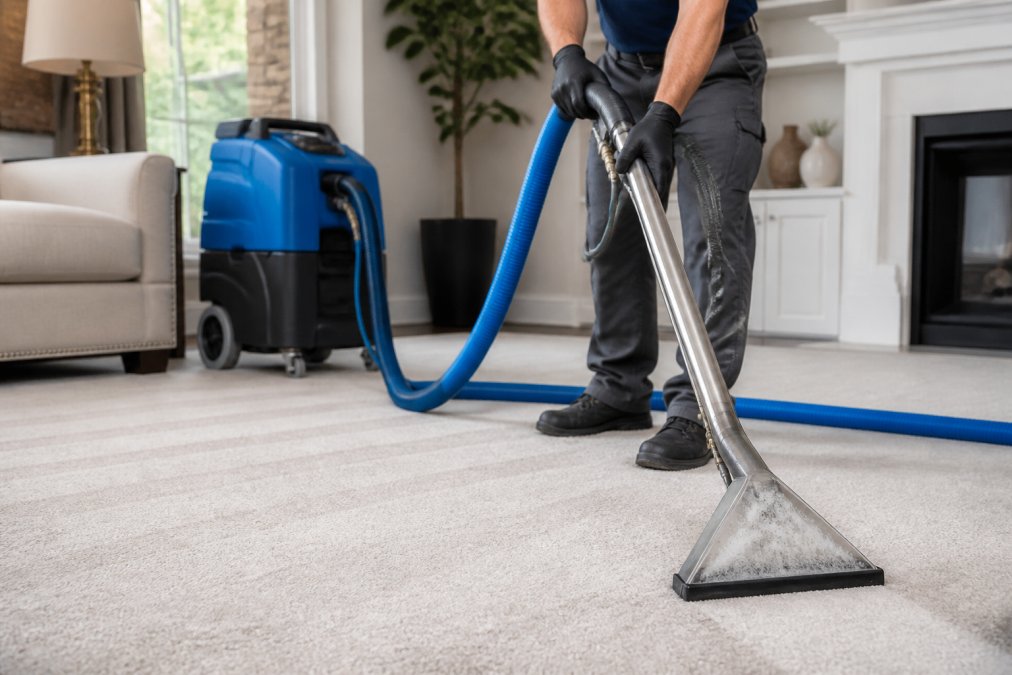
Professional carpet cleaning by certified technicians removes embedded soil, allergens, and moisture that household vacuums and rental machines cannot reach. The EPA's indoor air quality guidance notes that carpets act as reservoirs for pollutants, which makes proper extraction and drying a health issue, not just a cosmetic one.
Certified expertise matters most in three areas:
- Fiber knowledge. Wool, nylon, polyester, and olefin each respond differently to heat and cleaning agents. Certifications require testing on these distinctions.
- Controlled moisture. Over-wetting is the leading cause of mold and mildew growth after a cleaning. Certified technicians meter water volume and use extraction equipment rated for the fiber type.
- Stain chemistry. Protein, tannin, oil, and dye-based stains need different treatments. Applying the wrong one sets the stain permanently.
The benefits of professional carpet cleaning go beyond appearance. Removing pet dander and pollen reduces allergy triggers, especially in homes with young children or pets.
How Long Does Carpet Take to Dry After Deep Cleaning?
Carpet typically takes four to eight hours to dry after professional deep cleaning when proper extraction and airflow are used (the EPA). Homes with high humidity or poor ventilation may need up to twelve hours.
Several factors affect drying time:
- Extraction quality. A machine with strong water lift removes more moisture before drying begins.
- Air movement. Box fans and open windows shorten drying by hours.
- Humidity. In humid climates, a dehumidifier helps considerably.
- Carpet thickness. Plush and deep-pile carpets hold more water than low-pile styles.
Mighty Clean Services aims to schedule jobs so that drying happens while you're awake and can manage airflow, not overnight while moisture sits in the pad.
Hiring Certified Cleaning Services: What to Verify
Hiring certified cleaning services means confirming that the certification is real, current, and relevant to the work you need done. Not every company that claims certification can back it up, and the verification process is simpler than most homeowners and facility managers realize.
How to verify a certification in three steps
- Get the certifying body's name and the technician's credential number. A legitimate provider will give you both without hesitation. If the answer is "we're certified" with no number, treat it as unverified.
- Check the certifying body's directory or contact them directly. Most trade associations publish a member or credential lookup, or will confirm a credential number by phone or email. Confirm the name on the credential matches the company or the individual technician who will actually be on site.
- Confirm the credential is current. Certifications carry renewal requirements, often tied to continuing education or a re-test. An expired credential is not a credential. Ask for the expiration date and, if it is close, ask how renewal is handled.
What to request in writing before booking
- Certifying body name and technician credential number, with expiration date
- Certificate of insurance showing general liability coverage and limits
- Proof of bonding, if the provider offers it
- Written scope of work, including what is covered and what is not
- Equipment list (truck-mounted vs. portable units perform differently)
- References from jobs similar to yours
Why the insurance piece matters
Certification and insurance are separate but related. A credential proves training; a certificate of insurance proves the provider can pay a claim if something is damaged. Ask for both. For commercial facility contracts, the property owner or manager often requires vendors to name them as an additional insured and to demonstrate documented training for the work performed, a certification is one of the cleanest ways to satisfy that requirement. If you manage a facility, make the credential number and the certificate of insurance part of your vendor file, not just a verbal assurance.
The FTC's guidance on advertising claims is clear that companies must be able to substantiate certification claims. A legitimate provider will send documentation without hesitation.
Questions that separate a real credential from a marketing claim
- Which specific certification do you hold, and who issues it?
- What did the training cover, fiber identification, stain chemistry, moisture control, sanitation?
- How often is the credential renewed, and what does renewal require?
- Can you provide your certificate of insurance and credential number today?
The answers tell you whether you are hiring a trained technician or someone with a logo on a van.
Safety, Sanitation, and Environmental Standards
Certified cleaners operate under defined safety and sanitation standards that protect both the technician and your household. These standards cover chemical handling, ventilation, personal protective equipment, and disposal of wastewater.
Green cleaning practices are part of the certification curriculum. Many certified providers use biodegradable solutions, low-VOC agents, and equipment that reduces water consumption. For households with chemical sensitivities or young children, this matters.
Sanitation goes beyond surface appearance. Proper extraction removes biological contaminants, and certified technicians know how to handle situations involving pet waste, mold, or water damage without spreading contaminants to unaffected areas.
Mighty Clean Services holds additional certifications in water damage restoration and mold inspection and remediation, which means we can address problems that go beyond routine cleaning.
The ROI of Hiring IJCSA Certified Cleaners
The return on hiring certified cleaners is easiest to see when you break it into four cost lines: cleaning frequency, carpet lifespan, liability exposure, and contract eligibility. Here is the mechanism behind each line.
1. Cleaning frequency. Residue is the enemy of a clean carpet. High-pH detergents that are not fully extracted leave a sticky film that attracts soil, so an uncertified job can look soiled again within weeks. Certified technicians follow a documented rinse-and-extract sequence, which typically extends the interval between cleanings. If you move from a quarterly to a semi-annual schedule on a whole-home carpet, that is two fewer service calls per year, a direct, calculable saving.
2. Carpet lifespan. Carpet replacement is priced by the square yard, and the installed cost can be significant, before padding and labor. A carpet that is cleaned correctly and dried within the manufacturer's recommended window tends to hold its appearance longer than one that is over-wet repeatedly. Over-wetting damages the backing and can void a manufacturer's warranty, which is a replacement cost you absorb entirely.
3. Liability and insurance. Many commercial facility contracts and property-management agreements require vendors to carry general liability coverage and, in some cases, to demonstrate documented training for the work being performed. A certification is one of the cleanest ways to satisfy that documentation requirement. On the insurance side, carriers that write policies for cleaning and restoration businesses often ask about technician training and certification when setting premiums, a documented, verifiable credential is a favorable underwriting signal. If you are a facility manager, ask your vendor for a certificate of insurance and confirm the training behind it.
4. Contract eligibility and win rate. For commercial work, offices, medical suites, multi-family common areas, certification frequently appears as a scored line item in the RFP. A bidder who cannot produce a credential number is often screened out before pricing is even opened. That means certification does not just improve your odds of winning; it can determine whether you are allowed to compete at all.
For property managers and landlords, certified cleaning supports move-in and move-out standards that reduce tenant disputes and security-deposit friction. For homeowners, it protects an investment that costs far more to replace than to maintain.
The benefits of IJCSA certified cleaners ultimately come down to this: you are paying for verified skill, documented process, and accountability, and those translate into line items you can actually measure. When you are comparing providers, ask what certification they hold, what it required, and how it affects their insurance and contract eligibility.
Frequently Asked Questions
What is an IJCSA certified cleaner?
An IJCSA certified cleaner has completed training and testing through the International Janitorial Cleaning Association. This certification covers proper cleaning techniques, safety protocols, and industry standards. It shows the cleaner has demonstrated knowledge in areas like chemical handling, equipment use, and sanitation. For homeowners, it means the person cleaning your carpets has verified skills beyond basic cleaning.
How does certification impact the quality of carpet cleaning?
Certified cleaners follow proven methods for stain removal, fiber protection, and allergen reduction. They know which cleaning agents work for different carpet types and how to avoid damage. This leads to deeper cleaning and longer-lasting results.
Do IJCSA certified cleaners follow specific safety standards?
Yes, IJCSA certification requires training in safety and sanitation. Cleaners learn proper handling of cleaning chemicals, safe equipment operation, and risk mitigation. They also follow guidelines for workplace hygiene and environmental stewardship. This reduces the risk of accidents and ensures a safer home environment for you and your family.
Are IJCSA certified cleaners better for commercial spaces?
Certified cleaners bring consistent, high-quality results that matter for commercial spaces. They understand industry compliance and can help maintain a healthy environment for employees and customers. Their training in operational efficiency and best practices means less downtime and better long-term maintenance. This can lead to fewer complaints and a more professional appearance.
Carpet that looks clean and carpet that is clean are two different things, and only one of them protects your home long-term. Mighty Clean Services has been IJCSA certified since our early years, and we bring that standard to every residential and commercial job. Our team specializes in deep carpet and upholstery care, mold and water damage remediation, and recurring janitorial service for offices and rentals. Book an appointment with Mighty Clean Services and get a cleaning that holds up.