 how-to
Remove Stubborn Dirt From Upholstery: 2026 Guide
Table of Contents
- Before You Start: Vacuuming and Fabric Prep
- Upholstery Cleaning Codes Explained: S, W, SW, X
- Best Upholstery Cleaner for Deep Dirt: DIY Solutions and Store Options
- How to Deep Clean Fabric Couch: Step-by-Step Method
- Remove Stubborn Dirt From Upholstery: Techniques That Actually Work
- Drying Upholstery Without Water Rings or Mildew
- When to Call a Professional for Upholstery Cleaning
- Frequently Asked Questions
Last Updated: September 27, 2026
Before You Start: Vacuuming and Fabric Prep
You can remove stubborn dirt from upholstery at home with a few basic supplies, but the prep work decides whether the job succeeds. Skip it, and you risk setting stains deeper or damaging the fabric.
Why Vacuuming Comes First
Vacuuming lifts loose debris before any liquid touches the fabric. If you skip it, cleaning solution turns dry dust into mud that works deeper into the weave.
Spot Testing for Colorfastness
Colorfastness is how well a fabric holds its dye when it gets wet. Test every fabric before you clean it.
- No color on the cloth: safe to proceed
- Color transfer or fabric distortion: stop and use a dry method only
Upholstery Cleaning Codes Explained: S, W, SW, X
Upholstery cleaning codes explained in plain terms: these single letters on the furniture tag tell you which cleaning method the fabric maker allows. Checking the code takes ten seconds and prevents most damage.
Where to Find the Code
Look for a white or cream tag stapled under the seat cushion, sewn into the decking beneath the cushions, or attached to the back panel or underside of the frame. On sectionals, each piece usually carries its own tag, and the codes can differ between the base and the throw pillows.
What Each Code Allows
- W: Water-based cleaners are safe. Most synthetic fibers, polyester, olefin, nylon blends, carry this code. You can use dish soap mixes, enzyme cleaners, and extraction machines.
- S: Solvent-based cleaners only. Water causes rings, shrinkage, and browning on these fabrics. Use a dry-cleaning solvent or a professional solvent-based upholstery cleaner. Never introduce water, even a damp cloth.
- SW: Either water or solvent works. These fabrics are the most forgiving, and you can choose your method based on the stain type rather than the fabric.
- X: Vacuum only. Never use liquid of any kind. These are typically viscose, rayon, or delicate blends that water-spot permanently. For anything beyond surface dust, call a professional who can dry-clean on site.
How the Code Changes Your Method
The code does not just pick your cleaner, it picks your whole approach:
| Code | Cleaner | Application | Rinse | Drying |
|---|---|---|---|---|
| W | Water-based (dish soap, enzyme) | Damp cloth or spray | Damp cloth, distilled water | Fan, 4-6 hours |
| S | Solvent-based only | Solvent on cloth, blot | No rinse, solvent evaporates | Air dry, no water |
| SW | Either | Match to stain type | Match to cleaner | Fan, 4-6 hours |
| X | None | Vacuum only | None | N/A |
When the Tag Is Missing
If you must test, do it on the back or underside of the frame where a mistake will not show. If you must test, do it on the back or underside of the frame where a mistake will not show.
Best Upholstery Cleaner for Deep Dirt: DIY Solutions and Store Options
The best upholstery cleaner for deep dirt depends on your fabric code. For W and SW fabrics, a simple dish soap mix handles most jobs. For S fabrics, you need a solvent-based product.
DIY Recipes Using Dish Soap, Vinegar, and Rubbing Alcohol
Three household mixes cover nearly every situation:
- Dish soap and warm water: 1 teaspoon of clear, gentle detergent per 2 cups of warm water. Best for general dirt on W and SW fabrics.
- White vinegar and water: equal parts vinegar and warm water. Good for odors and light residue. Skip it on natural fibers like silk or wool.
- Rubbing alcohol and water: 1 part alcohol to 1 part water. Works on S fabrics and grease-based stains.
Stir each mix gently. Foamy soap leaves residue that attracts new dirt.
Eco-Friendly and Non-Toxic Alternatives
If you want to skip harsh chemicals, enzyme-based cleaners break down organic stains without strong fumes. Look for pH-neutral formulas, which are gentler on fibers and dyes.
How to Deep Clean Fabric Couch: Step-by-Step Method
To deep clean a fabric couch, work in small sections from the top down. Rushing or soaking the fabric causes water rings and mildew.
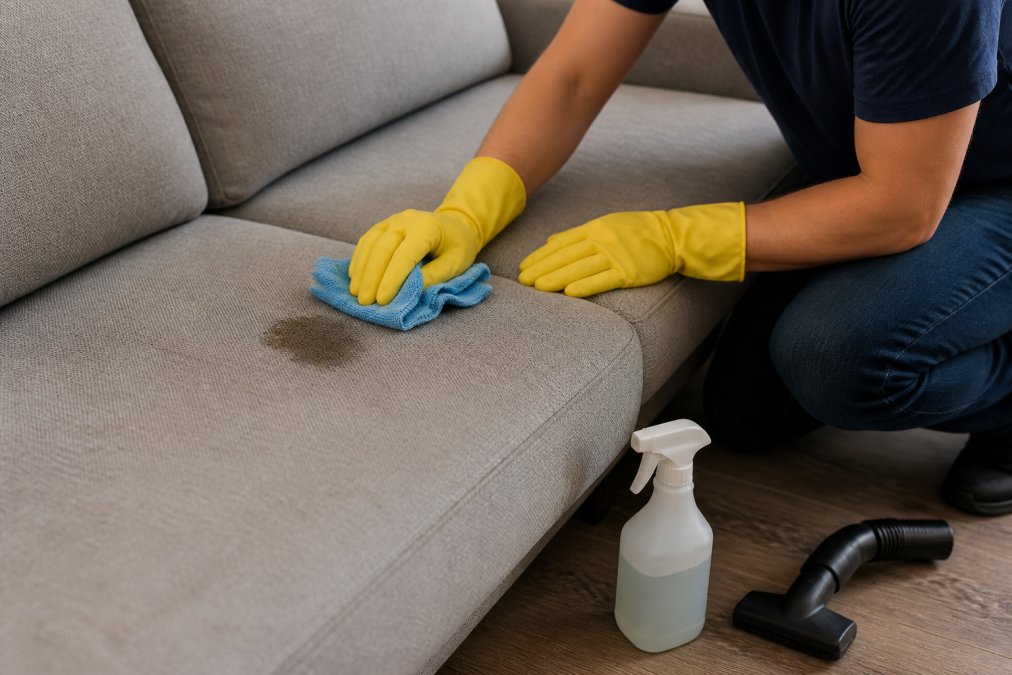
Total time: 45 to 60 minutes, plus drying.
- Vacuum the entire couch with the upholstery attachment.
- Spot test your solution on a hidden area.
- Mix your cleaning solution in a spray bottle.
- Dampen a microfiber cloth, never soak it.
- Blot the stain from the outside in.
- Rinse with a clean, damp cloth.
- Air dry with fans and open windows.
Blotting vs. Scrubbing: What Works for Set-In Stains
Blotting wins every time. Scrubbing pushes dirt deeper into the padding and frays the fibers, which makes the stain look worse once it dries.
Remove Stubborn Dirt From Upholstery: Techniques That Actually Work
To remove stubborn dirt from upholstery, match the technique to the stain type instead of using one method everywhere. Heat, dwell time, and the right cleaner do more than elbow grease. The section below pairs each common stain with a specific method, then covers which tool to reach for and how to recover when a DIY attempt goes wrong.
Stain-by-Stain Methods
- Grease and oil: rubbing alcohol or a solvent cleaner on a white cloth, blotted, never rubbed. Alcohol breaks the oil bond so the cloth can lift it. Work from the outside edge in.
- Food and drink: dish soap mix (1 teaspoon clear detergent per 2 cups warm water), blotted, then rinsed twice with a clean damp cloth to remove residue.
- Pet accidents: enzyme cleaner first, then a 1:1 white vinegar and water rinse to neutralize odor. Enzyme needs 5 to 10 minutes of dwell time to break down uric acid crystals.
- Ink and marker: alcohol on a cotton swab, working outward from the edge so you do not spread the ink. Change the swab often.
- Blood: cold water only. Warm water sets the protein. Blot, do not rub.
- Coffee and tea: a 1:1 vinegar and water mix, then a dish soap pass if a tannin ring remains.
Apply, wait, blot, repeat. Most stains lift after two or three rounds, not one. If a stain has been set by heat or time, expect four or five passes with dwell time between each.
Choosing Your Tool: Hand, Steam, or Extractor
The tool matters as much as the solution:
- Hand scrubbing with a microfiber cloth is the safest default. It works on every code except X, gives you full control over moisture, and is the right choice for small spots and delicate fabrics.
- A steam cleaner uses heat to loosen set-in grime and kill dust mites. It works well on W and SW codes but can shrink or watermark S and X fabrics. Keep the head moving and never let it sit in one spot.
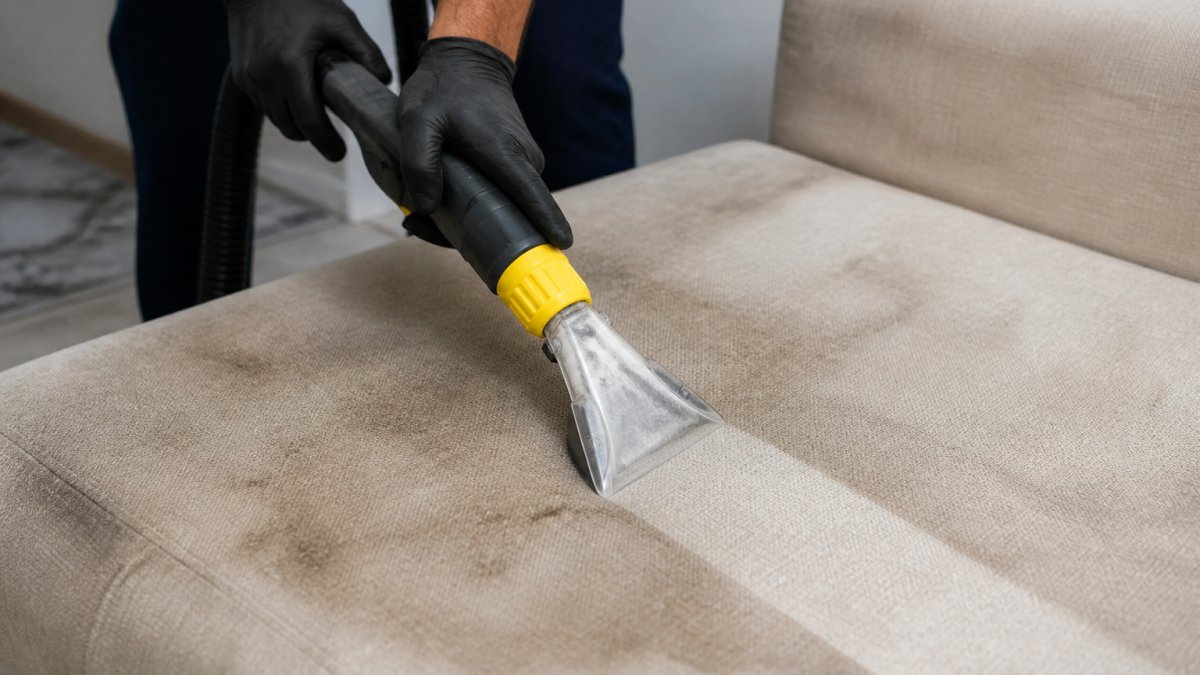
- An upholstery extraction machine (a wet vacuum with a hand tool) pulls dirt and moisture out of the padding, not just the surface. It is the best option for whole-couch deep cleans and heavy soiling on W and SW fabrics. It is not safe for S or X codes.
Start with hand scrubbing, escalate to steam for set-in grime, and finish with an extractor on W and SW fabrics for a full-couch clean. Skipping straight to the extractor on a light stain over-wets the cushion for no benefit.
Troubleshooting Failed Attempts and Water Rings
Water rings happen when liquid dries unevenly or soap residue stays behind. Fix them by dampening the whole cushion evenly with distilled water and drying it fast with a fan, the goal is to move the tide line to the edge of the cushion where it will not show.
Drying Upholstery Without Water Rings or Mildew
Drying fast prevents both water rings and mildew. Set up airflow before you start cleaning, not after.
- Open windows and run a fan pointed at the couch
- Blot again with a dry towel after rinsing
- Avoid direct sunlight, which can fade fabric
- Keep pets and kids off until fully dry
When to Call a Professional for Upholstery Cleaning
Call a professional when the fabric code is S or X, when stains keep returning, or when the whole couch needs a deep clean. Some jobs are not worth the risk.
| Situation | DIY Method | Call a Pro |
|---|---|---|
| W or SW fabric, light dirt | Dish soap mix | Not needed |
| S or X fabric | Solvent only | Recommended |
| Set-in stains returning | Retry with enzyme cleaner | Recommended |
| Allergies or heavy pet dander | Surface clean only | Recommended |
Frequently Asked Questions
How can I clean heavily soiled upholstery without damaging the fabric?
Check the cleaning code tag first. For W or SW fabrics, use a mild dish soap and warm water solution, blot gently, and avoid soaking. For S fabrics, use a solvent-based cleaner only. Always spot test on a hidden area. Work in small sections, blot rather than scrub, and let the fabric air dry completely to prevent water rings.
Does Dawn dish soap remove dirt stains from upholstery?
Dawn and similar grease-cutting dish soaps can lift oily dirt from W and SW fabrics when diluted with warm water. Use a few drops per cup of water, apply with a microfiber cloth, and blot. Rinse with a clean damp cloth to remove residue. Avoid over-wetting, and do not use on S-coded fabrics, which require solvent cleaners.
What is the best method to get deep-set dirt out of a fabric couch?
Start by vacuuming with an upholstery attachment to remove loose debris. Spot test your cleaning solution. Apply a pH-neutral or dish soap solution, let it sit for a few minutes, then blot with a microfiber cloth. For set-in stains, use a soft upholstery brush with gentle agitation. If the fabric is W or SW coded, a steam extractor can help, but call a professional for delicate or antique fabrics.
When should you call a professional for upholstery cleaning?
Call a professional when the fabric is coded S or X, when stains are set-in and have resisted DIY methods, or when the upholstery is antique or delicate. Professionals have extraction equipment and fabric-specific solutions that remove deep dirt without over-wetting.
Stubborn dirt on upholstery is beatable, but fabric codes, spot tests, and drying time decide whether you win or cause damage. When the job is too risky for DIY, Mighty Clean Services removes deep dirt and allergens with certified technicians and professional extraction equipment. Book an appointment with Mighty Clean Services and get your furniture looking its best.