 ultimate-guide
Is Professional Carpet Cleaning Worth It? A 2026 Guide
Table of Contents
- The Real Cost of Professional Carpet Cleaning vs. DIY
- DIY Carpet Cleaning vs Professional: What Actually Gets Results
- How Often Should You Get Carpets Professionally Cleaned?
- Carpet Cleaning Cost vs Replacement: The ROI Calculation
- What Professional Cleaning Does for Indoor Air Quality and Allergies
- Carpet Warranty Requirements and Chemical Safety
- Conclusion
- Frequently Asked Questions
Last Updated: September 23, 2026
The Real Cost of Professional Carpet Cleaning vs. DIY
Deciding whether professional carpet cleaning is worth it starts with understanding what you actually pay for. This guide from Mighty Clean Services breaks down the real costs, hidden expenses, and long-term value so you can make an informed decision for your home or property.
What Drives the Price of a Professional Service
Pricing depends on several factors, and no two jobs are identical. Square footage is the biggest variable, followed by the number of rooms, carpet condition, and the type of treatment required. Heavily soiled carpets or those with pet stains need more time and product.
Additional cost factors include:
- Furniture moving and pre-treatment of high-traffic areas
- Specialty stain removal for wine, ink, or pet accidents
- Upholstery cleaning as an add-on service
- Stairs, closets, and tight spaces that slow the work
Hidden Costs of Rental Machines and Store-Bought Cleaners
The sticker price of a rental machine looks appealing until you add everything up. Machine rental, cleaning solution, and your own time all factor into the true cost. Many renters make a second trip for more solution or a different attachment.
DIY Carpet Cleaning vs Professional: What Actually Gets Results
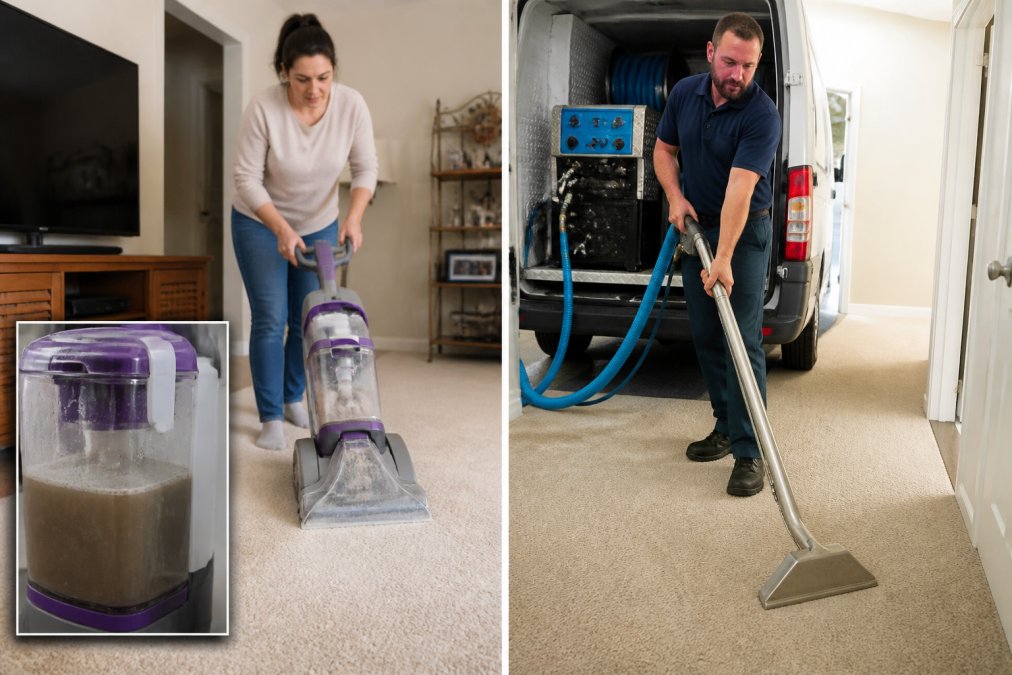
DIY methods handle surface-level maintenance well, but they rarely reach the soil trapped deep in carpet fibers and padding. Professional cleaning uses hot water extraction, often called steam cleaning, to flush out what routine methods leave behind.
Why Rental Machines Leave Stains Behind
Rental machines rely on weaker suction and lower water temperatures than professional-grade equipment. That combination lifts surface dirt but leaves residue and deep-set stains in place. Over time, leftover cleaning solution actually attracts new soil, so carpets look dirty again within weeks.
When DIY Is Enough and When It Is Not
DIY is a reasonable choice for light upkeep between professional visits. If your carpet is only lightly soiled and free of pet accidents or allergens, a vacuum and spot treatment may hold you over.
Hire a professional when you see:
- Deep-set stains that return after cleaning
- Persistent odors from pets or spills
- Visible traffic lanes in high-traffic areas
- Allergy concerns tied to dust mites or pet dander
How Often Should You Get Carpets Professionally Cleaned?
Most households should schedule professional cleaning every 12 to 18 months. Homes with pets, children, or allergy sufferers often benefit from cleaning every 6 to 12 months to control allergen buildup and soil accumulation.
Household Factors That Change the Schedule
Several conditions shorten the ideal interval between cleanings:
- Pets that shed or have accidents
- Young children who play on the floor
- Household members with allergies or asthma
- High foot traffic from guests or home offices
- Smoking indoors or frequent cooking
For rental properties and offices, more frequent service protects the investment and keeps the space presentable for tenants and clients.
Carpet Cleaning Cost vs Replacement: The ROI Calculation
Most guides answer this question with a slogan: cleaning is cheaper than replacing. That is usually true, but it is not a calculation. A real ROI comparison weighs what you spend on maintenance against the replacement cost you defer, and it accounts for the fact that not every carpet is worth saving.
The Two Numbers You Actually Need
To run the comparison honestly, you need two figures:
- Your annualized cleaning spend. Multiply the cost per professional visit by how many times per year your household needs service. A home on a 12-month cycle pays once; a home with two shedding pets and a toddler may pay two or three times.
- Your replacement cost. This is not just the price of new carpet. It includes removal and haul-away of the old material, disposal fees, new padding, installation labor, and furniture moving. Padding and labor are frequently underestimated because homeowners price only the carpet itself.
When you divide replacement cost by the number of years a well-maintained carpet lasts, you get an annual cost of ownership. Compare that to your annual cleaning spend. In most homes, the cleaning line is a fraction of the replacement line, which is the entire argument for maintenance.
Why the Comparison Is Not Always Favorable
Cleaning wins on cost, but it does not win on every carpet. Cleaning cannot restore:
- Fibers that are worn flat or frayed in traffic lanes
- Delaminated backing, where the secondary backing separates from the primary
- Padding that has compressed and lost its resilience
- Permanent stains from bleach, dye, or burns that have altered the fiber itself
A Simple Decision Framework
| Carpet Condition | Better Financial Move | Why |
|---|---|---|
| Structurally sound, soiled, or stained | Professional cleaning | Defers replacement; low cost per year of life gained |
| Sound but heavily soiled with pets | More frequent cleaning | Prevents odor and padding damage that force replacement |
| Worn fibers, delaminated backing, or crushed padding | Replacement | Cleaning cannot reverse structural failure |
| Water damage or microbial growth in padding | Replacement (after remediation) | Cleaning will not fix contaminated padding |
The Warranty Overlay
There is a third variable most cost comparisons ignore: your carpet warranty. Many manufacturers condition stain and texture-retention warranties on professional hot water extraction performed at set intervals, often every 12 to 18 months, by a qualified technician. If you skip that maintenance and later file a claim for premature wear or staining, the manufacturer can deny coverage for failure to maintain.
What This Means for Your Decision
Run the two numbers, then check the carpet's condition against the framework above. If the carpet is structurally sound and the warranty requires maintenance, cleaning is the clear financial winner. If the carpet has already failed structurally, no amount of cleaning changes the outcome, and replacement is the honest answer.
What Professional Cleaning Does for Indoor Air Quality and Allergies
Deep cleaning improves indoor air quality by removing the allergens that settle into carpet fibers. Dust mites, pet dander, and other particles accumulate over time, and every step across the floor stirs them back into the air.
Carpet Warranty Requirements and Chemical Safety
Two factors rarely covered in depth decide whether professional cleaning is worth it over the long run: whether it keeps your warranty intact, and whether the chemicals used are safe for the people and pets living on the carpet. Both deserve more than a passing mention.
How Carpet Warranties Actually Work
Most residential carpet warranties are limited warranties that cover specific defects, premature staining, texture retention, and wear, but only if the owner follows the manufacturer's maintenance requirements. Those requirements typically include:
- Professional hot water extraction at defined intervals, commonly every 12 to 18 months
- A qualified or certified technician performing the work
- Retained documentation, such as invoices or receipts showing the date and method of cleaning
What Voids Coverage
Common ways homeowners accidentally void or weaken a carpet warranty include:
- Using a rental or consumer machine with a method the warranty does not recognize
- Applying off-the-shelf spot treatments that leave residue or bleach the fiber
- Skipping the required cleaning interval entirely
- Failing to address spills promptly, allowing stains to set
- Attempting DIY stain removal with harsh chemicals that damage the fiber
Chemical Safety: What 'Eco-Friendly' Should Mean
Chemical safety is not just a marketing label. It comes down to three practical questions:
- What is in the solution? Professional cleaning solutions range from standard alkaline detergents to low-residue, biodegradable, or plant-derived formulas. Ask what will be used on your carpet, especially in homes with infants, pets, or allergy sufferers.
- How is it applied and removed? The residue left behind matters more than the label. Proper hot water extraction rinses the solution out of the fibers. Leftover detergent attracts new soil and can leave volatile organic compounds in the air.
- What is the dwell and rinse protocol? A technician who controls dilution, dwell time, and rinse cycles minimizes residue. A technician who does not can leave a carpet that looks clean but soils faster.
Pet- and Child-Safe Options
For households with pets or young children, the practical approach is to ask for low-residue or green-certified solutions, confirm the rinse step, and allow the carpet to dry fully before anyone walks on it. Most professional services can accommodate this on request. The key is to ask before the appointment, not after.
How to Verify a Provider
When evaluating a cleaning company, look for:
- Certification from a recognized industry body
- Written confirmation of the cleaning method used
- An itemized invoice you can keep for warranty records
- Clear answers about the solutions used and their safety profile
Protecting your investment takes two forms: keeping your warranty valid with documented professional cleaning at the required interval, and confirming that solutions are properly rinsed so no residue remains in the fibers. Ask about both before you book.
Conclusion
Choosing between DIY and professional service comes down to how much soil, allergen, and stain removal your carpet actually needs. For deep-set stains, pet dander, and long-term carpet longevity, professional cleaning delivers results that rental machines cannot match. Mighty Clean Services has cared for residential and commercial carpets since 2005, backed by IJCSA certification, state-of-the-art equipment, and a customer-focused approach from start to finish.
Frequently Asked Questions
Is professional carpet cleaning better than doing it yourself?
Professional cleaning uses truck-mounted hot water extraction that pulls deeply embedded soil, pet dander, and dust mites from carpet fibers and padding. Rental machines often leave excess moisture and residue that attract dirt again within weeks. For high-traffic areas, pet accidents, or allergy sufferers, professional service delivers deeper, longer-lasting results.
How does professional cleaning affect carpet warranty requirements?
Most carpet manufacturers require professional hot water extraction every 12 to 18 months to keep warranties valid. DIY methods or rental machines may not meet those standards. Check your warranty terms before cleaning, and keep receipts from a certified provider to document compliance.
Is it worth cleaning 15-year-old carpet?
It depends on the carpet's condition. If fibers are matted, delaminated, or heavily stained, cleaning may not restore appearance and replacement is the better investment. For carpets with life left, professional cleaning can remove years of soil accumulation and extend usability by 1 to 2 years.
What are the health benefits of professional carpet cleaning?
Professional extraction removes allergen buildup including pet dander, dust mites, and microbial growth that trigger asthma and allergies. It also reduces volatile organic compounds trapped in fibers. For households with kids or pets, regular cleaning supports better indoor air quality and a healthier living environment.