 how-to
How to Clean High Traffic Carpet Areas: 2026 Guide
Table of Contents
- What You'll Need Before You Start
- Step 1: Prep and Vacuum High Traffic Carpet Zones
- Step 2: Pre-Treat and Remove Carpet Traffic Lane Stains
- Step 3: Deep Clean with Steam or Hot Water Extraction
- Step 4: Restore Carpet Pile and Speed Up Drying Time
- Choosing the Best Carpet Cleaner for High Traffic Areas
- Professional Carpet Cleaning Frequency for Busy Homes
- Frequently Asked Questions
Last Updated: September 25, 2026
What You'll Need Before You Start
Cleaning high traffic carpet areas starts with the right tools, not harder scrubbing. Most homeowners use too much water and too little suction, which is why stains return.
Gather these items before you begin:
- A commercial-grade vacuum with strong suction
- A pile lifter or rotating brush attachment
- A pH-balanced carpet cleaner or carpet shampoo
- White cloths and a spray bottle for pre-treatment
- A carpet rake or grooming tool
- A steam cleaner or hot water extraction unit
Step 1: Prep and Vacuum High Traffic Carpet Zones
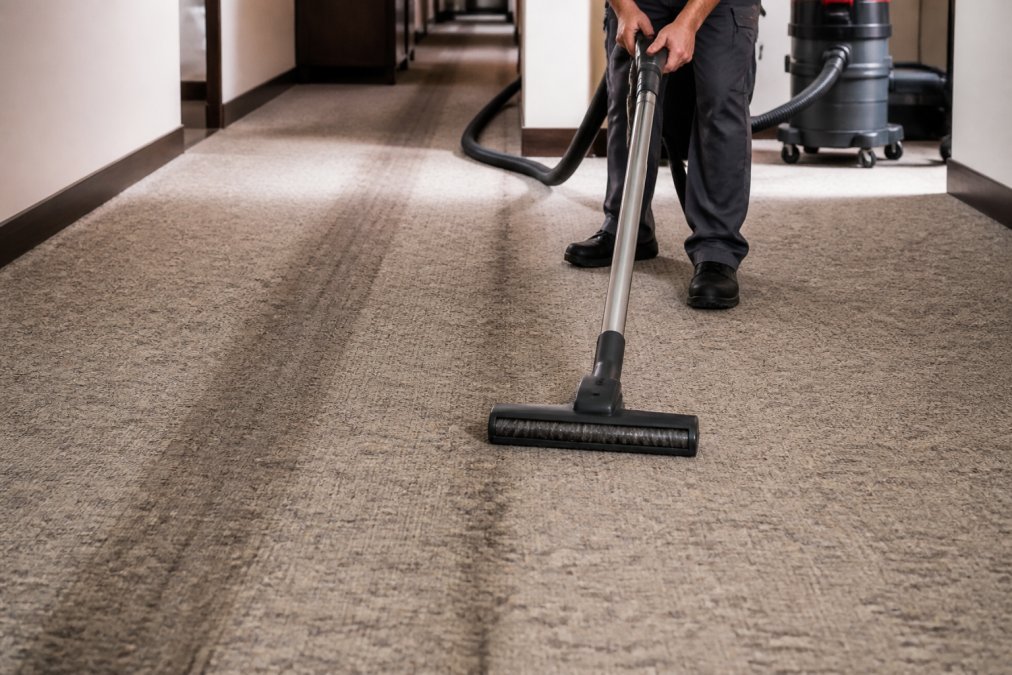
Vacuuming is the most important step, and most people rush it. Dry soil makes up the bulk of what you see in a traffic lane, and suction removes it before water turns it into mud.
Why Vacuum Suction and Agitation Matter
Suction pulls loose dirt out of the pile; agitation from a rotating brush or beater bar loosens deep-set dirt suction alone cannot reach. Weak suction just skims the surface, while strong suction with no brush leaves grit at the base of the fibers.
Check your vacuum settings:
- Adjust the height so the brush touches the pile, not the backing
- Empty the canister or change the bag before you start
- Use a crevice tool along baseboards and under furniture edges
Step 2: Pre-Treat and Remove Carpet Traffic Lane Stains
Pre-treatment separates a surface clean from a real one. Spray your cleaner on the traffic lane, wait, then blot; rushing pushes stains deeper into the backing.
DIY Solutions vs. pH-Balanced Cleaners
DIY mixes work for light soil, but for full traffic lanes a pH-balanced cleaner is the better call. Here is why:
| Approach | Best For | Watch Out For |
|---|---|---|
| Vinegar and water | Light odor, mild spots | Can dull some natural fibers |
| Baking soda paste | Greasy or oily marks | Leaves residue if not rinsed |
| Dish soap and warm water | Fresh food spills | Sticky film attracts new dirt |
| pH-balanced cleaner | Full traffic lanes | Needs proper dwell time |
| Enzyme cleaner | Pet stains and odors | Slow acting, needs moisture |
Step 3: Deep Clean with Steam or Hot Water Extraction
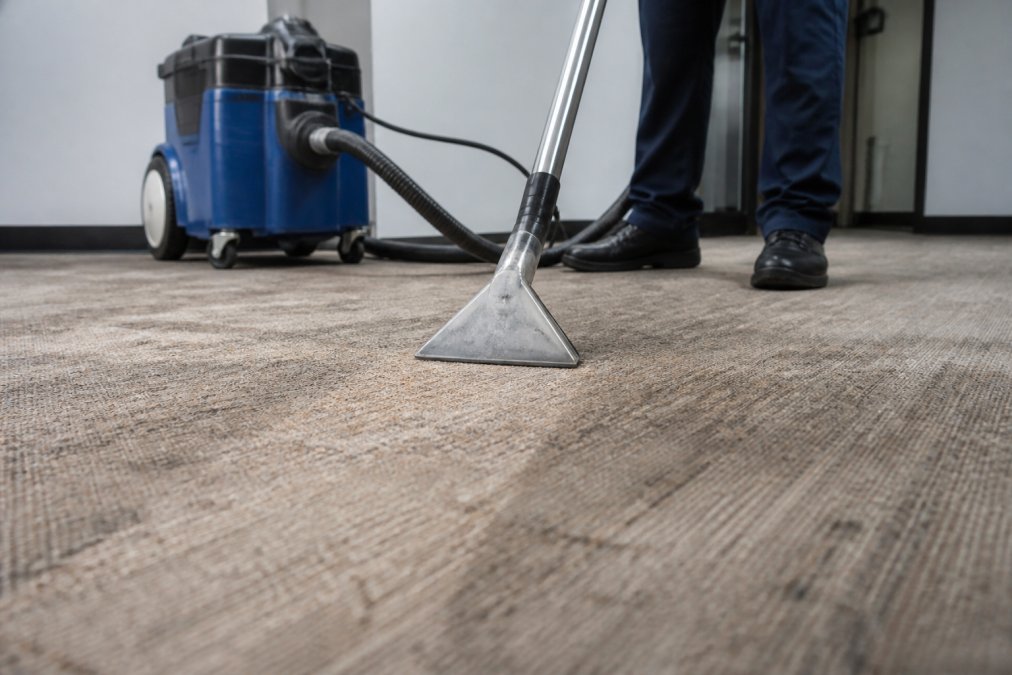
Steam cleaning and hot water extraction both push cleaning solution into the pile and pull it back out with the soil. Hot water extraction is deeper, injecting heated solution and extracting it with dissolved dirt. Steam cleaning uses less water and dries faster, but lifts less deep-set soil.
Whichever method you pick, follow these rules:
- Work in small sections, about 1 meter square at a time
- Overlap each pass by half to avoid streaky lanes
- Go over each section twice, once forward and once back
- Use slow, steady strokes so the machine can extract properly
Step 4: Restore Carpet Pile and Speed Up Drying Time
Crushed carpet pile is the real reason traffic lanes look worn, and most cleaning guides never solve it. A lane can be perfectly clean and still read as dirty because the fibers are flattened and matted. Cleaning removes soil; grooming restores texture. You need both.
What Actually Happens When Pile Crushes
Carpet fibers are twisted, heat-set yarns with a built-in crimp. Under repeated load from foot traffic, furniture, and moisture, the yarn bundles bend at the base, the twist loosens, and the pile lays flat. Once fibers stay bent past their recovery point, the lane looks permanently matted even after a deep clean.
Two things accelerate crush:
- Residual moisture. Wet fibers are more pliable and bend more easily under foot. A carpet that stays damp for 24 hours after cleaning crushes faster than one that dries in 6.
- Wrong agitation. A stiff brush on a low-resilience fiber like olefin or polyester can mechanically distort the pile instead of lifting it.
Tools That Restore Pile
- Carpet rake: A wide, gentle rake with flexible tines, best for post-clean grooming on cut-pile carpets. Work in one direction, then the opposite, with light pressure to lift the nap and re-align the twist.
- Grooming brush or pile brush: Firmer than a rake, useful on loop-pile and berber where a rake can snag. Use short strokes.
- Pile lifter: A vibrating machine that pulls embedded grit from the base of the fibers, the most effective tool for reviving a heavily crushed traffic lane. Run it before extraction, not after.
- Steam and heat: A light steam pass relaxes the fiber and helps it recover its set. Best on nylon and wool, less so on olefin.
The Drying Sequence That Protects the Pile
Drying decides whether your grooming holds.
- Extract thoroughly. Slow passes, overlapping strokes, and a second dry pass with no solution to pull as much water out as the machine allows.
- Increase airflow immediately. Open windows, run box fans angled across the lane, and turn on the AC or a dehumidifier. Air movement does more than heat alone.
- Keep foot traffic off the lane. Most carpets dry in 6 to 12 hours with good airflow; wool and thick plush take longer.
- Groom while damp-dry, not soaking wet. Raking a soaked carpet can stretch the backing.
- Groom again after full dry. A second rake pass sets the pile and locks in the lifted texture.
When Pile Crush Is Permanent
If a traffic lane stays flat after extraction, grooming, and full drying, the fiber has likely passed its recovery point, and no cleaner or tool will bring it back. Options are professional pile lifting with commercial equipment, carpet stretching if the lane has rippled, or replacement of the affected area, one of the few situations where calling a professional is genuinely the right call.
Choosing the Best Carpet Cleaner for High Traffic Areas
The best carpet cleaner for high traffic areas matches the fiber chemistry under your feet, not the loudest label. Two carpets that look identical can react to the same cleaner in opposite ways, because the polymer backbone of the fiber decides what it will tolerate. Most generic guides skip this, which is why so many traffic lanes end up dull, browned, or matted after a DIY clean.
Read the Fiber, Then Pick the Chemistry
Check the manufacturer's tag or install paperwork before you buy anything. The fiber name tells you almost everything about heat, pH, and moisture tolerance.
- Nylon (including Stainmaster and Anso): The most forgiving fiber in a traffic lane, resilient, holds dye well, and tolerates hot water extraction and mildly alkaline cleaners. It responds best to pile grooming because the crimp memory is strong. Watch for oil-based soil bonding over time, which is why a pre-spray with dwell time matters here.
- Polyester (PET and PTT): Soft hand and strong stain resistance, but lower resilience than nylon. Polyester traffic lanes crush and mat faster, so aggressive agitation with a stiff brush accelerates pile distortion. Use a gentler brush, lower water temperature, and lean on grooming afterward.
- Olefin (polypropylene): Solution-dyed and naturally hydrophobic, so water-based stains bead up. The trade-off is the lowest resilience of the common synthetics, so it crushes quickly under foot traffic. It also attracts oily soil, so a degreasing pre-spray does more work here. Keep water temperature moderate and avoid over-wetting.
- Wool: A protein fiber with a natural scale structure. High pH cleaners (above roughly pH 8) can strip natural lanolin, dull the color, and cause felting. Wool also holds moisture longer, so low-moisture methods and fast drying are not optional. Use a wool-safe, pH-balanced cleaner and test in a closet first.
- Wool blends and triexta (PTT): Treat blends as wool unless the tag says otherwise. Triexta behaves like a hybrid, with polyester-like softness and better resilience, but still benefits from moderate heat and gentle agitation.
Match the Cleaner to the Soil, Not Just the Fiber
Fiber tells you what is safe; soil type tells you what works.
- Oily, dark traffic lane soil: A pre-spray with a degreaser or mildly alkaline traffic lane cleaner, given 5 to 10 minutes of dwell time, breaks the bond before extraction.
- Food and beverage spills: A neutral pH spotter, blotted, not rubbed. Sugar-based spills can wick back if not fully rinsed.
- Protein stains (pet accidents, dairy, blood): An enzyme cleaner is the only category that digests the source. Enzymes need moisture and 15 to 30 minutes of dwell time, and work best when the area stays damp.
- Tannin stains (coffee, tea, wine): A dedicated tannin spotter or diluted vinegar solution, followed by a thorough rinse. Leftover acid residue can attract soil.
What to Avoid on High Traffic Lanes
- Oxygen bleaches on wool or wool blends: They can lighten dye and damage the fiber.
- High-pH cleaners on wool or natural fibers: They strip lanolin and cause gradual dulling.
- Excess water on any fiber: Over-wetting drives soil into the backing and pad, which is the leading cause of recurring traffic lane browning.
- Mixing cleaners: Combining an alkaline pre-spray with an acidic rinse without understanding the chemistry can neutralize both and leave residue.
Rental vs. Purchase for Traffic Lane Maintenance
Rental machines from grocery or hardware stores deliver lower suction lift and leave more water in the pad than a truck-mounted or high-end portable unit. That residual moisture flattens pile and invites wicking. A home-grade steam cleaner or mid-tier hot water extractor pays for itself if you clean traffic lanes more than twice a year, especially with pets or kids.
Professional Carpet Cleaning Frequency for Busy Homes
Professional carpet cleaning frequency depends on foot traffic, pets, and kids. For a busy household, once every 6 to 12 months keeps traffic lanes from setting into permanent wear patterns.
Here is a simple rule set:
- Light traffic, no pets: every 12 to 18 months
- Average family home: every 12 months
- Kids or pets in the home: every 6 to 9 months
- Home office or entryway lanes: spot clean monthly, deep clean twice a year
Frequently Asked Questions
How often should high traffic carpet areas be professionally cleaned?
Professional carpet cleaning frequency depends on foot traffic: homes with pets or kids may need cleaning every 6-12 months, while light-use areas can go 12-18 months. High traffic carpet zones like hallways and living rooms accumulate deep-set dirt faster, so schedule professional hot water extraction at least annually. Mighty Clean Services recommends a professional assessment to set the right schedule for your home.
What is the best carpet cleaner for high traffic areas?
The best carpet cleaner for high traffic areas depends on your carpet fibers and the type of soil. For synthetic carpets, a pH-balanced cleaner with hot water extraction works well. For natural fibers like wool, use a gentler, fiber-specific solution. Rental machines can help, but professional-grade equipment provides stronger suction and agitation. Mighty Clean Services uses certified methods to match the right cleaner to your carpet.
Can I use DIY methods like vinegar or dish soap to remove deep-set dirt from carpet traffic lanes?
DIY solutions like vinegar, baking soda, and dish soap can handle light surface stains, but they often leave residue that attracts new dirt, making traffic lanes look dirty again quickly. For deep-set dirt and stubborn stains, pre-treatment with a pH-balanced cleaner followed by hot water extraction is more effective. If stains return within weeks, professional cleaning may be needed to remove embedded soil.
How long does carpet last in a high traffic area?
Carpet in high traffic areas typically lasts 5-10 years, depending on fiber type, maintenance, and cleaning frequency. Regular vacuuming, prompt stain removal, and professional deep cleaning can extend carpet longevity. Neglecting traffic lanes leads to crushed pile and fiber damage that cannot be reversed. Preventative care, including mats and routine cleaning, helps maximize carpet life.